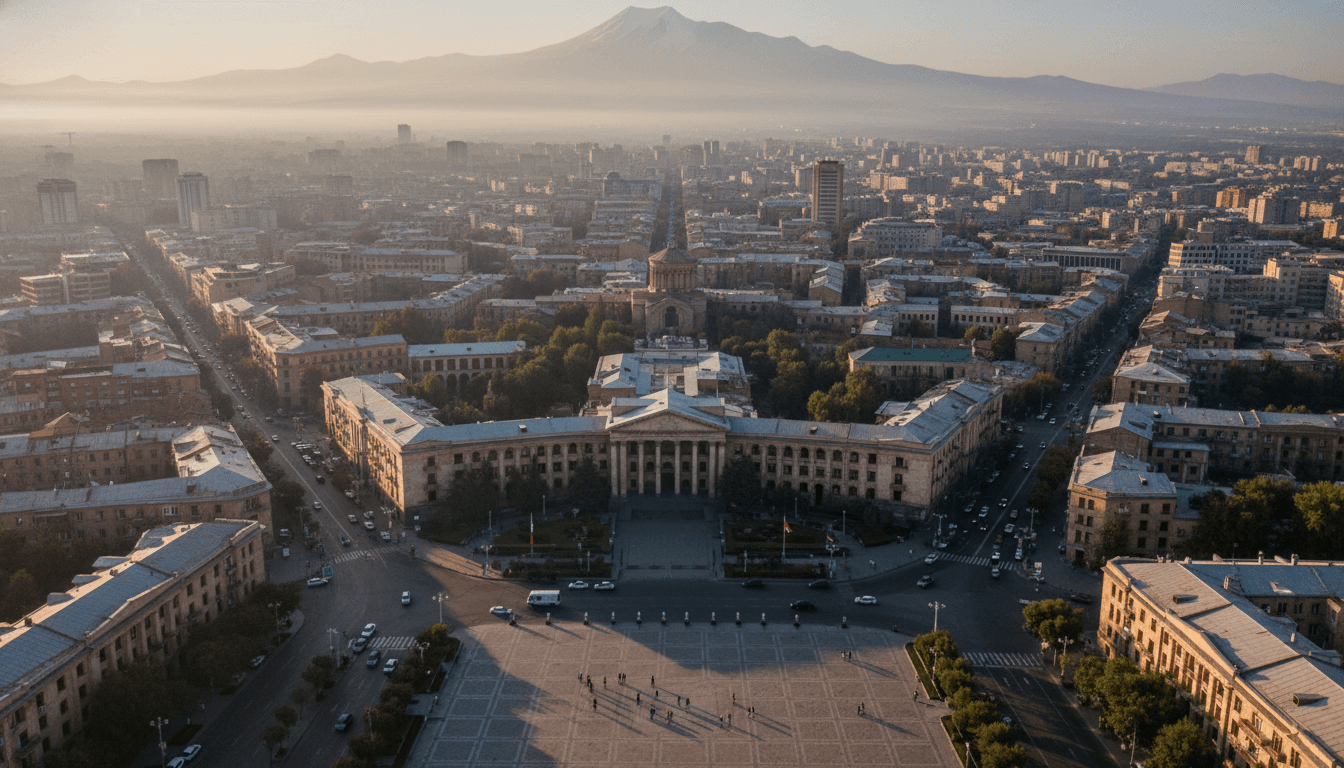
Critical Armenia Election is underway, with the nation bracing for a pivotal parliamentary vote on June 7, 2026, amidst significant and escalating pressure from Russia. This election is not merely a domestic political contest; it represents a critical juncture that could fundamentally reshape Armenia’s regional alliances and its geopolitical orientation, potentially pulling it away from its traditional Moscow orbit and closer to the West.
For the majority of its post-Soviet existence since 1991, Armenia has been an unwavering ally of Moscow. It has hosted Russian troops, procured Russian weaponry, and integrated deeply into Kremlin-led economic and political structures such as the Eurasian Economic Union (EAEU) and the Collective Security Treaty Organization (CSTO). However, this long-standing relationship has seen a steady and pronounced deterioration under Prime Minister Nikol Pashinyan, who ascended to power in 2018. A watershed moment arrived with the 2023 Nagorno-Karabakh conflict, during which Russia, despite its security alliance with Armenia, conspicuously failed to intervene when Azerbaijan seized control of the region. This led to the tragic mass exodus of over 100,000 ethnic Armenians, starkly exposing the limitations of Russian security guarantees and fueling widespread Armenian disappointment and a compelling desire to diversify its international partnerships.
Since that pivotal conflict, Pashinyan’s government has unequivocally pursued a more pro-Western course. Yerevan has openly expressed aspirations for closer ties with both the European Union and the United States. In a significant move, Armenia joined the International Criminal Court in 2023 and, in 2024, suspended its participation in the CSTO. May 2026 saw Armenia host the European Political Community summit in Yerevan, signaling its growing engagement with European political structures. Further cementing this shift, the Armenian parliament adopted legislation in March 2025 formally expressing the possibility of eventual EU membership, followed by the adoption of a new Strategic Agenda for the EU-Armenia Partnership in December 2025. The EU has reciprocated this engagement with increased support, including an initial €50 million economic support package aimed at helping Armenia counter Russian trade pressure, alongside a commitment to deeper economic cooperation. The United States has also deepened its relationship, signing a Charter on a Comprehensive Strategic Partnership and a framework agreement on the “Trump Route for International Peace and Prosperity” (TRIPP) project in May 2026, a transport initiative designed to enhance regional connectivity.
Russian Pressure Mounts
Russia views Armenia’s westward shift with profound disapproval and has intensified its pressure campaign to prevent the nation from definitively leaving its sphere of influence. This pressure manifests in multifaceted ways. Economically, Moscow has imposed a series of trade restrictions on key Armenian imports, including cognac, flowers, fish, and fruits, citing opaque sanitary concerns that are widely perceived as politically motivated. Russia maintains significant control over Armenia’s energy and infrastructure, including its gas distribution networks and railroads, and has implicitly threatened to suspend subsidized gas supplies should Armenia continue its trajectory of EU integration. Notably, Russia accounts for approximately 40% of Armenia’s total exports, highlighting the leverage Moscow possesses.
Politically, Russian President Vladimir Putin has explicitly drawn parallels between Armenia’s integration process and the “Ukrainian scenario,” issuing veiled warnings against political instability and armed conflict. Russia is also widely accused of conducting extensive covert influence operations, employing sophisticated disinformation campaigns utilizing botnets and Kremlin-linked structures to undermine Pashinyan’s government and bolster pro-Russian candidates. There have been credible reports of efforts to mobilize pro-Russian voters from the Armenian diaspora residing in Russia, with suggestions of potentially transporting up to 100,000 individuals to sway the vote at an estimated cost of $50 million.
Kremlin backing has notably flowed towards Pashinyan’s primary challenger, Samvel Karapetyan, a prominent Russian-Armenian billionaire leading the “Stronger Armenia” party, which openly advocates for closer ties with Moscow. Karapetyan is currently under house arrest on charges related to calls for the seizure of power, allegations he vehemently denies. Other influential opposition figures, such as former President Robert Kocharyan of the “Armenia Alliance,” also champion a return to closer ties with Russia, further complicating the political landscape.
The market impact of this election is considerable, as it is widely perceived as a referendum on Armenia’s geopolitical future. While Russia remains a crucial economic partner, its assertive actions are undeniably pushing Armenia to diversify its international engagements. Analysts like Mikayel Zolyan emphasize that this marks the first Armenian election where geopolitical orientation is the decisive issue at stake.
“This is not just an election; it’s a battle for Armenia’s soul, caught between its historical ties and a compelling future,” says Mikayel Zolyan, an independent analyst.
Despite the intense Russian pressure, current opinion polls suggest that Pashinyan’s Civil Contract party is likely to emerge as the largest political force, garnering approximately 30% of the vote. Karapetyan, his main pro-Russian challenger, trails significantly at roughly 10%. However, a comfortable parliamentary majority for Pashinyan is far from guaranteed, and a substantial portion of the electorate remains undecided or disillusioned, making the outcome less predictable than the polls might suggest. Even if Pashinyan is re-elected, experts believe Russia will still need to adapt and find a way to operate within the existing political landscape, as completely ceding Armenia to its geopolitical competitors is not an outcome the Kremlin desires. The EU and US are actively supporting Armenia’s democratic and pro-Western trajectory, with the EU providing crucial economic aid and the US signing strategic partnership agreements. However, some critics argue that Western monitoring institutions have been willing to overlook alleged irregularities and political interference in the run-up to the vote. The outcome of the June 7 Critical Armenia Election will profoundly shape the nation’s democratic trajectory and its regional positioning for the next five years.
The immediate implications extend beyond Armenia’s borders, impacting the delicate geopolitical balance in the South Caucasus. A decisive shift towards the West could embolden other post-Soviet states seeking to reduce Russian influence, while a strong pro-Russian outcome would reaffirm Moscow’s grip on its traditional sphere. Businesses with interests in the region, particularly those in energy, trade, and infrastructure, are closely watching the results, as changes in Armenia’s foreign policy could lead to significant shifts in economic partnerships and regulatory environments. The long-term stability of the region, already fragile after the Nagorno-Karabakh conflict, hinges on the democratic legitimacy and external alignment that emerges from this critical vote. For more trending stories, stay tuned to The Financial Standard as we monitor the unfolding situation and its global ramifications.