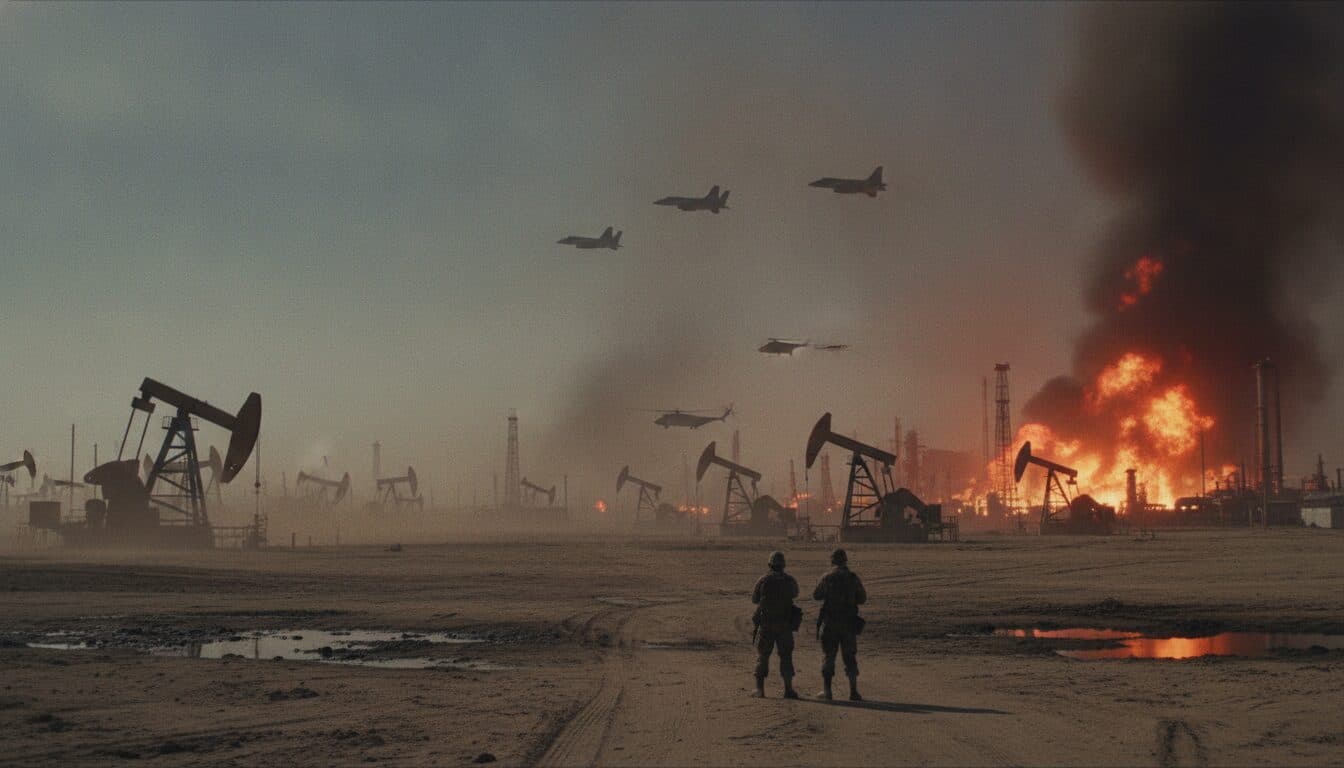
The United States has conducted its tenth consecutive night of airstrikes on Iran, as of July 21, 2026, marking a significant escalation in a conflict that began in February and is now severely impacting global energy markets. These sustained strikes target Iranian military command centers, maritime capabilities, missile and drone launch sites, and air defense systems, all aimed at degrading Tehran’s capacity to disrupt commercial shipping in the vital Strait of Hormuz. The ongoing military actions coincide with stalled shipping in the critical waterway and intensifying diplomatic efforts to de-escalate the volatile situation.
The latest round of US military action follows the tragic deaths of three US service members in Iranian attacks over the past week. On Friday, July 17, 19-year-old Army Pvt. Isabella Gonzales and 25-year-old 1st Lt. Tyler James Feehan were killed in an Iranian missile attack on the Muwaffaq Salti Air Base in Jordan, with a third service member from that attack still missing after unidentified remains were found. The following day, Saturday, July 18, another US service member died in northern Iraq during a “controlled detonation” of a downed Iranian drone. President Donald Trump has vowed that Iran will “pay” for the deaths of US soldiers, a sentiment underscoring the retaliatory nature of the current US strikes.
Since the conflict began on February 28, 2026, at least 18 US service members have been killed and 447 injured. While nearly 100 American service members have sustained injuries in multiple Iranian airstrikes this month, the vast majority experienced minor concussions, with 96% returning to duty. Iran has not been idle, retaliating with attacks on US military positions in Bahrain and Kuwait, claiming hits on air defense systems and radar installations. Kuwait’s army has confirmed intercepting Iranian drones and missiles, and Jordan’s military on Tuesday, July 21, also intercepted five Iranian drones targeting the kingdom.
Hormuz Shipping Stalls, Oil Prices Surge
The economic ramifications of this escalating military confrontation are profound, particularly concerning the Strait of Hormuz. This critical waterway, through which approximately a fifth of all crude oil and natural gas traded globally once passed, remains largely stalled for shipping. On Tuesday, July 21, Iran attacked another tanker in the Strait, forcing its crew to abandon the vessel. This incident marks at least three commercial vessels attacked in and around the Strait of Hormuz in a 48-hour period, with Iran’s paramilitary Revolutionary Guard claiming responsibility for this and two other attacks on Monday.
The disruption to shipping in the Strait of Hormuz has sent shockwaves through global energy markets. Brent crude was trading above $88 a barrel on Tuesday, July 21, reflecting a 15.04% increase over the past month and a staggering 30.65% rise compared to the same period last year. Goldman Sachs has issued a stark warning: crude oil prices could surge to $120 per barrel by the end of the year if the war continues and the Strait of Hormuz remains closed for an extended period. This forecast stands in sharp contrast to earlier in July when an interim deal had led to a projected reduction in Brent crude prices, highlighting the fragility of market sentiment in this volatile geopolitical climate. For more insights on global market reactions, see our related trending articles.
The current escalation follows the collapse of an interim deal signed last month between the US and Iran, which was intended to end the conflict that originated in February 2026. That agreement, brief as it was, offered a glimmer of hope for de-escalation, but its failure has plunged the region back into direct military confrontation. The involvement of multiple regional actors, including Bahrain, Kuwait, and Jordan, underscores the widespread impact and potential for broader regional instability.
“The persistent attacks in the Strait of Hormuz are not just acts of military aggression; they are direct assaults on the global economy. The ripple effects of prolonged shipping disruptions will be felt far beyond the Middle East, impacting everything from energy costs to supply chains worldwide.”
Despite the intensifying military actions, diplomatic efforts are surprisingly ongoing. Iranian Interior Minister Eskandar Momeni arrived in Pakistan on Monday, July 20, for high-level talks with Pakistan’s top leadership, including Prime Minister Shehbaz Sharif and Army Chief Field Marshal Asim Munir. Pakistan is playing a pivotal role as a key mediator in the conflict, alongside Qatar. Momeni is expected to discuss a joint de-escalation proposal put forth by Pakistan and Qatar, and he carries a “special message” from Iranian President Masoud Pezeshkian. However, with the previous interim deal having collapsed, the path to a new agreement to end the fighting remains exceptionally unclear and fraught with challenges.
The immediate future hinges on the effectiveness of these diplomatic overtures against the backdrop of continuous military strikes and retaliatory actions. The sustained US pressure aims to force Iran to cease its attacks on commercial shipping, while Iran’s actions appear designed to assert its influence over a critical global chokepoint. Investors and global markets will be closely watching for any signs of progress in the Pakistan-Qatar mediation efforts, as a prolonged closure or even heightened risks in the Strait of Hormuz could fundamentally reshape global energy prices and trade routes. The stakes are extraordinarily high, not just for the involved nations, but for the stability of the global economy.