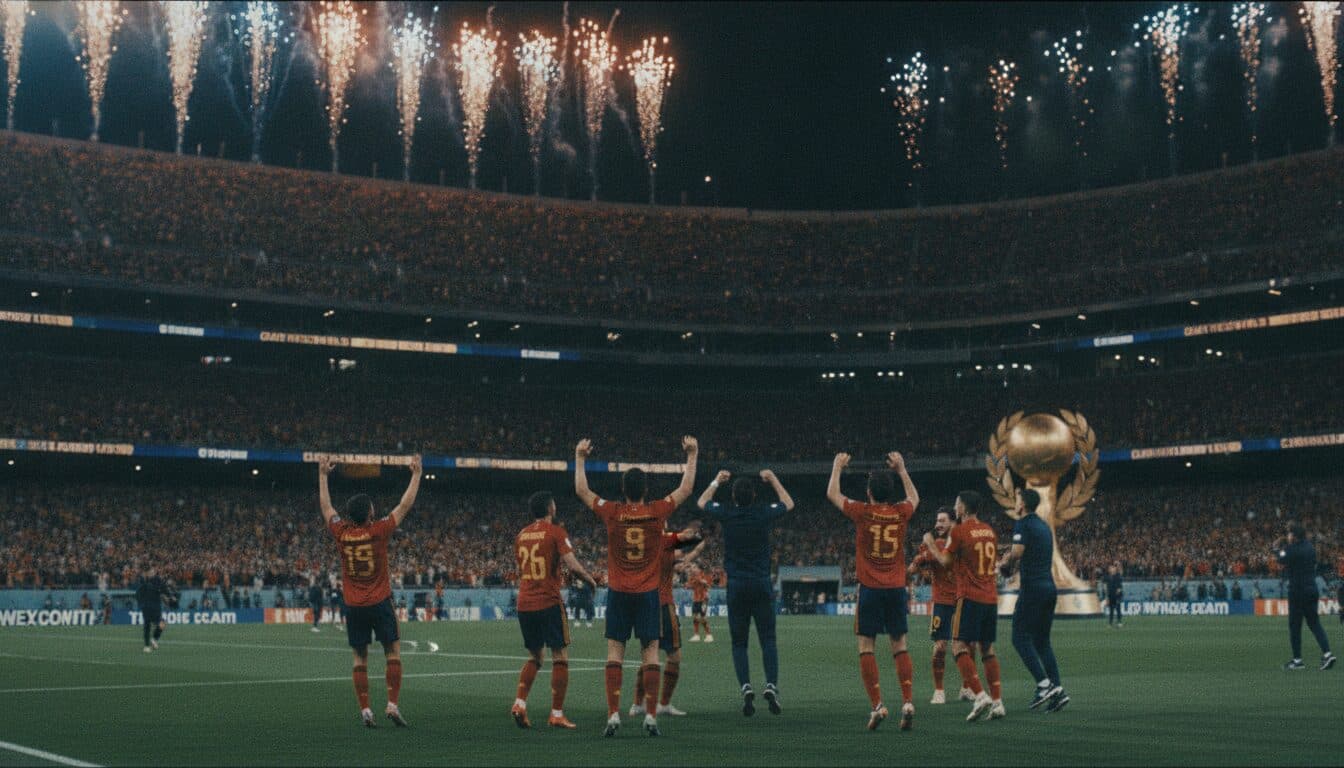
Spain has cemented its place in football history, triumphing over Argentina in a gripping FIFA World Cup 2026 Final held on July 19, 2026. The 23rd edition of the global spectacle culminated at MetLife Stadium in East Rutherford, New Jersey, with Spain’s victory marking their second World Cup title, a feat achieved through an undefeated run that underscored their tactical prowess and defensive solidity throughout the tournament.
The final match, a clash of continental champions, saw Spain maintain an extraordinary record, conceding only a single goal across their seven matches. This defensive masterclass not only secured their coveted trophy but also extended their unbeaten streak to an astonishing 37 consecutive matches in men’s international football, matching Italy’s long-standing record. Argentina, led by the incomparable Lionel Messi, entered the final undefeated, having scored 19 goals en route to the showpiece event. However, Spain’s disciplined defense proved an insurmountable barrier, denying Argentina the opportunity to become the first team since Brazil in 1962 to successfully defend their World Cup title.
Spain Triumphs Over Argentina in Historic Final
The 2026 FIFA World Cup Final was more than just a football match; it was a global event that captivated audiences worldwide, drawing immense public interest and discussion. The expanded format of the tournament, featuring 48 teams and 104 matches across Canada, Mexico, and the United States, set the stage for a memorable conclusion. Spain’s victory was a testament to their collective strength, with key players delivering standout performances. Lamine Yamal’s exceptional dribbling skills were on full display, completing a tournament-leading 30 dribbles, while Rodri orchestrated Spain’s midfield with a record 648 passes. Goalkeeper Unai Simon was a formidable presence, setting a new World Cup record for the longest consecutive shutout streak at 650 minutes and recording six clean sheets. Upfront, Mikel Oyarzabal equaled the Spanish record for most goals in a single World Cup with five strikes.
For Argentina, the final was tinged with the bittersweet reality of Lionel Messi’s probable last World Cup appearance. Despite scoring eight goals and providing four assists, and entering the final tied for the Golden Boot race, Messi could not steer his team to victory. His record-extending 33rd FIFA World Cup appearance in the semi-final underscored his enduring legacy, even in defeat. The head-to-head history between Spain and Argentina, perfectly even with six wins each and two draws across 14 previous encounters, added an extra layer of anticipation to this historic final. This was only their second meeting in a World Cup, the first being in 1966.
The economic impact of such a global spectacle is profound, particularly for the host cities and participating nations. The immense viewership translates into significant advertising revenue, tourism boosts, and merchandise sales, providing a substantial injection into various economies. For brands associated with the winning team, the halo effect can be substantial, driving increased consumer engagement and loyalty. The closing ceremony and an extended halftime show, a first for a World Cup final, featured performances by global music icons Madonna, Shakira, and BTS, further elevating the event’s entertainment value and drawing in a wider audience. Jennifer Hudson’s rendition of the US national anthem added a patriotic touch to the proceedings.
“Spain’s clinical performance, particularly their defensive record, will be studied for years to come. It’s a blueprint for success in modern international football, emphasizing resilience and tactical discipline alongside attacking flair.”
Historically, World Cup victories often mark a golden era for the winning nation’s footballing landscape, inspiring a new generation of talent and attracting further investment into youth development programs. Spain’s 2010 triumph was followed by a period of dominance in European football, and this latest victory is expected to similarly invigorate their national sport. For investors, the performance of sports-related stocks, from apparel manufacturers to broadcasters, often sees a discernible uptick during and after such major tournaments. The global reach of the FIFA World Cup also reinforces the power of live sports as a premium content driver in an increasingly fragmented media landscape, influencing subscription models and advertising strategies for major media conglomerates. For more insights on the broader trends shaping global sports, readers can explore our related trending articles.
Looking ahead, Spain’s victory sets a new benchmark for international football. The challenge will be to maintain this level of performance and integrate the emerging talents who proved crucial to this campaign. For Argentina, the focus will shift to a post-Messi era, and the arduous task of rebuilding and identifying new leaders to carry the torch. The 2026 World Cup, with its expanded format and historic final, will undoubtedly leave a lasting legacy, shaping future tournaments and influencing tactical approaches across the globe. The financial implications for FIFA and its commercial partners, already substantial, will likely see further growth as the tournament’s global appeal continues to expand.
The key takeaway from this historic final is the enduring power of sport to unite and electrify. Spain’s triumph, built on an unwavering commitment to defensive excellence and a cohesive team effort, serves as a powerful reminder that sustained success in elite competition demands meticulous planning and flawless execution. For investors, the World Cup underscores the robust and growing market for global sports, offering diverse opportunities across media, technology, and consumer goods sectors.