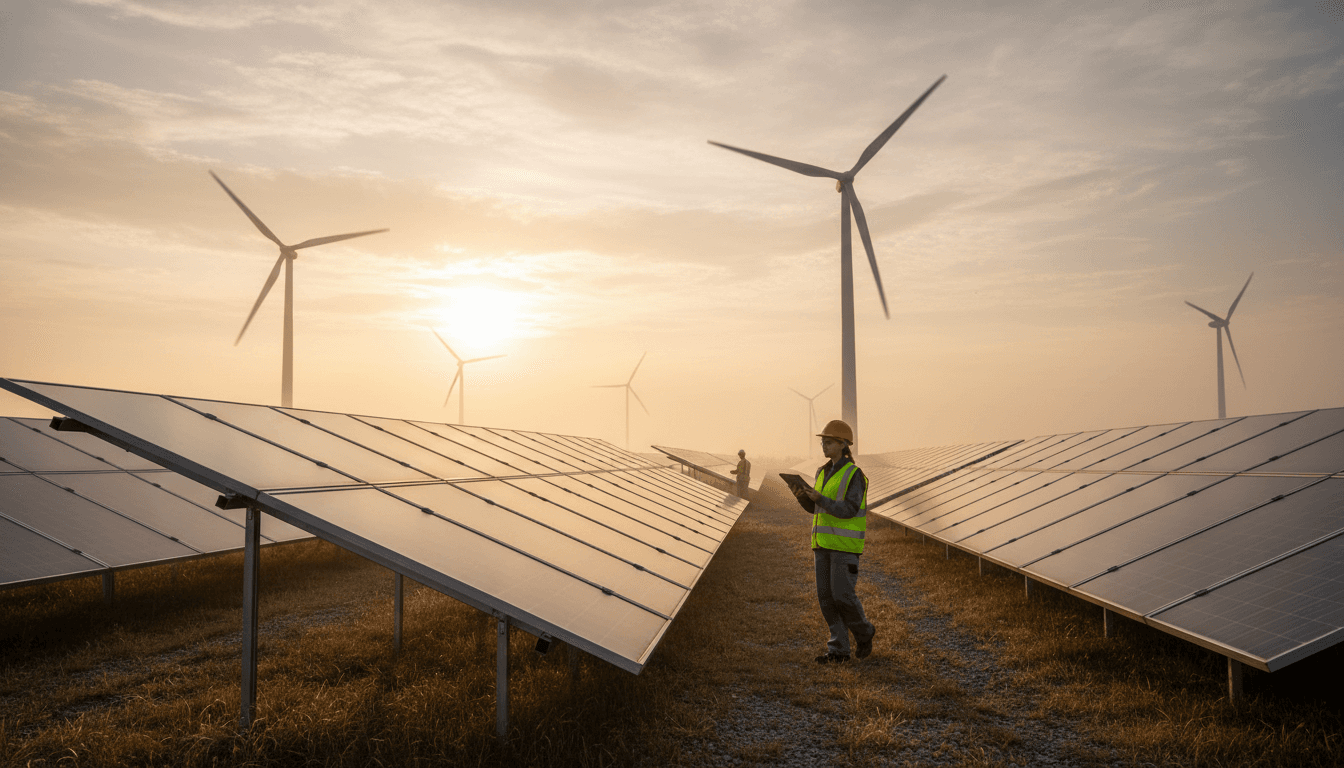
Renewable energy accelerates the global race toward net zero and climate resilience, a sentiment strongly reiterated by industry leaders on World Environment Day 2026. The ongoing transition to sustainable power sources is increasingly recognized as the primary driver for achieving ambitious climate targets and safeguarding against environmental shifts.
The declaration, made on Saturday, June 6, 2026, during World Environment Day, underscored the critical role of solar, wind, and other renewable technologies in decarbonizing economies worldwide. Industry leaders, speaking at an event covered by SolarQuarter, emphasized that the current pace of renewable energy deployment is not merely a trend but a fundamental acceleration in the global effort to mitigate climate change. This push is seen as essential for both reducing greenhouse gas emissions and building societal resilience against the inevitable impacts of a changing climate, such as extreme weather events and resource scarcity. The discussions highlighted that substantial investments and policy frameworks are now aligning to support this rapid expansion.
The Global Race Toward Net Zero
The acceleration in renewable energy adoption directly impacts the broader environment and climate landscape by providing a viable and scalable alternative to fossil fuels. As more nations commit to net-zero targets, the demand for clean energy solutions has surged, creating a virtuous cycle of innovation, cost reduction, and deployment. This shift is not just about electricity generation; it extends to transportation, industrial processes, and even agricultural practices, all of which are undergoing decarbonization efforts powered by renewables. The rapid scale-up helps reduce air pollution, conserve natural resources, and protect biodiversity by minimizing the need for extractive industries.
Historically, the conversation around climate action has often focused on limitations and challenges. However, the narrative has shifted significantly, particularly in the last decade. Early renewable energy initiatives faced hurdles related to cost, intermittency, and grid integration. Yet, technological advancements, economies of scale, and supportive government policies have drastically improved their competitiveness. The period leading up to 2026 has seen unprecedented growth in solar and wind capacity, with these technologies now often being the cheapest form of new electricity generation in many parts of the world. This momentum builds on decades of research and development, transforming what was once a niche sector into a mainstream energy solution. Related environment & climate articles often track this evolution.
“The transition to renewable energy is no longer a futuristic vision but a present-day reality driving significant progress in our global race toward net zero and enhanced climate resilience.”
Looking ahead, the future implications of this renewable energy acceleration are profound. Upcoming decisions by international bodies and national governments will likely focus on strengthening grid infrastructure to accommodate higher penetrations of intermittent renewables, investing in energy storage solutions, and developing new green technologies such as green hydrogen. Predictions suggest continued innovation in areas like offshore wind, advanced geothermal, and tidal power, further diversifying the renewable energy portfolio. Policy decisions around carbon pricing, subsidies for fossil fuels, and international cooperation on technology transfer will be crucial in sustaining this momentum. The private sector is also expected to play an even larger role, with increased corporate commitments to 100% renewable energy and green supply chains. Further, as the global race toward net zero intensifies, we can anticipate more integrated energy systems that combine various renewable sources with smart grid technologies to ensure reliability and efficiency.
Why this matters is unequivocal: the rapid deployment of renewable energy accelerates humanity’s ability to achieve critical climate goals, ensuring a more stable and sustainable future. It represents a tangible pathway to mitigating the most severe impacts of climate change, fostering economic growth, and improving public health. The ongoing commitment to and investment in these technologies are paramount for securing global climate resilience and achieving net-zero emissions.