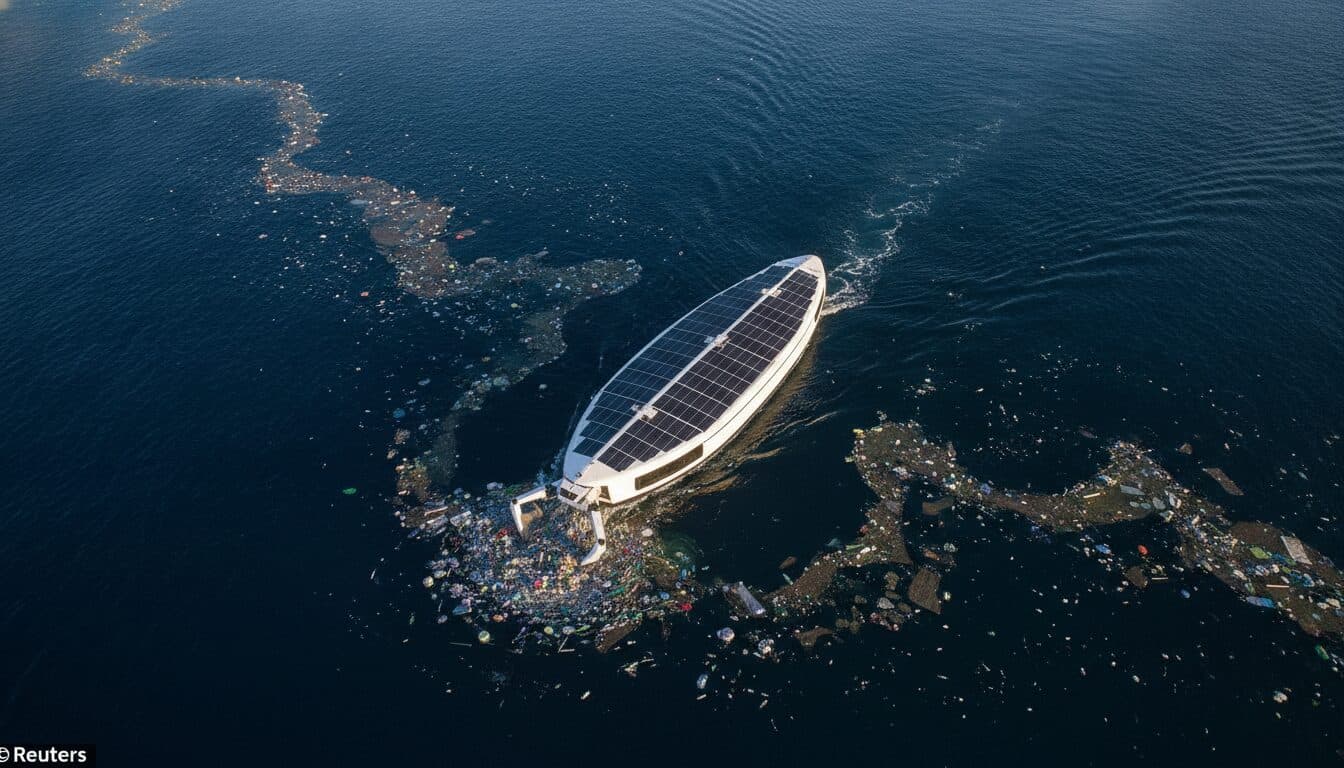
A solar-powered boat tackles the ocean plastic waste problem, offering a potentially revolutionary solution to one of the planet’s most pressing environmental crises. This innovative vessel, unveiled on Wednesday, June 17, 2026, by Good.is, is designed to actively ‘feast’ on marine debris, leveraging renewable energy to address the vast and growing accumulation of plastic in our oceans. Its emergence signals a significant step forward in the global battle against pollution, moving beyond passive collection methods to an active, sustainable approach.
The Innovative Solution: Who and What
The core of this breakthrough is a newly developed solar-powered boat, specifically engineered for the continuous collection of plastic waste from marine environments. While specific details regarding the organization or individuals behind its development were not provided in the initial report by Good.is, the focus is squarely on the boat’s operational capabilities. The vessel is equipped with technology that allows it to autonomously navigate and gather plastic, operating solely on solar energy. This eliminates the need for fossil fuels, significantly reducing its operational carbon footprint and making it an environmentally sound solution for a pervasive environmental challenge. The boat’s design emphasizes efficiency in waste collection, capable of processing various types of plastic debris it encounters.
Impact Analysis: Solving Ocean Plastic Waste Problem
The potential for this solar-powered boat to solve the ocean plastic waste problem is immense. Current estimates suggest millions of tons of plastic enter our oceans annually, forming vast garbage patches and threatening marine ecosystems. Traditional cleanup efforts often face challenges related to scale, cost, and environmental impact. This new vessel, however, offers a scalable, self-sustaining model. By harnessing solar power, it can operate for extended periods without external refueling, making continuous cleanup operations more feasible and economical. Its ability to ‘feast’ on trash suggests a mechanism for effective capture and perhaps even preliminary processing of the collected material, reducing the volume of plastic returning to shore for disposal or recycling. This active removal strategy could lead to a tangible reduction in marine plastic concentrations, protecting wildlife and restoring oceanic health.
“The deployment of autonomous, solar-powered systems represents a paradigm shift in how we approach marine pollution, moving from reactive measures to proactive, sustainable intervention.”
Context and Background: A Growing Crisis
The ocean plastic crisis has been escalating for decades. From microplastics infiltrating the food chain to large debris entangling marine animals, the environmental and economic costs are staggering. Previous attempts to address this have included large-scale barriers, community cleanups, and legislative efforts to reduce plastic production. While these initiatives have had some success, the sheer volume of existing plastic in the oceans remains a daunting challenge. This new solar-powered boat builds upon a growing trend of technological innovation aimed at environmental remediation, reflecting a global pivot towards leveraging advanced engineering for ecological solutions. It stands alongside other efforts to develop sustainable technologies for environmental protection, showcasing how renewable energy can be integrated into large-scale environmental projects. The persistent problem of plastic pollution has spurred researchers and innovators worldwide to seek out more effective and less resource-intensive methods for cleanup.
What’s Next: Scaling Up and Global Deployment
The immediate future for this solar-powered boat likely involves further testing, optimization, and potential scaling of operations. The report from Good.is on June 17, 2026, highlights its potential, suggesting that the next steps would involve discussions around manufacturing capacity and strategic deployment in high-impact areas such as the Great Pacific Garbage Patch or heavily polluted coastal zones. Partnerships with governments, NGOs, and private sector entities would be crucial for expanding its reach and maximizing its impact. The long-term vision could see fleets of these autonomous vessels working in concert, systematically clearing vast expanses of ocean. Furthermore, research into onboard sorting or compaction capabilities could enhance efficiency and reduce logistical challenges associated with transporting collected waste. The success of this prototype could inspire further innovation in autonomous environmental cleanup technologies.
Key Takeaway: A Beacon of Hope
This solar-powered boat represents more than just a piece of technology; it is a beacon of hope in the fight against ocean plastic pollution. Its ability to operate sustainably and autonomously to tackle the ocean plastic waste problem offers a concrete, actionable path towards mitigating an environmental disaster. By demonstrating that effective, large-scale ocean cleanup can be achieved without contributing to further emissions, it sets a new standard for eco-friendly remediation efforts and underscores the critical role of innovation in securing a healthier planet for future generations. The development of such a solution is a testament to human ingenuity in addressing self-inflicted environmental wounds, signaling a potential turning point in the global effort to restore marine ecosystems.