The Yandex.Rover is the newest autonomous vehicle from the Russian self-driving car company, signaling a strategic pivot towards diversifying its autonomous offerings beyond traditional robo-taxis. Announced on Thursday, these six-wheeled delivery bots have commenced testing at Yandex’s sprawling Moscow headquarters, marking a significant expansion in the company’s autonomous capabilities.
Yandex, often likened to Google and Alphabet for its diverse tech ecosystem, isn’t abandoning its ambitious self-driving car program. Indeed, its growing fleet of self-driving cars recently began testing in Detroit, adding to existing operations in Las Vegas, Tel Aviv, Innopolis, and Skolkovo, where the company has collectively logged over one million autonomous miles. However, the introduction of the Yandex.Rover underscores a pragmatic move into the burgeoning last-mile delivery sector.
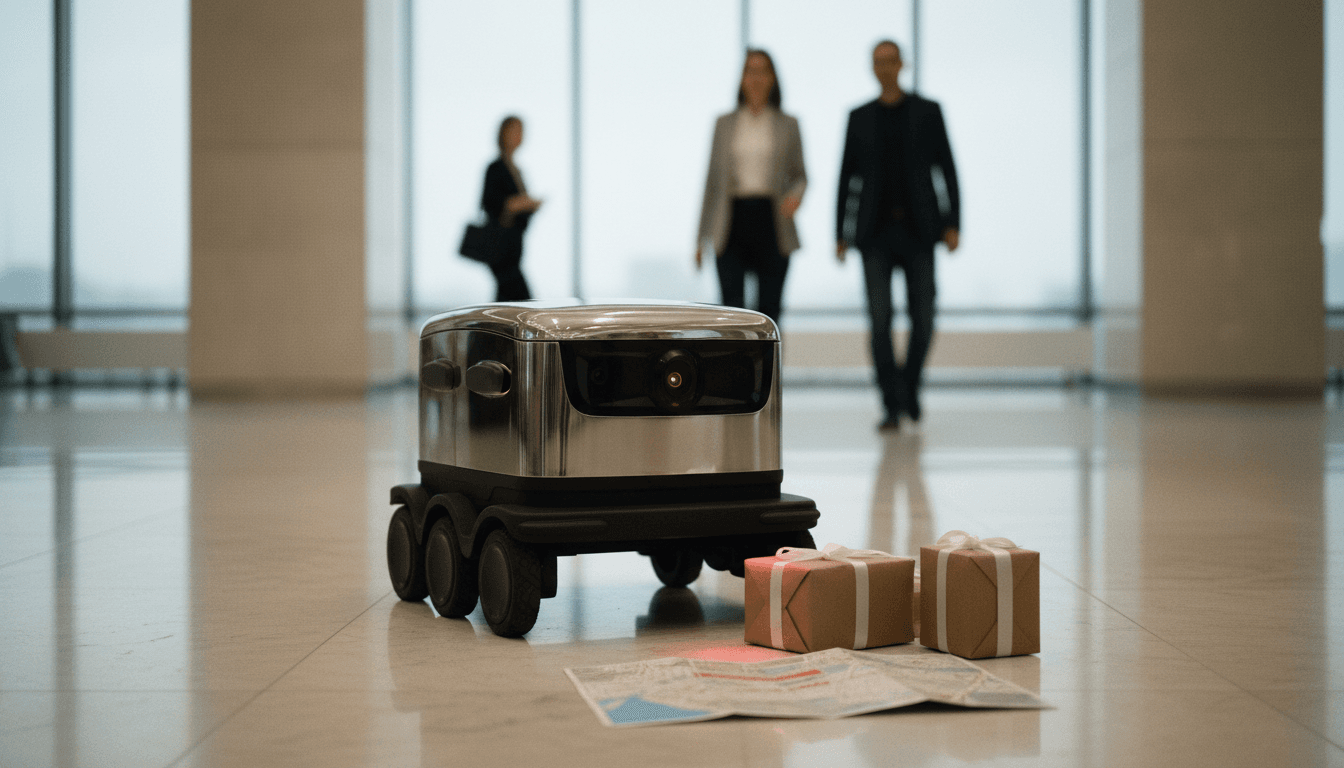
These compact, suitcase-sized robots are designed for self-navigation, adept at maneuvering around objects and obstacles. Initially, their mission is to deliver small packages to Yandex’s 7,000 employees spread across multiple buildings, restaurants, and parking garages at its HQ. This internal deployment serves as a crucial proving ground for the Yandex.Rover’s autonomous capabilities, subjecting them to real-world scenarios day and night, and across various weather conditions. Equipped with advanced LiDAR light-measuring sensors and other proprietary sensors, the bots are engineered to reach their destinations autonomously, albeit with remote operators currently overseeing their movements.
Autonomous Delivery Bots Expand Yandex’s Reach
The strategic introduction of these autonomous delivery bots positions Yandex to capitalize on the increasing demand for automated logistics. The Yandex.Rover bears a resemblance to other delivery robots already making inroads, such as Amazon’s Scout, KiwiBot, and Starship, which are becoming common sights on college campuses and urban sidewalks. This competitive landscape highlights a broader industry trend towards smaller, more agile autonomous units for specialized delivery tasks.
Following a testing methodology similar to Yandex’s self-driving cars, the Yandex.Rover will eventually venture beyond the confines of the company’s headquarters. The ultimate goal is to deploy these bots for public use, including food deliveries and other services across Moscow and potentially further afield. This phased approach, starting with controlled internal environments before expanding to public roads, is a standard practice in autonomous vehicle development, ensuring robust safety and reliability before widespread adoption.
The move into autonomous delivery bots signifies a strategic diversification for Yandex, leveraging its core expertise in self-driving technology to tap into new market segments. While the development of fully autonomous robo-taxis continues to be a long-term play, the Yandex.Rover offers a more immediate and scalable application of autonomous technology. This dual-pronged approach allows Yandex to incrementally expand its autonomous footprint while gathering valuable data and refining its AI and sensor technologies across different vehicle types and operational environments.
The introduction of the Yandex.Rover is a clear indicator that the future of autonomous vehicles is not solely confined to passenger transport. As companies like Yandex continue to innovate, the integration of autonomous delivery solutions will reshape urban logistics, offering efficiency, speed, and potentially reducing operational costs. The continued testing and eventual public deployment of the Yandex.Rover will provide critical insights into the viability and scalability of such systems, setting a precedent for how autonomous technology can be applied to everyday services.
Ultimately, Yandex’s latest venture into autonomous delivery bots underscores a broader industry pivot towards integrated autonomous ecosystems. By expanding its portfolio from self-driving cars to smaller, more specialized delivery units, Yandex is positioning itself as a comprehensive player in the future of mobility and logistics, ready to meet diverse consumer and business needs with cutting-edge autonomous solutions.