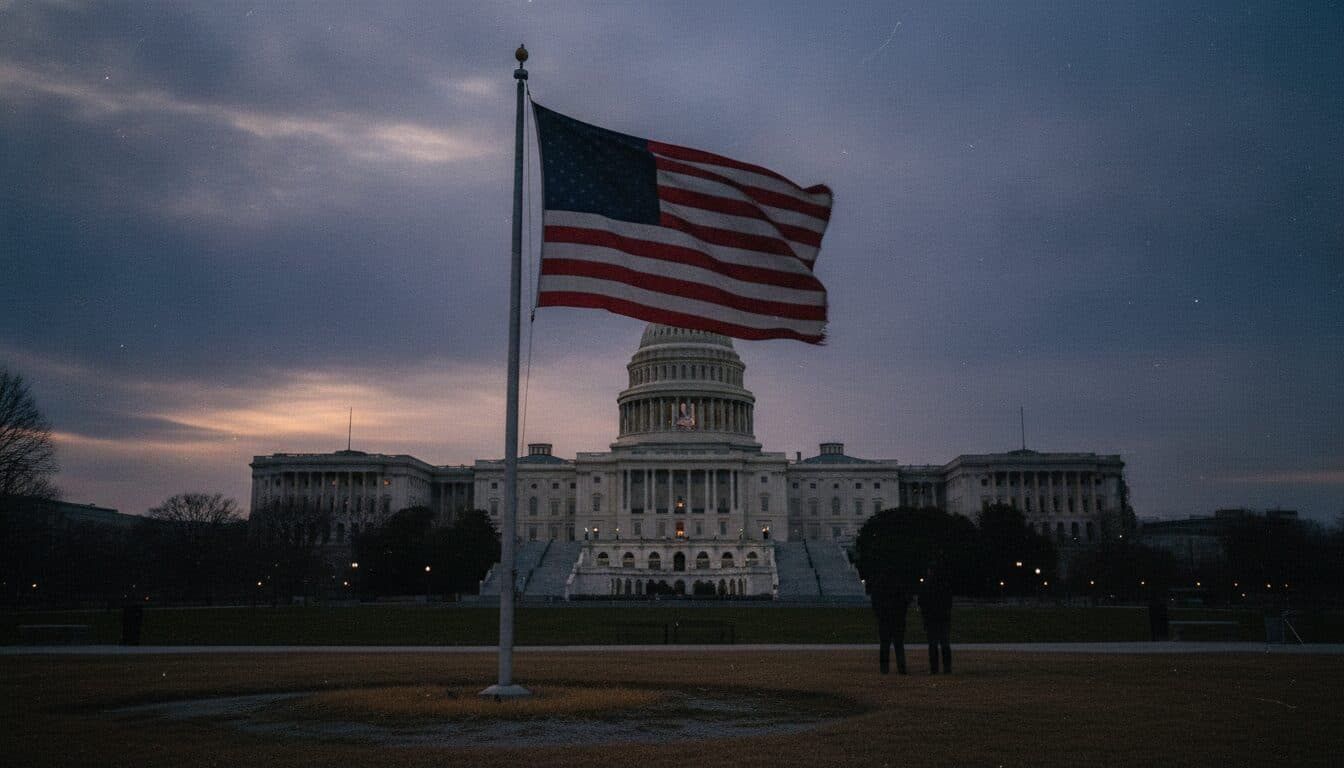
Washington D.C. awoke Sunday to the news of a profound political loss: U.S. Senator Lindsey Graham, a Republican from South Carolina and a towering figure in American foreign policy, passed away on Saturday, July 11, 2026, at the age of 71. His sudden death, following a brief illness, has sent immediate shockwaves through the nation’s capital and the Republican Party, with ramifications extending to the delicate balance of power in the Senate and the ongoing political landscape.
The office of Senator Graham confirmed his passing early Sunday, requesting privacy for his family and offering no immediate details regarding the cause. However, details emerging from police scanner audio, as cited by The Washington Post, paint a clearer picture of the tragic sequence of events. Emergency medical services reportedly received a call around 8:30 p.m. on Saturday for a person experiencing chest pains at Graham’s Capitol Hill home. Within approximately 25 minutes, emergency personnel reported active CPR and cardiac arrest. Photographs from a neighbor reportedly showed an older man being transported by stretcher from Graham’s residence into an ambulance around 9:30 p.m., subsequently taken to George Washington University Hospital.
The news is particularly jarring given that Senator Graham had just celebrated his 71st birthday on Thursday, July 9, 2026, and had no known prior health concerns. In fact, just days before his death, he had been engaged in high-profile international diplomacy, visiting Ukraine where he met with President Volodymyr Zelenskyy. Zelenskyy publicly expressed his gratitude to Graham on social media on Friday, acknowledging his recognition of Ukrainian warriors. Graham was also scheduled to appear on NBC’s “Meet the Press” on Sunday, underscoring his continued active role in national discourse.
The Impact of Senator Lindsey Graham’s Passing
The death of Senator Lindsey Graham immediately narrows the Republican majority in the U.S. Senate, a chamber often operating on razor-thin margins. South Carolina Governor Henry McMaster is now tasked with appointing a temporary replacement to serve until January, a decision that will be closely scrutinized for its potential political implications. For investors and political strategists, the shift in Senate composition, however temporary, could influence legislative priorities, committee assignments, and the trajectory of key bills, particularly those related to defense and foreign policy – areas where Graham was a formidable voice.
Graham’s influence extended far beyond his vote. As a former Air Force lawyer, he was renowned for his hawkish foreign policy views, advocating for a robust national defense, assertive interventionist policies, particularly concerning Iran and Russia, and a strong U.S. presence on the global stage. His absence leaves a significant void in these critical policy debates, particularly as geopolitical tensions remain high. He also chaired the powerful Senate Budget Committee, a role that positioned him at the heart of fiscal policy discussions in Washington.
His long and impactful career in public service began in the South Carolina House of Representatives from 1993 to 1995, followed by a tenure in the U.S. House of Representatives from 1995 to 2003. He was first elected to the U.S. Senate in 2002, representing South Carolina, and was actively campaigning for his fifth term at the time of his passing. This extensive experience made him one of the most knowledgeable and influential voices in the Republican caucus.
Perhaps one of the most compelling aspects of Graham’s political journey was his evolving relationship with former President Donald Trump. During the 2016 presidential campaign, Graham was one of Trump’s fiercest critics, famously calling him a “jackass,” a “race-baiting bigot,” and “the most flawed nominee in the history of the Republican party.” Yet, after Trump’s election, Graham transformed into one of his closest confidants and a staunch ally, frequently advising the former president on foreign policy and often joining him for rounds of golf.
“Lindsey Graham was one of the greatest people and Senators I have ever known. A true American Patriot.”
Trump paid tribute to Graham on Truth Social, describing him as “one of the greatest people and Senators I have ever known” and a “true American Patriot.” This sentiment underscores the profound personal and political bond that developed between the two, a relationship that often confounded political observers and cemented Graham’s position within the Trump wing of the Republican Party. His ability to bridge different factions of the party, despite his initial criticisms, was a testament to his political acumen and adaptability.
What’s Next for South Carolina and the Senate
The immediate focus turns to South Carolina, where Governor McMaster’s appointment of a successor will be a critical political maneuver. This temporary appointee will serve until January, when a special election will likely be held to fill the remainder of Graham’s term. The race for this seat will undoubtedly attract significant national attention and resources, offering an early barometer of the political climate ahead of the next federal election cycle. For investors, this creates a degree of uncertainty in a state with significant military installations and a growing manufacturing sector, though the economic impact is expected to be minimal compared to the political ripple effects.
Beyond the immediate succession, the Republican Party will grapple with the loss of a seasoned legislator and a powerful voice on national security. Graham’s pragmatism, even in his staunch conservatism, often allowed him to work across the aisle on certain issues, particularly those related to defense. His absence could lead to a more polarized debate on foreign policy within the Senate, potentially impacting the ease with which future defense budgets or international agreements are passed. Related trending articles will undoubtedly explore the long-term implications for the Republican Party’s foreign policy platform.
The sudden death of Senator Lindsey Graham at 71 after a sudden illness serves as a stark reminder of the fragility of life and the unpredictable nature of political events. His passing not only signifies the end of a long and influential career but also initiates a period of political adjustment and strategic recalibration in Washington and South Carolina. For readers and investors alike, the key takeaway is the immediate shift in the Senate’s power dynamics and the vacuum left in critical policy debates, particularly those concerning national security and foreign relations, which will undoubtedly influence the legislative agenda in the coming months.