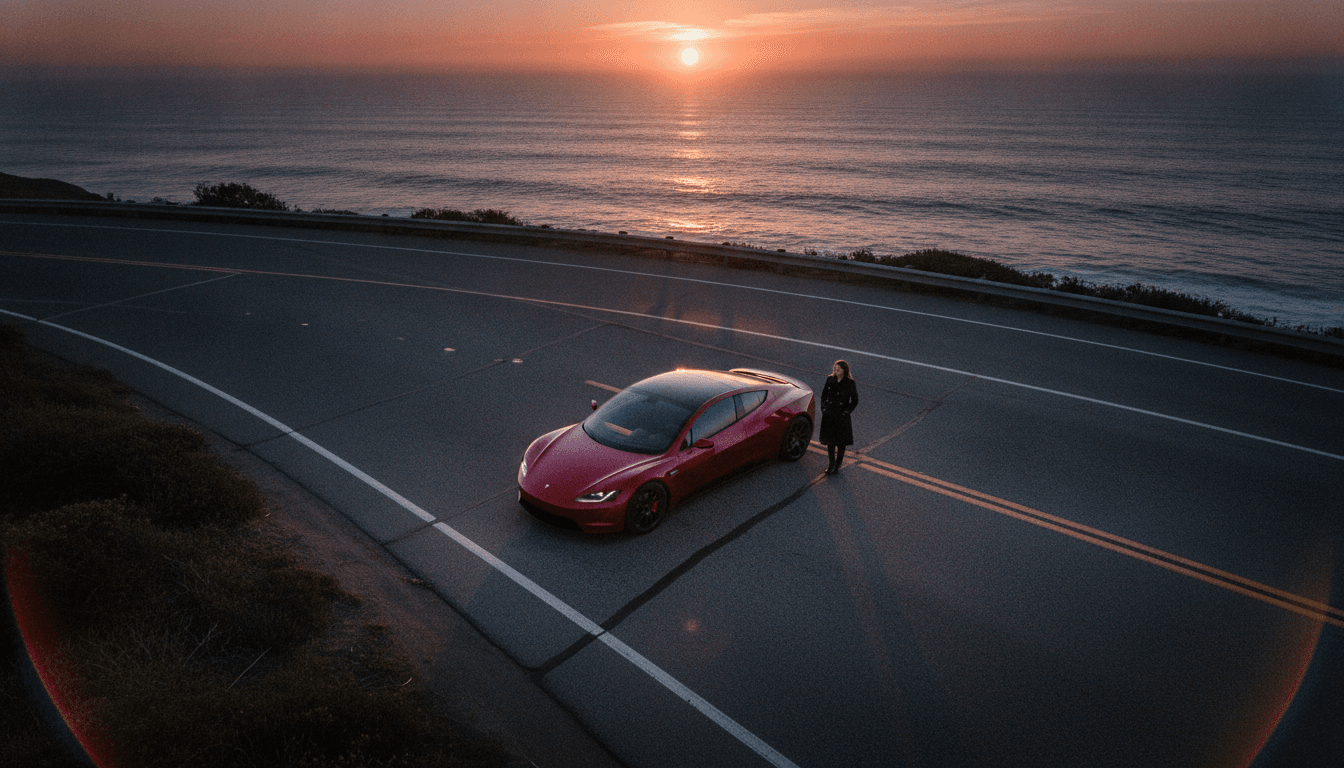
Tesla’s Original Roadster continues to be highlighted as the vehicle that ignited the electric revolution, a testament to its foundational role in the modern automotive landscape. As of Sunday, June 14, 2026, industry observers are revisiting the groundbreaking specifications and market impact of this pioneering EV, underscoring its historical significance in shaping the current trajectory of electric vehicles.
The Roadster, first unveiled by Tesla, was more than just a car; it was a proof of concept that electric vehicles could be desirable, high-performance machines, challenging the long-held skepticism of the internal combustion engine’s dominance. Its introduction laid the groundwork for Tesla’s subsequent models and, by extension, catalyzed a broader industry shift towards electrification. The ‘Not a Tesla App’ article on June 14, 2026, specifically delves into the original Roadster’s price, detailed specifications, and impressive range, reminding us of the audacious vision that drove its creation.
Impact Analysis: Tesla’s Original Roadster’s Legacy
The impact of Tesla’s Original Roadster reverberates through the entire automotive and EV landscape. Before its arrival, electric cars were largely perceived as golf carts or niche, low-performance vehicles. The Roadster shattered this stereotype, demonstrating that EVs could offer thrilling acceleration, sleek design, and a substantial range, appealing to a mainstream, performance-oriented audience. This paradigm shift forced established automakers to take electric propulsion seriously, initiating the massive investments we see today in EV research, development, and production.
Its success proved that there was a viable market for premium electric vehicles, paving the way for the Model S, X, 3, and Y, and inspiring countless startups and legacy brands to accelerate their EV programs. The direct consequence is a competitive EV market brimming with innovation, with every major manufacturer now committing billions to electric fleets. The discussion around Tesla’s Original Roadster serves as a crucial reminder of this pivotal moment, highlighting how one vehicle fundamentally altered the industry’s direction. Read more about the evolving EV market here.
“The Roadster wasn’t just a car; it was a declaration that electric vehicles could outperform their gasoline counterparts, setting an entirely new benchmark for what was possible.”
The vehicle’s initial price point, while premium, established the viability of high-margin electric vehicles, attracting significant investor confidence in the nascent EV sector. Its range, considered impressive at the time, also addressed one of the primary concerns of early EV adopters: range anxiety. By pushing the boundaries of battery technology and performance, Tesla created a halo effect that benefited the entire industry, proving that electric mobility was not just environmentally friendly but also commercially viable and technologically advanced.
Context & Background: The Dawn of a New Era
The automotive industry in the early 2000s was firmly rooted in internal combustion technology. Hybrid vehicles were beginning to gain traction, but fully electric vehicles were largely experimental or limited in scope. Against this backdrop, Tesla, a then-unknown startup, launched the Roadster, a bold move that defied conventional wisdom. Its development involved leveraging Lotus Elise chassis technology, combining it with cutting-edge battery and electric powertrain innovations.
This period was characterized by skepticism from traditional automotive giants who often dismissed EVs as impractical or uneconomical. However, the Roadster’s performance metrics and market reception demonstrated a clear demand for innovative, sustainable transportation solutions. It effectively bridged the gap between niche electric experiments and mass-market appeal, laying the groundwork for the infrastructure and technological advancements that define today’s EV ecosystem. Tesla’s Original Roadster was a significant disruptor, forcing a reevaluation of future mobility.
What’s Next: The Enduring Legacy of the Roadster
Looking ahead, the legacy of Tesla’s Original Roadster will continue to influence automotive innovation. As the industry races towards an all-electric future, the principles of performance, range, and design excellence that defined the Roadster remain central to new EV development. Future implications include ongoing advancements in battery density, charging infrastructure, and autonomous driving capabilities, all building upon the foundation laid by this early pioneer.
The continuous reflection on the Roadster’s initial specifications and market reception, as seen in the June 14, 2026 article, serves as a historical touchstone. It reminds current manufacturers and consumers of the rapid evolution within the EV space and the potential for even greater breakthroughs. Upcoming decisions by automakers will undoubtedly be informed by the lessons learned from the Roadster’s success, particularly regarding market positioning, technological integration, and brand perception. Explore more on the future of automotive technology.
Predictions suggest that the next wave of EVs will further democratize electric mobility, making advanced features and impressive performance accessible across more price points, mirroring the trajectory set by Tesla’s initial high-end offering eventually leading to more affordable models.
Key Takeaway: A Catalyst for Change
The significance of Tesla’s Original Roadster cannot be overstated. It was not merely an electric car; it was a catalyst that fundamentally reshaped the automotive industry, proving the viability and desirability of electric vehicles. Its introduction initiated a chain reaction that led to widespread EV adoption, technological innovation, and a global shift towards sustainable transportation. The ongoing discussion about its price, specs, and range, even years later, underscores its enduring status as the vehicle that truly sparked the electric revolution, a pivotal moment in automotive history.