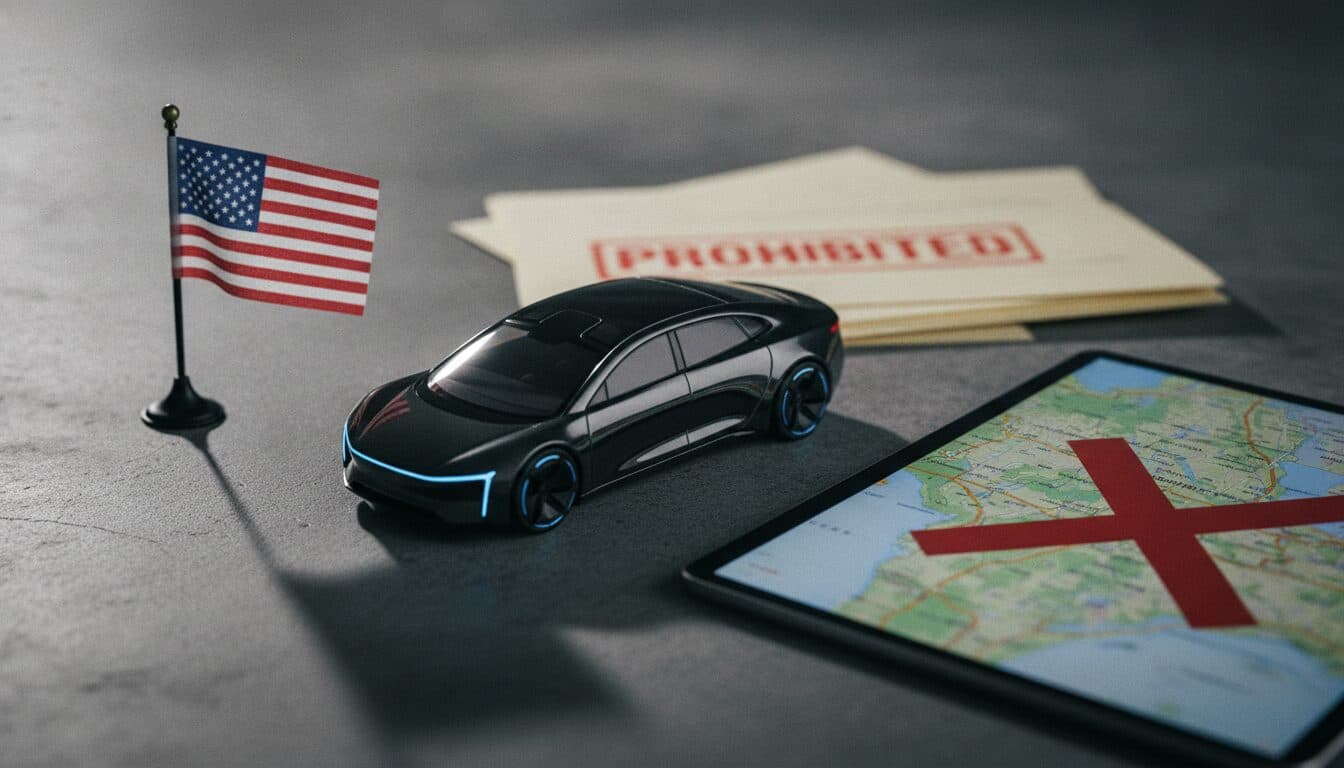
The USA’s ban on a Chinese self-driving electric vehicle marks a significant escalation in the technological and economic rivalry between the two global powers, directly impacting the future of autonomous mobility. This prohibition, highlighted by Mashable on Wednesday, June 17, 2026, centers on a specific, unnamed Chinese self-driving EV, preventing its operation within American borders due to undisclosed, but presumed, national security or data privacy concerns.
The Story: Chinese Self-Driving EV Ban
While the specific manufacturer and model of the banned Chinese self-driving EV remain undisclosed in the initial report, the core event is clear: the United States government has formally prohibited a particular self-driving electric vehicle from China from operating within its territory. This move comes at a time of increasing scrutiny over foreign technology, particularly from China, in critical infrastructure and advanced sectors. The ban effectively shutters any potential market entry or operational presence for this specific vehicle, signaling a hardening stance against perceived technological threats. The implications extend beyond just this single vehicle, casting a shadow over future collaborations and market access for other Chinese automotive innovations in the U.S.
Impact Analysis
This prohibition on a Chinese self-driving electric vehicle has profound implications for the broader automotive and EV landscape. Firstly, it underscores the growing politicization of technology, where national security concerns are increasingly dictating market access. For Chinese automakers, it represents a significant hurdle in their global expansion ambitions, particularly in the lucrative U.S. market. Companies that have invested heavily in autonomous driving technology will now face heightened scrutiny and potential barriers, forcing a re-evaluation of their international strategies. Conversely, American and European EV manufacturers might see this as an opportunity to solidify their domestic market share without direct competition from certain advanced Chinese offerings. The ban could also accelerate the development of distinct, geographically siloed technological ecosystems, potentially leading to divergent standards and slower global adoption of universal autonomous driving protocols. This incident could also spur further protectionist measures in other critical technology sectors, setting a precedent for future trade and regulatory actions.
“The USA’s decision to ban a Chinese self-driving EV is not just about one vehicle; it’s a clear signal of deepening technological decoupling, forcing a re-evaluation of global supply chains and market strategies for every major automotive player.”
Furthermore, the ban raises questions about data sovereignty and cybersecurity in an era where vehicles are essentially rolling data centers. If the prohibition is indeed rooted in concerns over data collection or potential remote control capabilities, it could lead to stricter regulations globally regarding data handling in autonomous vehicles, impacting design, manufacturing, and software development across the industry. For more insights on the evolving regulatory landscape, read our related automotive & ev articles.
Context & Background
The decision to ban a Chinese self-driving EV is not an isolated incident but rather the latest development in a prolonged period of escalating tensions between the U.S. and China over technology, trade, and national security. Previous actions have included restrictions on telecommunications equipment, semiconductor technology, and various software applications originating from China. The U.S. government has consistently expressed concerns about potential espionage, intellectual property theft, and the influence of the Chinese state over its domestic companies. In the automotive sector, China has rapidly emerged as a global leader in EV production and battery technology, and its advancements in autonomous driving have been closely watched. This ban extends the existing framework of restrictions into the burgeoning field of autonomous vehicles, highlighting the strategic importance placed on this technology. The timing, June 17, 2026, indicates a continued, rather than sudden, policy trajectory.
What’s Next
The immediate future will likely see further clarification, or perhaps continued ambiguity, regarding the specific reasons behind the ban on this Chinese self-driving EV. Industry stakeholders will be watching closely for any official statements from the U.S. government that might shed light on the exact concerns – whether they pertain to hardware, software, data transmission, or broader national security considerations. This incident is expected to prompt other nations to review their own policies regarding foreign autonomous vehicle technology. We may see increased due diligence and potentially similar restrictions implemented by U.S. allies. For Chinese automakers, the focus will shift towards strengthening their presence in non-U.S. markets and perhaps developing ‘U.S.-proof’ versions of their technology that can meet stringent American regulatory and security demands, should a pathway for future entry ever materialize. The broader implication is a further fragmentation of the global automotive market into distinct geopolitical blocs, each with its own preferred technologies and regulatory frameworks. This could slow down the pace of global autonomous vehicle development and deployment as companies navigate a complex web of national interests and technical specifications. The long-term impact on global standardization efforts for autonomous driving will be significant.
Key Takeaway: Why USA Bans Chinese Self-Driving EV Matters
The USA’s ban on a Chinese self-driving electric vehicle is a watershed moment, underscoring the irreversible intertwining of geopolitics and advanced technology. It signals a new era where national security and data sovereignty concerns will increasingly dictate market access and technological collaboration in the automotive industry. This action is likely to reshape global supply chains, accelerate the development of distinct technological ecosystems, and force automakers worldwide to reassess their international strategies, ultimately impacting innovation, competition, and the pace of autonomous vehicle deployment on a global scale. The repercussions will be felt across boardrooms and policy chambers for years to come, solidifying a more divided and complex landscape for the future of mobility. The event serves as a stark reminder that the race for technological supremacy is now inextricably linked to the geopolitical ambitions of nations.