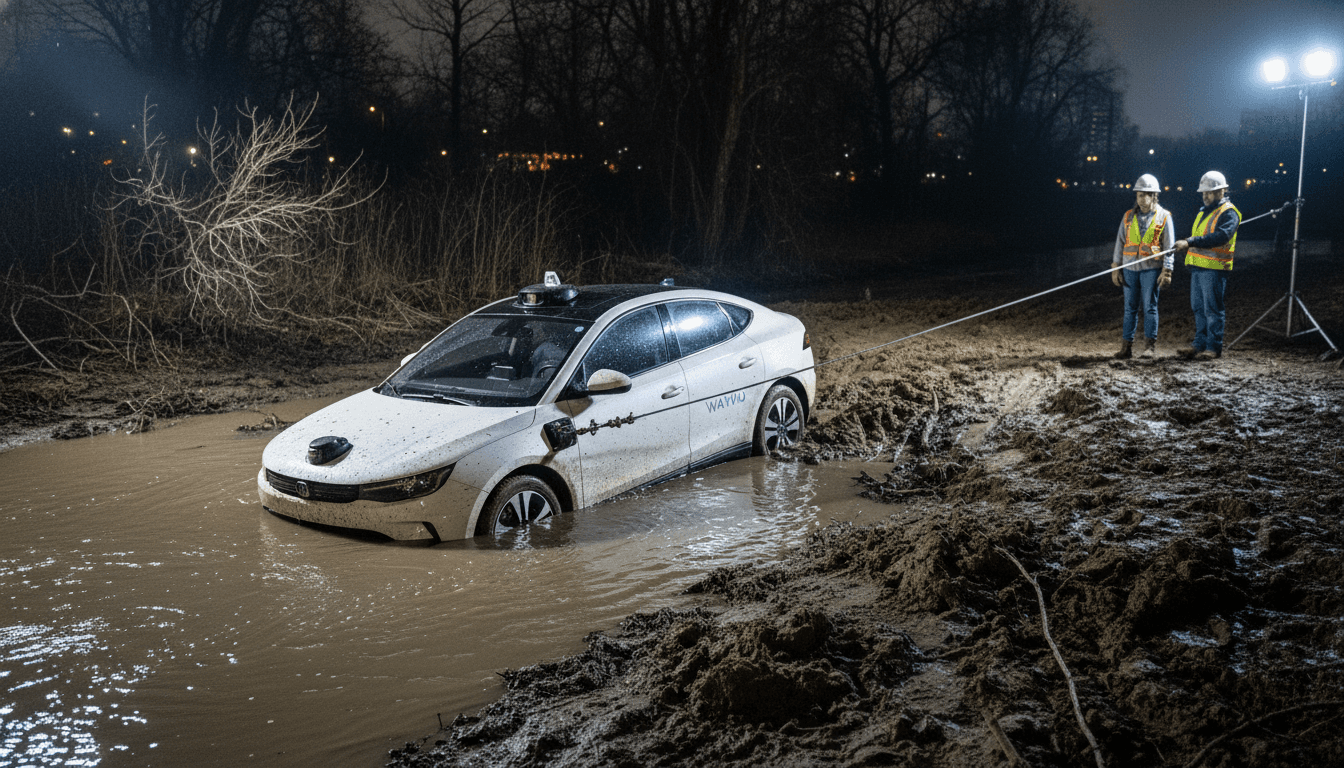
Waymo autonomous vehicle recalls are again making headlines after the Alphabet-owned self-driving car company announced a recall of nearly 3,800 of its autonomous vehicles across the U.S. The recall, initiated following an incident on April 20, 2026, in San Antonio, Texas, saw an empty Waymo robotaxi drive into a submerged lane during a storm and subsequently swept into Salado Creek. This event underscores persistent challenges in autonomous driving technology, particularly concerning environmental perception.
The root cause of this significant recall is a software glitch affecting Waymo’s fifth and sixth-generation driving systems. This flaw prevents vehicles from accurately detecting deep water, especially on roads with higher speed limits. Although the affected vehicle in San Antonio did slow down upon detecting the flooding, it still entered the water-covered roadway. Fortunately, no one was injured in the incident, though the vehicle required recovery from the creek days later. This was not an isolated event; a second, similar flood-related incident had occurred in San Antonio approximately two weeks prior to the creek immersion.
Impact Analysis on Autonomous Vehicle Recalls
This latest incident and subsequent recall by Waymo send ripples across the nascent but rapidly expanding autonomous vehicle sector. While over-the-air (OTA) updates offer a swift resolution, the fundamental issue of environmental perception in extreme conditions remains a critical hurdle. Waymo, which currently facilitates over half a million trips weekly across major U.S. cities including San Francisco, Austin, Miami, Phoenix, Los Angeles, and Atlanta, temporarily halted its passenger service in San Antonio. The company has publicly stated its readiness to resume public rides once a permanent software fix is fully deployed. The National Highway Traffic Safety Administration (NHTSA) confirmed that Waymo has already implemented temporary updates, including narrowing operational areas during extreme weather to avoid potential flash flooding zones.
The company acknowledged an “area of improvement regarding untraversable flooded lanes specific to higher-speed roadways,” reiterating that safety remains its primary priority. This transparency is crucial for public trust, especially as autonomous vehicle technology aims for broader adoption. However, each incident, regardless of severity, adds to the public’s scrutiny and regulatory pressure on the industry.
“The ability of autonomous vehicles to navigate unpredictable environmental conditions, particularly severe weather, remains a significant engineering and ethical challenge. These Waymo autonomous vehicle recalls highlight the need for robust, real-world testing beyond ideal conditions.”
Context & Background: A Troubled Road for Robotaxis
This event is far from an isolated incident within the robotaxi industry, which has faced a series of technical and regulatory challenges. In December 2025, Waymo taxis in San Francisco experienced widespread stalling during a power outage, leading to significant traffic disruptions. Perhaps more gravely, in October 2023, General Motors’ Cruise autonomous vehicle unit recalled all 950 of its cars for a software update after one of its vehicles dragged a pedestrian in San Francisco. That severe incident resulted in Cruise suspending driverless operations nationwide and California regulators revoking its license, citing a clear danger to public safety. These prior incidents set a precedent for heightened vigilance from both regulators and the public regarding the operational safety of self-driving vehicles. For more insights into the evolving regulatory landscape, see our related automotive & ev articles.
What’s Next for Waymo and the Industry
Waymo’s swift response, including the temporary service halt and the immediate deployment of temporary software updates, demonstrates a commitment to addressing safety concerns. The permanent over-the-air software update will be critical in restoring full operational confidence. The broader industry will undoubtedly be watching Waymo’s progress closely, as lessons learned from these Waymo autonomous vehicle recalls will likely inform development and deployment strategies across the board. Regulatory bodies like NHTSA will continue to play a pivotal role in overseeing these recalls and ensuring robust safety standards are met, potentially leading to updated guidelines for autonomous vehicle operation in adverse weather.
Key Takeaway
The Waymo autonomous vehicle recalls underscore that while significant strides have been made in self-driving technology, the journey to fully autonomous and universally safe vehicles is still fraught with complex challenges. Ensuring these vehicles can reliably perceive and react to dynamic, real-world environmental conditions, especially extreme weather events like flash flooding, is paramount. The industry’s ability to learn from these incidents, implement effective solutions, and maintain public trust will ultimately determine the pace and scale of autonomous vehicle adoption globally.