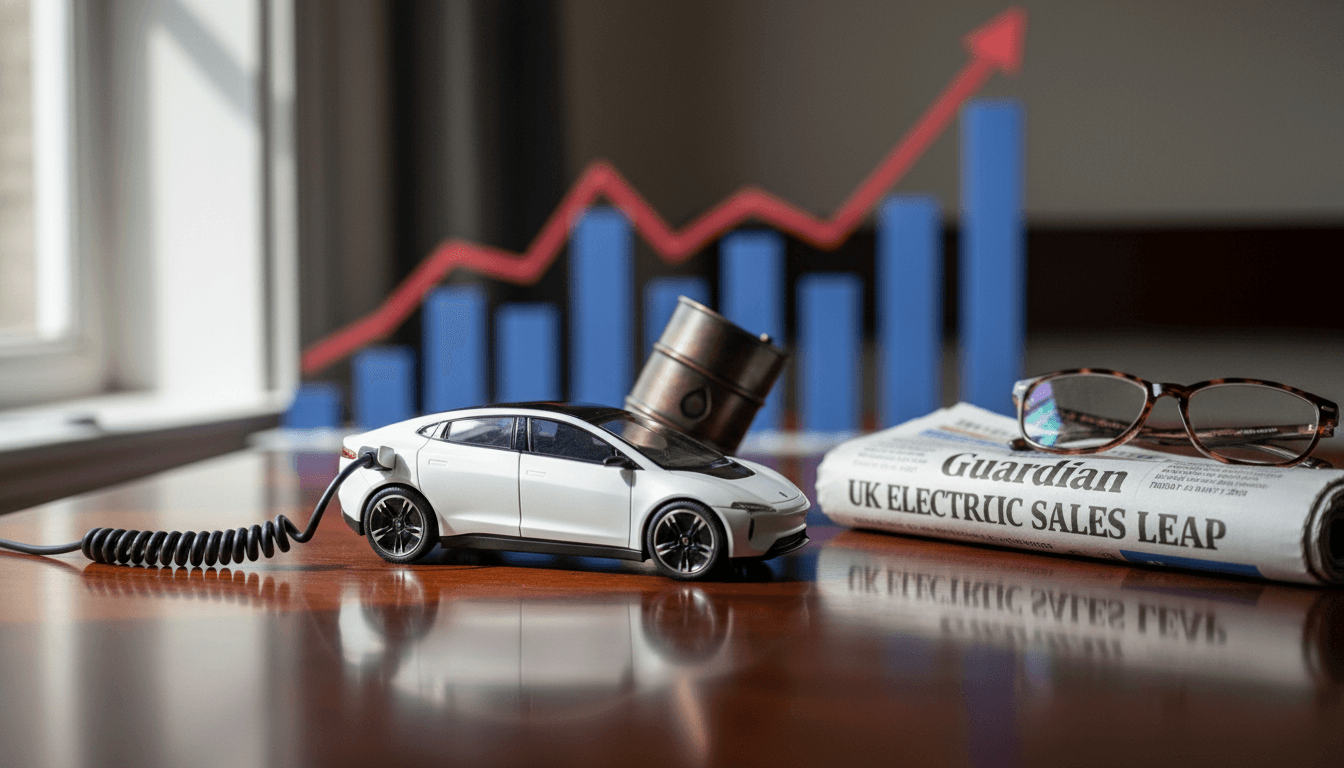
UK electric car sales leap, a recent surge in adoption across the nation, now faces a significant potential slowdown due to the escalating Iran war inflation and the resulting energy price rises. This stark warning, reported by The Guardian on Wednesday, May 6, 2026, highlights a critical juncture for the UK’s ambitious electrification targets, as external geopolitical events threaten to undermine domestic progress.
The Story: Geopolitical Tensions Threaten EV Momentum
The UK has been a global frontrunner in the transition to electric vehicles, with a notable acceleration in sales figures over the past year. This growth has been fueled by a combination of government incentives, expanding charging infrastructure, and increasing consumer awareness of environmental benefits. However, the ongoing conflict in Iran has triggered a ripple effect across global energy markets, leading to pronounced inflation and a sharp increase in energy costs. The Guardian’s report specifically links these macroeconomic pressures directly to a potential deceleration in the UK’s EV market, suggesting that the affordability advantage of electric cars could be eroded.
Industry analysts point to several factors at play. Rising energy prices directly impact the cost of manufacturing EVs, from raw materials like lithium and cobalt to the energy-intensive production processes. Furthermore, the elevated cost of electricity, while still generally more economical than petrol or diesel, could diminish the perceived savings for consumers contemplating an EV purchase. This confluence of factors creates a challenging environment for automakers and consumers alike, potentially stalling the momentum of the UK electric car sales leap.
Impact Analysis: Broader Automotive & EV Landscape
The potential slowdown in UK electric car sales has significant ramifications for the broader automotive and EV landscape. For manufacturers, the UK is a crucial market for testing and scaling EV production and sales strategies. A dip here could force a re-evaluation of production targets, investment in new models, and even the pace of factory conversions to electric-only lines. Supply chain disruptions, already a persistent challenge in the post-pandemic era, could be exacerbated by higher energy costs, leading to increased component prices and longer lead times.
For consumers, the economic squeeze could delay or deter the switch to electric. While environmental consciousness remains high, the immediate financial burden often takes precedence, especially during periods of high inflation. This could lead to a ‘wait and see’ approach, prolonging the lifespan of internal combustion engine (ICE) vehicles and complicating the UK’s net-zero targets. The situation also places pressure on charging infrastructure providers, as slower EV adoption could impact the economic viability of expanding public charging networks. Read more about global EV market trends here.
Context & Background: A Fragile Transition
The automotive industry’s transition to electric vehicles has always been a delicate balance of technological innovation, regulatory push, and economic viability. Previous events, such as the semiconductor shortage or fluctuating raw material prices, have demonstrated the fragility of this transformation. The current scenario, however, introduces a new, formidable external shock: a geopolitical conflict with direct implications for global energy prices. The UK government has set ambitious targets for phasing out petrol and diesel car sales, with the 2030 ban on new ICE vehicles looming. The current challenges threaten to derail the progress towards these targets, potentially requiring policymakers to revisit incentive structures or infrastructure investment plans to maintain momentum for the UK electric car sales leap.
“The interplay of geopolitical instability and domestic economic conditions presents an unprecedented challenge to the UK’s EV ambitions. Maintaining the pace of electrification will require agile policy responses and resilient supply chains.”
What’s Next: Navigating the Economic Headwinds
The coming months will be critical for assessing the full impact of the Iran war inflation and energy price rises on the UK’s EV market. Automakers will likely be monitoring consumer spending habits closely, potentially adjusting pricing strategies or introducing more affordable EV models to counter the economic headwinds. The government may face calls to increase or reintroduce EV purchase incentives, or to cap electricity prices for EV charging, to mitigate the financial burden on consumers. Decisions made in the near future regarding energy policy and economic support will undoubtedly shape the trajectory of EV adoption. The long-term commitment to electrification remains, but the path to achieving it has become significantly more challenging. Explore our analysis on EV battery technology advancements.
Key Takeaway: The Vulnerability of Green Transitions
This development underscores a crucial lesson: the transition to a green economy, while imperative, is deeply vulnerable to external shocks, particularly those affecting global energy markets. The UK electric car sales leap, once a source of national pride and a model for others, now serves as a stark reminder that even the most determined efforts towards sustainability can be hampered by unforeseen geopolitical and economic forces. The challenge for the UK and other nations committed to electrification will be to build greater resilience into their green transitions, insulating them from the volatility of global events while continuing to drive innovation and adoption.