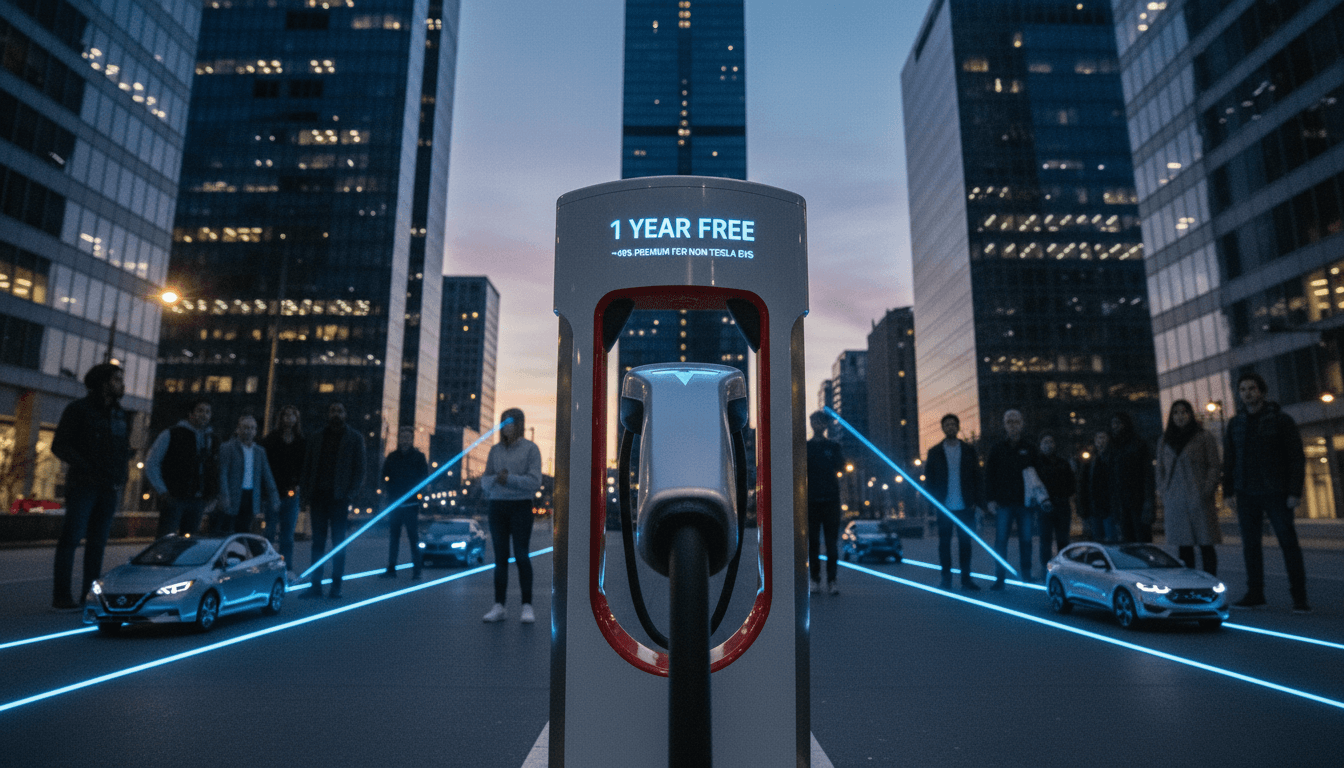
Tesla offers free Supercharging for one year, a significant move announced on Sunday, April 26, 2026, that also comes with the assertion of a roughly 40% premium for non-Tesla electric vehicles utilizing its charging network. This dual announcement from the EV giant signals a calculated strategy to incentivize its own ecosystem while potentially positioning its competitors at a financial disadvantage at the charging station.
The core of this development centers on Tesla’s latest initiative to bolster its market position and perhaps accelerate EV adoption, particularly within its own brand. The offer of a full year of complimentary Supercharging is a powerful incentive for new Tesla buyers, directly addressing one of the common pain points for EV ownership: range anxiety and charging costs. Simultaneously, the company’s claim of a ~40% premium for non-Tesla EVs accessing the Supercharger network, while not entirely new given previous pricing structures, solidifies a tiered approach to its infrastructure.
Impact Analysis
This strategic maneuver by Tesla offers free Supercharging and highlights a significant competitive angle in the rapidly evolving EV charging landscape. For consumers considering an EV purchase, the prospect of a year without charging costs could be a substantial differentiator, tilting the scales towards a Tesla vehicle. For existing non-Tesla EV owners, or those contemplating other brands, the alleged 40% premium could translate into considerably higher operational costs over time, potentially impacting their total cost of ownership calculations.
The broader automotive and EV landscape will undoubtedly feel the ripples of this announcement. Other charging network providers might face increased pressure to offer competitive incentives or adjust their pricing models. Furthermore, automakers relying on the Supercharger network as part of their charging solutions will need to assess the implications for their customers. This move could also accelerate the development of independent charging networks or prompt rival manufacturers to collaborate on their own comprehensive charging infrastructure.
Context & Background
Tesla has long been at the forefront of developing proprietary technology, and its Supercharger network stands as a testament to this strategy. Initially, the network was exclusively for Tesla vehicles, providing a distinct advantage in charging convenience and reliability. Over recent years, however, Tesla has gradually opened parts of its network to non-Tesla EVs, driven by regulatory pressures, market demands, and the potential for new revenue streams. This expansion has been a critical development for the wider EV industry, addressing a key barrier to mass adoption: the availability and interoperability of charging infrastructure.
The discussion around charging costs and network access has been a persistent theme in the EV sector. As more EVs hit the road, the demand for robust and affordable charging solutions intensifies. Tesla’s decision to offer free Supercharging for its own vehicles while maintaining a significant premium for others reflects a calculated effort to leverage its infrastructural advantage. This move also comes at a time when competition in the EV market is at an all-time high, with traditional automakers and new entrants vying for market share. For more insights into the evolving EV market dynamics, readers can explore our related automotive & EV articles.
“Tesla’s latest strategy is a clear signal: they are doubling down on their ecosystem while simultaneously monetizing their foundational infrastructure. This could be a game-changer for consumer choice and competitive dynamics within the charging sector.”
What’s Next
The immediate future will likely see other automakers and charging providers reacting to Tesla’s aggressive pricing strategy. We may observe similar promotional offers from competitors or a renewed focus on differentiating their own charging solutions. Regulators and industry bodies will also be closely monitoring the impact of such pricing disparities on market fairness and consumer access. The long-term implications could include a further fragmentation of charging networks based on brand loyalty or a push towards greater standardization and interoperability, potentially driven by legislative efforts.
Crucially, the actual utilization rates and consumer feedback regarding the ~40% premium for non-Tesla EVs will be vital metrics to watch. If the premium significantly deters non-Tesla owners, it could reinforce Tesla’s market dominance in charging. Conversely, if demand remains robust despite the higher cost, it underscores the critical need for reliable charging infrastructure, regardless of brand. The ongoing evolution of battery technology and charging speeds will also play a role, constantly reshaping the value proposition of such incentives.
Key Takeaway
Tesla’s offer of free Supercharging for a year, coupled with its claim of a substantial premium for non-Tesla EVs, underscores a pivotal moment in the electric vehicle industry’s maturation. This move highlights the strategic importance of charging infrastructure as a competitive battleground, directly influencing consumer choices, market dynamics, and the broader trajectory of EV adoption. As the industry continues to accelerate, the interplay between vehicle sales and charging network access will remain a critical determinant of success for all players involved.