Tesla expands India service and charging network, signaling a significant acceleration of its strategic footprint in the subcontinent. The announcement, made on Wednesday, April 22, 2026, by Entrepreneur India, confirms the electric vehicle giant’s commitment to bolstering its infrastructure to support anticipated growth and customer acquisition in one of the world’s most promising automotive markets.
The Strategic Push for Tesla India Expansion
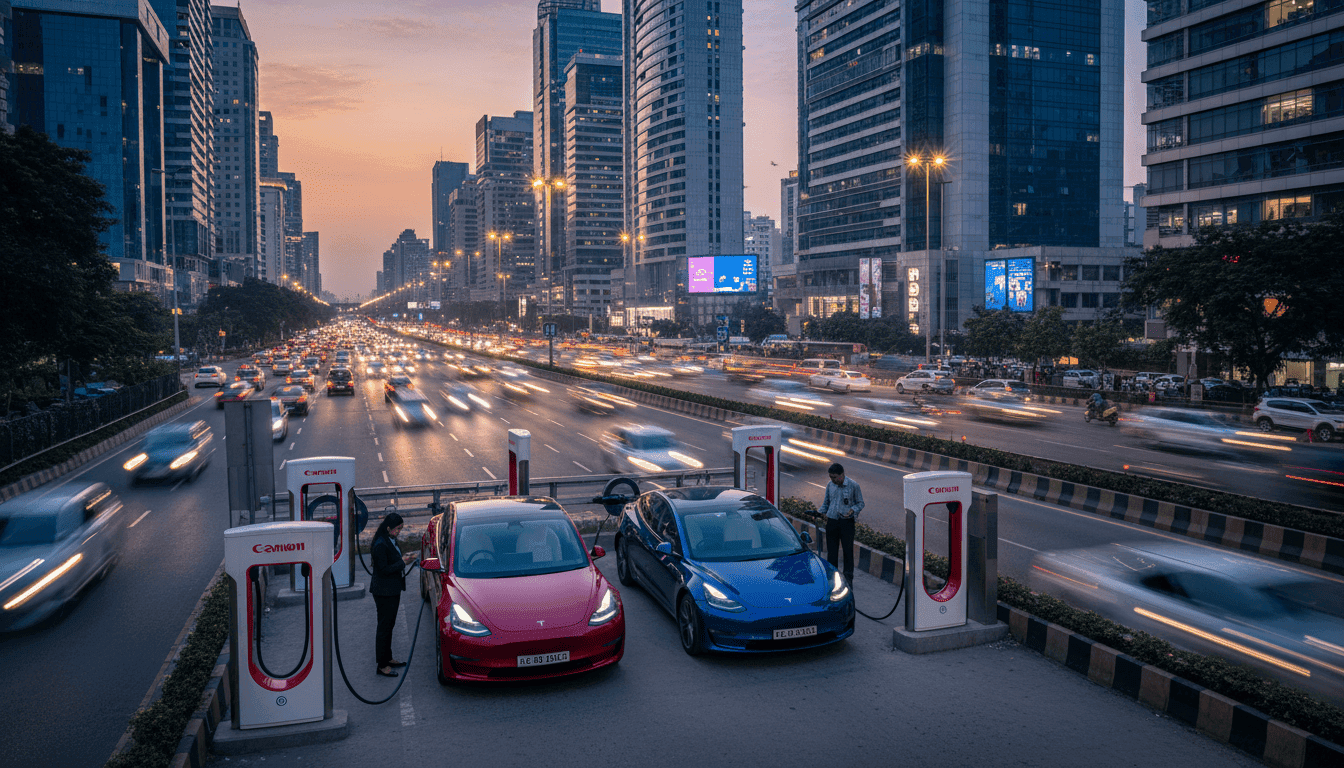
The core of this development centers on Tesla’s proactive measures to address a critical barrier to EV adoption: charging and service accessibility. By significantly scaling up its service centers and Supercharger network, Tesla aims to mitigate range anxiety and provide robust after-sales support, crucial factors for consumers considering a high-value EV purchase. While specific numbers for new service centers or charging stations were not disclosed in the initial report, the strategic intent is clear: to lay the groundwork for a broader market penetration across India.
This initiative follows a period of intense speculation and negotiations regarding Tesla’s entry and manufacturing plans in India. The current focus on infrastructure suggests a phased approach, prioritizing customer experience and operational readiness before potentially committing to larger-scale production facilities within the country. This move also aligns with global trends where EV manufacturers are increasingly investing in proprietary charging networks to differentiate their offerings and ensure seamless user experiences. For instance, companies like Rivian in North America have also begun building out their own charging infrastructure, recognizing its importance in the broader EV ecosystem. Read more about global EV infrastructure trends here.
Impact Analysis: Broadening the EV Horizon
The decision for Tesla to expand India service and charging network carries profound implications for the broader automotive and EV landscape in India. Firstly, it intensifies competition within the nascent but rapidly growing Indian EV market. Local players like Tata Motors and Mahindra & Mahindra, along with other international entrants, will face increased pressure to match Tesla’s infrastructure commitment and technological prowess. This competitive environment is likely to spur further investment in charging solutions and customer service across the industry, ultimately benefiting the Indian consumer.
“Tesla’s infrastructure push in India is not just about selling cars; it’s about building an ecosystem that validates the long-term viability of premium EVs in the market, setting a new benchmark for competitors.”
Secondly, it could accelerate the adoption of electric vehicles by instilling greater confidence among potential buyers. A robust charging network is often cited as the primary concern for consumers hesitant to switch to EVs. Tesla’s brand recognition, coupled with a dependable service and charging backbone, could significantly shift public perception and drive demand for electric mobility across various segments. This move also implicitly supports the Indian government’s ambitious targets for EV penetration, providing a much-needed boost to the national EV ecosystem.
Context & Background: A Long Road to India
Tesla’s journey into India has been characterized by cautious steps and strategic deliberations. For years, discussions revolved around import duties, local manufacturing requirements, and the readiness of the Indian market for premium EVs. The company had previously explored setting up showrooms and even a research and development center, but large-scale commitments were often contingent on favorable policy environments. This latest announcement marks a tangible commitment, moving beyond exploratory talks to concrete investment in critical operational infrastructure.
The timing is also significant. India is witnessing a surge in EV sales, albeit from a low base, driven by rising fuel prices, environmental concerns, and government incentives. The charging infrastructure, however, has remained a critical bottleneck. Tesla’s direct investment in this area demonstrates a strategic understanding of the market’s current needs and a long-term vision for leadership in India’s automotive future. This also comes at a time when other global automakers are reassessing their strategies for emerging markets, with many recognizing the unique challenges and opportunities presented by India’s diverse consumer base. For more insights on automotive industry shifts in emerging markets, see our latest reports on global automotive trends.
What’s Next: The Path Ahead for Tesla India Expansion
The immediate future will likely see Tesla rapidly deploying its new service centers and charging stations across key metropolitan areas and major highways. The success of this initial expansion will be crucial in determining the pace of further investments, including potential local assembly or manufacturing plants. Industry observers will be keenly watching for details on the scale of this expansion – how many new points, their geographical distribution, and the speed of their rollout. Future decisions will undoubtedly hinge on market response, sales figures, and the evolving regulatory landscape.
Moreover, this infrastructure build-out could open doors for partnerships with local energy providers or real estate developers for charging station locations, further integrating Tesla into the Indian business ecosystem. The long-term implication is a potential paradigm shift in how premium EVs are perceived and consumed in India, with Tesla leading the charge in creating a comprehensive and reliable electric mobility experience.
Key Takeaway: Paving the Way for EV Dominance
The strategic decision for Tesla to expand India service and charging network is more than just an operational update; it’s a foundational move that could redefine the trajectory of India’s electric vehicle market. By addressing the critical infrastructure gap, Tesla is not only preparing for its own growth but also setting a precedent that will likely compel other automakers to accelerate their EV infrastructure investments. This commitment paves the way for a more robust and consumer-friendly EV ecosystem, ultimately accelerating India’s transition towards sustainable transportation and solidifying Tesla’s position as a serious contender in the world’s third-largest automotive market.