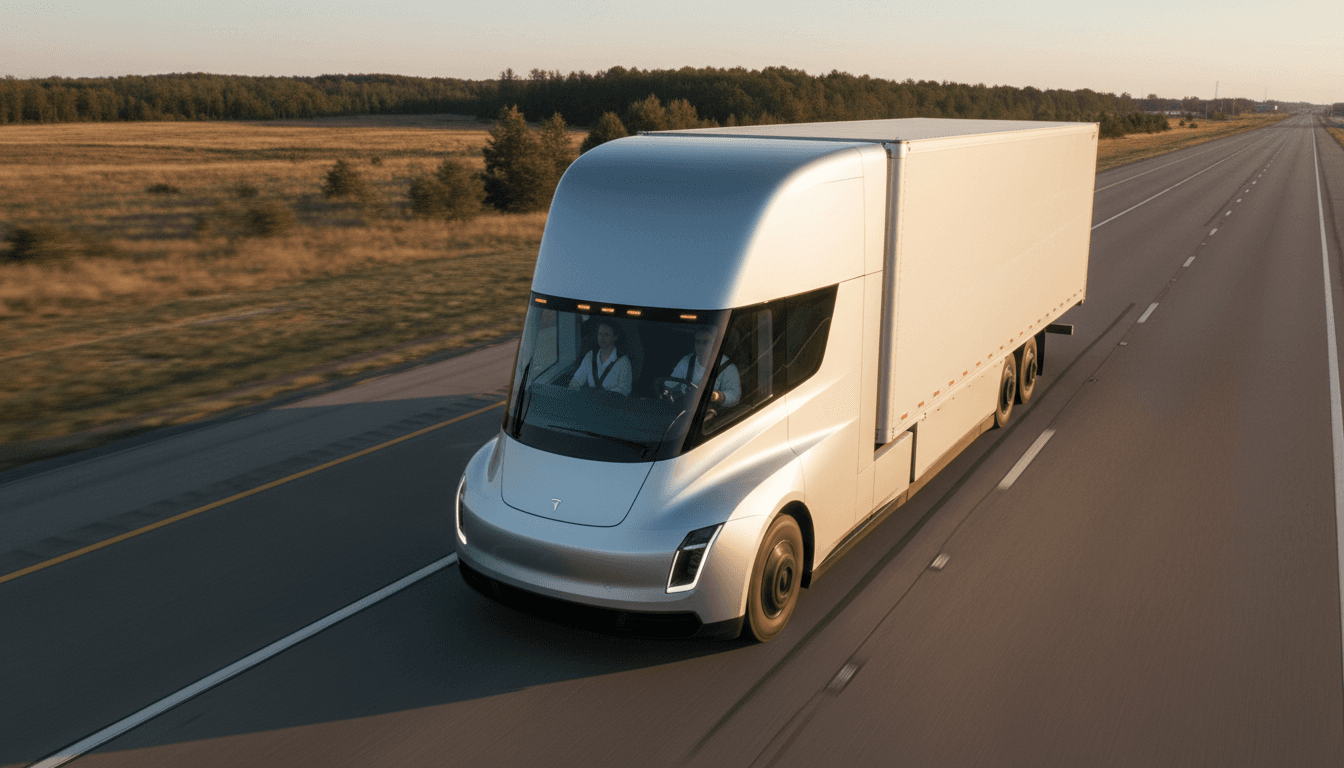
Tesla begins high-volume Semi production, marking a significant milestone for the electric truck manufacturer and the broader commercial transportation sector. The announcement, made on Friday, May 1, 2026, by Pulse 2.0, confirms that the long-anticipated electric heavy-duty vehicle is now moving beyond initial pilot runs into full-scale manufacturing. This development is poised to accelerate the transition to sustainable logistics, offering a tangible alternative to traditional diesel-powered trucks that have dominated freight transport for decades.
The Story: Tesla’s Semi Enters Full Production
The core of this story revolves around Tesla’s successful transition to high-volume production of its Semi electric truck. After years of development, prototypes, and initial deliveries, the company has officially scaled up its manufacturing capabilities. While specific production numbers or facility locations for this high-volume phase were not detailed in the source, the confirmation from Pulse 2.0 on May 1, 2026, signifies a critical inflection point. This move suggests that Tesla has overcome the initial hurdles of new vehicle manufacturing, including supply chain optimization, assembly line automation, and quality control at scale. The Semi, first unveiled in 2017, promises a range of up to 500 miles on a single charge, impressive torque, and advanced driver-assistance features, all aimed at reducing operating costs and emissions for fleet operators.
Impact Analysis: Reshaping Commercial Logistics
The commencement of high-volume Semi production carries profound implications for the automotive and EV landscape, particularly within the commercial logistics segment. For years, the heavy-duty truck market has been considered one of the most challenging to electrify due to demands for range, payload capacity, and rapid charging infrastructure. Tesla’s ability to scale production validates the viability of long-haul electric trucking and could spur other traditional manufacturers and EV startups to accelerate their own electric truck programs. This increased competition will likely drive innovation in battery technology, charging solutions, and vehicle design, ultimately benefiting fleet owners and the environment. Related automotive & ev articles have often highlighted the slow pace of electrification in this sector, making this announcement a potential catalyst for change.
“The shift to high-volume electric truck production is not merely about manufacturing; it’s about fundamentally altering the economic and environmental calculus for global supply chains.”
Furthermore, the widespread adoption of electric trucks like the Semi could significantly reduce greenhouse gas emissions from the transportation sector, a major contributor to climate change. Companies committed to ESG (Environmental, Social, and Governance) principles will now have a more accessible option to decarbonize their freight operations, potentially leading to a ripple effect across various industries dependent on logistics. The cost savings associated with lower fuel prices (electricity vs. diesel) and reduced maintenance requirements for electric powertrains will also make a compelling economic case for fleet electrification, especially as battery costs continue to decline.
Context & Background: A Long Road to Production
The journey to high-volume Semi production has been extensive for Tesla. Unveiled to much fanfare in November 2017, the Semi initially generated immense excitement, with major companies like PepsiCo placing significant pre-orders. However, production faced multiple delays, attributed to battery cell constraints, global supply chain disruptions, and the complexities inherent in bringing a revolutionary heavy-duty vehicle to market. Early limited deliveries began in late 2022, primarily to PepsiCo, providing valuable real-world data and allowing Tesla to refine its manufacturing processes. This latest announcement signifies the culmination of years of iterative development, testing, and strategic investment in production capabilities, demonstrating Tesla’s persistent commitment to its ambitious electrification goals across all vehicle segments. The industry has been closely watching for this moment, as it represents a tangible step towards fulfilling the promise of electric long-haul freight.
What’s Next: Infrastructure and Market Expansion
Looking ahead, the commencement of high-volume Semi production sets the stage for several critical developments. The immediate focus will likely be on fulfilling existing pre-orders and expanding market reach. This will necessitate a significant build-out of charging infrastructure specifically designed for heavy-duty electric trucks, requiring high-power Megachargers capable of rapidly replenishing large battery packs. Tesla’s Supercharger network has been instrumental for its passenger vehicles, and a similar dedicated network for the Semi will be crucial for its widespread adoption. Furthermore, we can anticipate increased scrutiny on the Semi’s real-world performance metrics, including range under various load conditions, charging times, and overall operational reliability. The success of these initial high-volume deployments will be vital in convincing skeptical fleet operators to make the substantial investment in electric trucks. Expect to see more partnerships between Tesla and logistics companies, as well as continued regulatory pressure and incentives from governments to accelerate fleet electrification. Current events in automotive & ev often highlight the interplay of technology and policy in driving market shifts.
Key Takeaway: A New Era for Freight
The news that Tesla begins high-volume Semi production is more than just a corporate announcement; it represents a pivotal moment in the electrification of commercial transportation. By scaling up manufacturing of its electric heavy-duty truck, Tesla is not only advancing its own ambitious product roadmap but also providing a powerful impetus for the entire logistics industry to transition towards a more sustainable future. This development will accelerate innovation, intensify competition, and ultimately contribute to a significant reduction in the carbon footprint of global freight operations, ushering in a new era for how goods are moved around the world.