Tesla FSD v14.3.2 tweaks disengagement UI, marking a significant development in the ongoing evolution of its Full Self-Driving software. This latest iteration, released on Saturday, May 2, 2026, suggests a concerted effort by the electric vehicle giant to refine the user experience and potentially address critical feedback regarding the interface for human intervention.
The Story: Refining the Human-Machine Interface
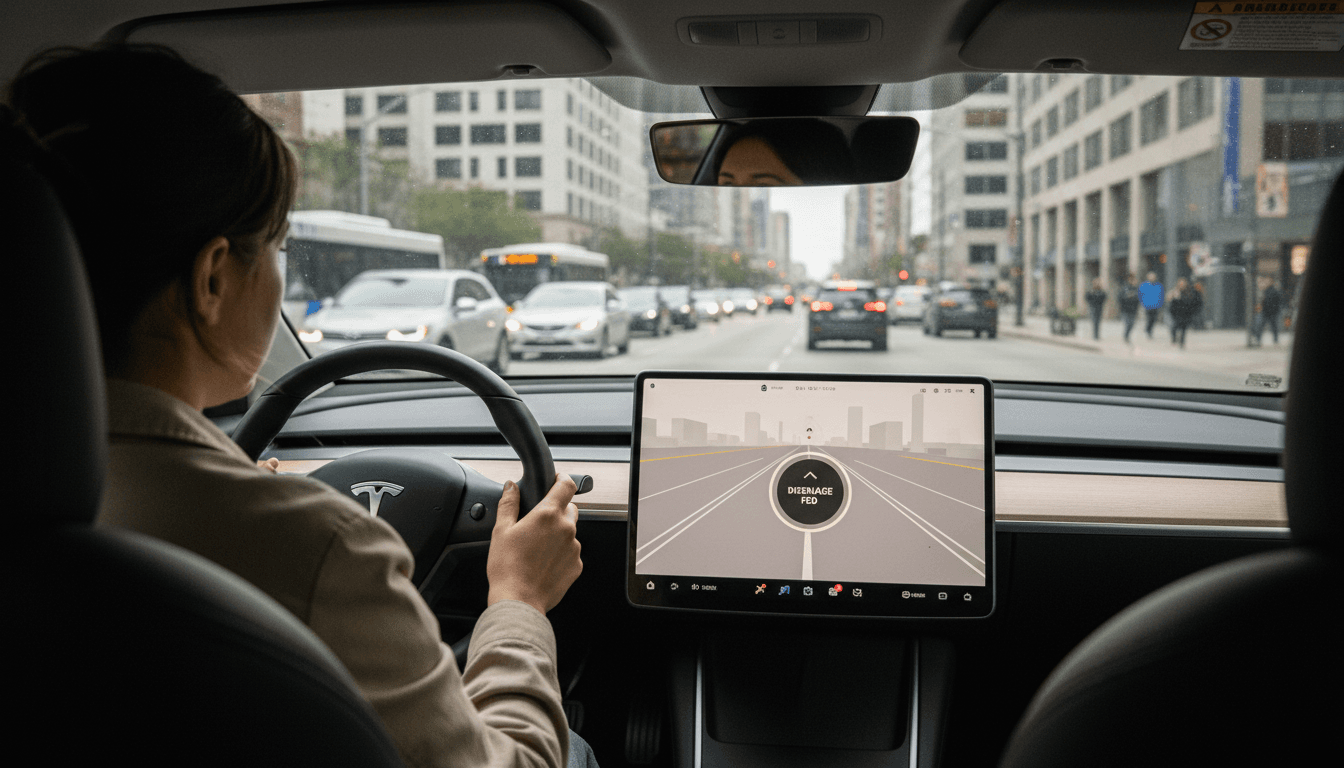
The core of this recent update lies in the refinement of the disengagement user interface within Tesla’s FSD v14.3.2. While specific details of the UI modifications were not elaborated upon, the term ‘tweaks’ implies a focused adjustment rather than a complete overhaul. In the context of advanced driver-assistance systems (ADAS) and autonomous driving, the disengagement UI is paramount. It serves as the critical communication channel between the autonomous system and the human driver, enabling the driver to seamlessly and safely take control when necessary or desired. Any enhancement in this area could contribute to improved driver confidence and a more intuitive interaction with the sophisticated FSD system.
Impact Analysis: A Subtle Shift in Autonomy’s Perception
The continuous refinement of the disengagement UI, as seen with Tesla FSD v14.3.2 tweaks, underscores a broader industry trend towards optimizing the human-machine interface in autonomous and semi-autonomous vehicles. For the broader automotive and EV landscape, this specific update, while seemingly minor, holds considerable weight. A more intuitive and responsive disengagement process can significantly reduce the cognitive load on drivers, potentially mitigating scenarios of confusion or delayed reaction. This directly impacts the perceived safety and reliability of FSD technology, which is crucial for wider public acceptance and regulatory approval. As autonomous capabilities advance, the moments of transition between automated and manual control become increasingly important, and Tesla’s focus here indicates an understanding of this critical juncture. Related automotive & ev articles frequently highlight the importance of seamless transitions in ADAS.
“The subtle refinement of the disengagement UI in Tesla’s FSD v14.3.2 reflects a maturing approach to autonomous driving, where the interplay between human and machine is being meticulously optimized for safety and user confidence.”
Context & Background: The Evolution of FSD
Tesla’s Full Self-Driving beta program has been a subject of intense scrutiny and rapid development since its inception. The company consistently pushes over-the-air updates, introducing new features, improving existing functionalities, and, as evidenced by the Tesla FSD v14.3.2 tweaks, refining the user experience. Earlier iterations of FSD have faced criticism and praise regarding their performance in various driving scenarios, highlighting the complex challenges of achieving true Level 4 or Level 5 autonomy. The focus on the disengagement UI is a natural progression, following years of data collection and real-world testing that likely revealed areas for improvement in how drivers interact with the system when manual intervention is required. This iterative development process is characteristic of software-defined vehicles, where continuous improvement is the norm rather than the exception.
What’s Next: Towards Greater User Confidence and Regulatory Scrutiny
Looking ahead, these Tesla FSD v14.3.2 tweaks will likely contribute to a more robust and user-friendly FSD experience. Future iterations will undoubtedly build upon these refinements, potentially incorporating more sophisticated haptic feedback, clearer visual cues, or even personalized disengagement protocols based on driver behavior. The impact of such enhancements extends beyond mere convenience; they are integral to building greater public trust in autonomous technologies. Regulators worldwide are closely monitoring the safety and efficacy of FSD systems, and improvements in the disengagement process could play a role in satisfying stringent safety requirements. The industry will be watching to see how these UI adjustments influence driver feedback and disengagement rates in the coming months. The role of UI in autonomous driving is an area of increasing academic and industry research.
Key Takeaway: The Unsung Hero of Autonomous Adoption
The seemingly small detail of Tesla FSD v14.3.2 tweaks to the disengagement UI is a powerful indicator of the evolving priorities within the autonomous driving sector. It underscores that while the algorithms and sensor suites are the brains of self-driving cars, the interface that allows humans to interact safely and effectively with these systems is equally critical. As autonomous technology inches closer to widespread adoption, the seamless and intuitive handoff between machine and human will be an unsung hero in building confidence, ensuring safety, and ultimately, accelerating the future of mobility.