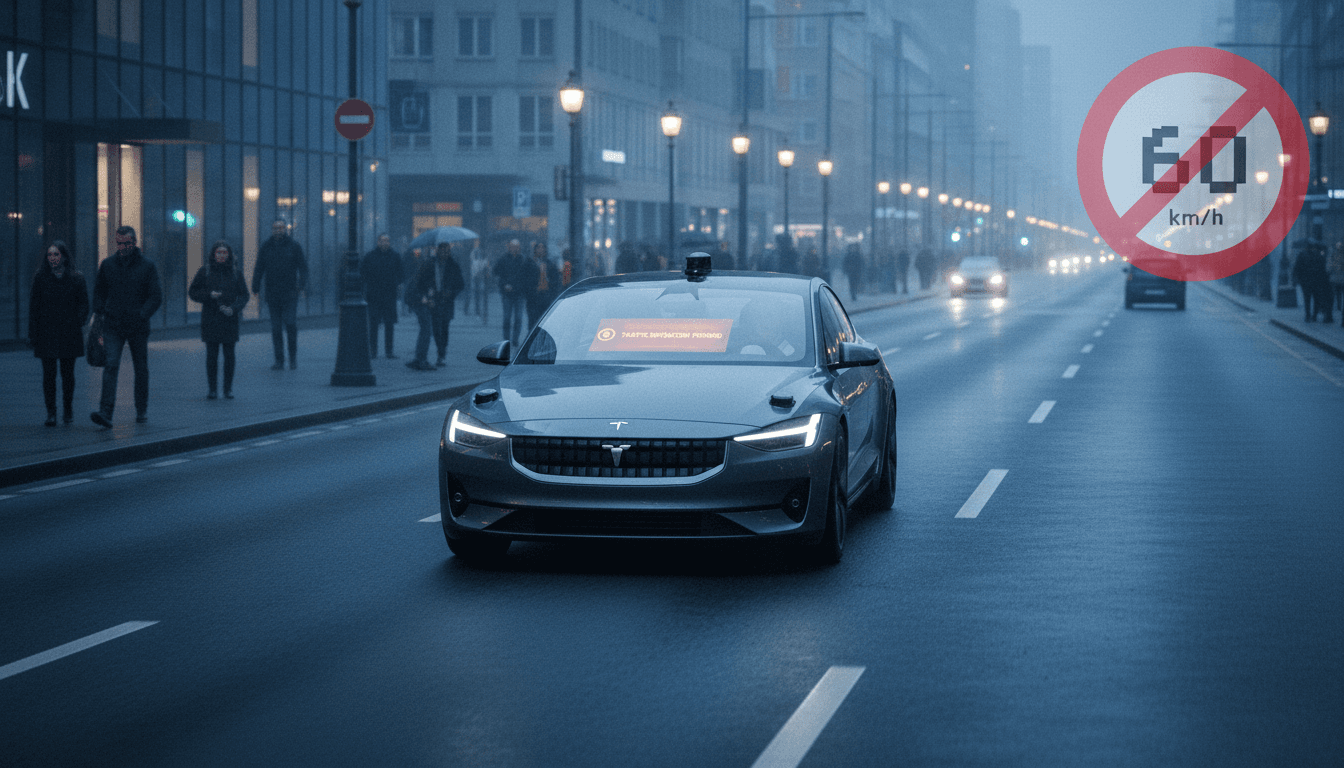
New regulations cracking down on autonomous vehicles mean self-driving cars will face fines for breaking road rules, a significant development announced on Sunday, May 3, 2026. This fresh crackdown on autonomous vehicles signals a clear shift in regulatory approach, moving towards holding the technology itself accountable for infractions rather than solely the human occupant or manufacturer.
The New Regulatory Landscape for Self-Driving Cars
The announcement by GB News on May 3, 2026, detailed the impending fines for autonomous vehicles that violate traffic laws. This marks a critical juncture for the burgeoning self-driving car industry in the UK. Previously, the legal framework surrounding liability for autonomous vehicle incidents has been a complex and often ambiguous area. This new directive aims to clarify that complexity by imposing direct financial penalties when an autonomous system fails to adhere to established road rules.
While the specifics of the fine structure and the precise mechanisms for enforcement are yet to be fully detailed, the overarching principle is clear: autonomous vehicles are now expected to operate within the same legal parameters as human-driven cars. This move is intended to foster greater public trust and ensure a consistent standard of safety as these technologies become more prevalent on British roads. The implications extend beyond mere fines, potentially influencing insurance premiums, vehicle design, and the pace of autonomous vehicle deployment.
Impact Analysis on the Automotive & EV Landscape
The decision to fine self-driving cars for road rule violations will send ripples across the automotive and EV landscape. For manufacturers developing autonomous driving systems, this introduces a new layer of accountability and a heightened imperative for system robustness. Companies like Waymo, Cruise, and other players in the autonomous space, along with traditional automakers investing heavily in ADAS (Advanced Driver-Assistance Systems) and full self-driving capabilities, will need to rigorously assess their software and hardware to meet these new compliance standards.
“This crackdown on autonomous vehicles is a pivotal moment, shifting the onus of responsibility more firmly onto the technology itself and demanding an even higher standard of operational integrity from developers.”
The regulatory clarity, though stringent, could also be seen as a necessary step for broader adoption. A clear legal framework can reduce uncertainty for consumers, insurers, and urban planners. However, it also raises questions about who ultimately bears the cost of these fines – the vehicle owner, the operating company, or the system developer. This new policy will likely accelerate the development of more sophisticated monitoring and logging systems within autonomous vehicles to provide irrefutable data in the event of an infraction, thus helping to determine liability.
Context & Background of Autonomous Vehicle Regulation
The journey towards regulating autonomous vehicles has been a slow and deliberate one, marked by cautious optimism and significant technological hurdles. For years, discussions have revolved around the ‘human in the loop’ concept, the levels of autonomy (SAE Levels 0-5), and the ethical dilemmas posed by AI decision-making on the road. This latest development follows a global trend where various jurisdictions are grappling with how to integrate self-driving cars safely and legally into existing transport infrastructures. Previous incidents, though rare, involving autonomous test vehicles have often highlighted the grey areas of responsibility, prompting calls for clearer guidelines.
Many countries have been exploring legislative frameworks, ranging from permitting limited testing to establishing national certification processes. The UK’s announcement on May 3, 2026, positions it among the more proactive nations in defining the operational liabilities of self-driving cars, moving beyond theoretical discussions to tangible enforcement.
What’s Next for Self-Driving Cars
The immediate future will see automotive companies and autonomous technology developers scrutinizing their systems to ensure compliance and avoid potential fines. We can anticipate lobbying efforts from industry groups to influence the precise implementation details of this crackdown on autonomous vehicles. Further legislative clarifications may follow, defining the thresholds for intervention, the types of infractions covered, and the appeals process for such fines.
This move could also stimulate innovation in vehicle-to-infrastructure (V2I) communication, as autonomous systems might increasingly rely on real-time data from traffic signals and road signs to prevent violations. Moreover, the insurance industry will be keenly watching, as the allocation of liability directly impacts their risk models and policy offerings for vehicles with advanced autonomous capabilities. The long-term implication is a more robust, albeit more tightly regulated, environment for the deployment of self-driving cars.
Key Takeaway: Defining Accountability in Autonomy
The decision to fine self-driving cars for road rule violations is a watershed moment for the autonomous vehicle industry. It underscores a fundamental shift in regulatory philosophy, from merely enabling autonomous testing to actively enforcing accountability for operational performance. This crackdown on autonomous vehicles is a clear signal that as these technologies mature and become more integrated into daily life, they will be held to the same, if not higher, standards of conduct as human drivers. For the automotive and EV sectors, this means a renewed focus on infallible software, robust sensor arrays, and transparent operational data, all critical steps towards building a future where self-driving cars are not only technologically advanced but also legally accountable and universally trusted.