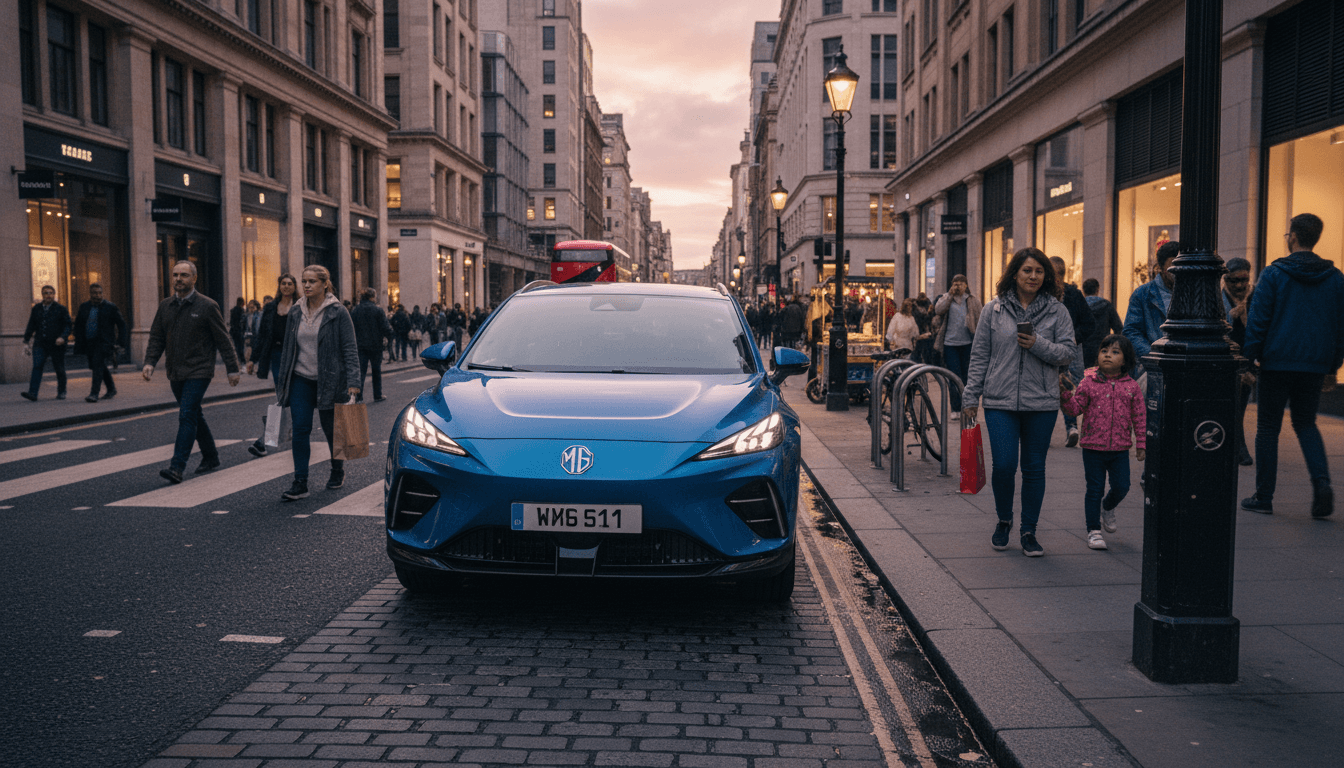
The MG 4X electric SUV, featuring groundbreaking semi-solid-state battery technology, is set to go on sale in China in a matter of days, marking a significant step forward for mass-produced EV advancements. SAIC Motor, the parent company of MG, is building on its earlier success with the MG4, which was launched last year as the world’s first mass-produced EV with a semi-solid-state battery.
Blind pre-orders for the MG 4X are scheduled to open on May 11, with more details anticipated to be revealed next week. This new electric SUV follows the MG4’s pioneering introduction of the technology, with deliveries of the semi-solid-state MG4 beginning in China in December 2025 at a starting price of 102,800 yuan ($14,500). In contrast, standard MG4 variants with LFP batteries started at 68,800 yuan ($9,800).
The MG4 semi-solid-state model utilizes a 53.95 kWh semi-solid manganese-based lithium-ion battery, offering a CLTC range of 530 km (330 miles) – comparable to the 53.95 kWh LFP battery variants. The MG 4X, an SUV variant, will extend this advanced battery technology across its lineup, with even entry-level models equipped with a semi-solid-state battery.
Semi-Solid-State Battery Technology Advances
SAIC previously indicated the MG 4X would boast a CLTC range starting at 510 kilometers (316 miles). However, recent filings with China’s MIIT revealed two battery options for the MG 4X. The first is the 53.9 kWh semi-solid-state battery, delivering up to 510 km (316 miles) of CLTC range. Additionally, buyers will have the option of a larger 64.2 kWh CATL-supplied LFP battery, providing a more extended range of 610 km (379 miles).
Performance-wise, the base MG 4X will feature a rear-mounted electric motor producing 125 kW (167 hp), while higher-priced variants will benefit from a more potent 150 kW (201 hp) electric motor. In terms of dimensions, the MG 4X measures 4,500 mm in length, 1,849 mm in width, and 1,621 mm in height, with a wheelbase of 2,735 mm. This positions it slightly larger than the standard MG4 and comparable in size to popular models like BYD’s Yuan Plus (Atto 3 overseas).
“MG is setting a new benchmark as the first manufacturer to achieve mass production of semi-solid-state EV batteries, signaling a pivotal shift in battery technology adoption across the automotive industry.”
Impact Analysis for Automotive & EV Landscape
The mass market introduction of semi-solid-state battery technology by SAIC’s MG brand represents a significant milestone for the broader automotive and EV landscape. For years, solid-state batteries have been hailed as the holy grail of EV power, promising higher energy density, faster charging, enhanced safety, and longer lifespans. While true solid-state batteries remain largely in the laboratory or limited prototypes, semi-solid-state technology offers a crucial bridge, bringing many of these benefits to consumers sooner.
SAIC’s ‘MG SolidCore Battery’ technology, refined for various road conditions, climates, and regulatory requirements, addresses critical consumer concerns. By reducing the liquid electrolyte content to just 5%, the semi-solid-state EV battery significantly mitigates the risk of combustion. SAIC MG proudly states that their battery produced no smoke, fires, or explosions during two needle penetration tests, exceeding industry standards by 20%. This safety enhancement, alongside promises of longer driving ranges, faster charging speeds, and improved cold-weather performance, could accelerate EV adoption globally. The protective layer formed by solid-state electrolytes within each cell also contributes to an extended battery life, reducing long-term ownership concerns.
This development intensifies competition, particularly for established automakers and emerging EV players still relying solely on traditional lithium-ion chemistries. The ability to offer superior safety and performance characteristics at a competitive price point – as seen with the MG4’s semi-solid-state variant priced from $14,500 – could force rivals to accelerate their own advanced battery research and deployment. For more on the evolving battery landscape, explore our related automotive & ev articles.
Context & Background
The journey towards advanced battery technologies has been long and arduous, marked by incremental improvements in lithium-ion chemistry. While lithium-ion phosphate (LFP) batteries have gained traction for their cost-effectiveness and safety, particularly in entry-level and mass-market EVs, the pursuit of even greater energy density and safety has driven research into solid-state alternatives. SAIC Motor’s introduction of the MG4 with a semi-solid-state battery in 2025, and now the MG 4X, places them at the forefront of this transition.
The interior of the MG 4X, like the MG4, features SAIC’s latest intelligent cockpit, developed in partnership with Chinese smartphone maker Oppo. This includes a massive 15.6-inch central infotainment display with 2.5K resolution and a smaller driver cluster, showcasing a blend of advanced battery tech with cutting-edge digital user experience.
What’s Next
With the MG 4X arriving at dealerships in China ahead of its May 11 launch, the immediate focus will be on initial sales performance and consumer reception. The pricing for the MG 4X, especially the semi-solid-state battery variants, will be critical in determining its market penetration. Looking further ahead, SAIC is poised to introduce this new semi-solid-state EV battery technology to Europe by the end of 2026. The MG4 EV Urban, expected to launch in Europe with the same battery, will likely see its CLTC range translate to approximately 400 km (248 miles) under WLTP conditions, which are typically more conservative.
This strategic rollout underscores SAIC’s ambition to position MG as a leader in innovative EV technology globally. The success of the MG 4X and its semi-solid-state battery could pave the way for faster adoption of this transitional battery type across the automotive industry, potentially accelerating the timeline for widespread solid-state battery commercialization.
The debut of the MG 4X with its semi-solid-state battery represents more than just a new vehicle launch; it signifies a tangible shift in the automotive industry’s approach to electric vehicle power. By bringing advanced battery technology to the mass market, SAIC is not only enhancing the appeal and practicality of EVs but also setting a precedent for future innovations that could redefine performance, safety, and range expectations for electric mobility worldwide.