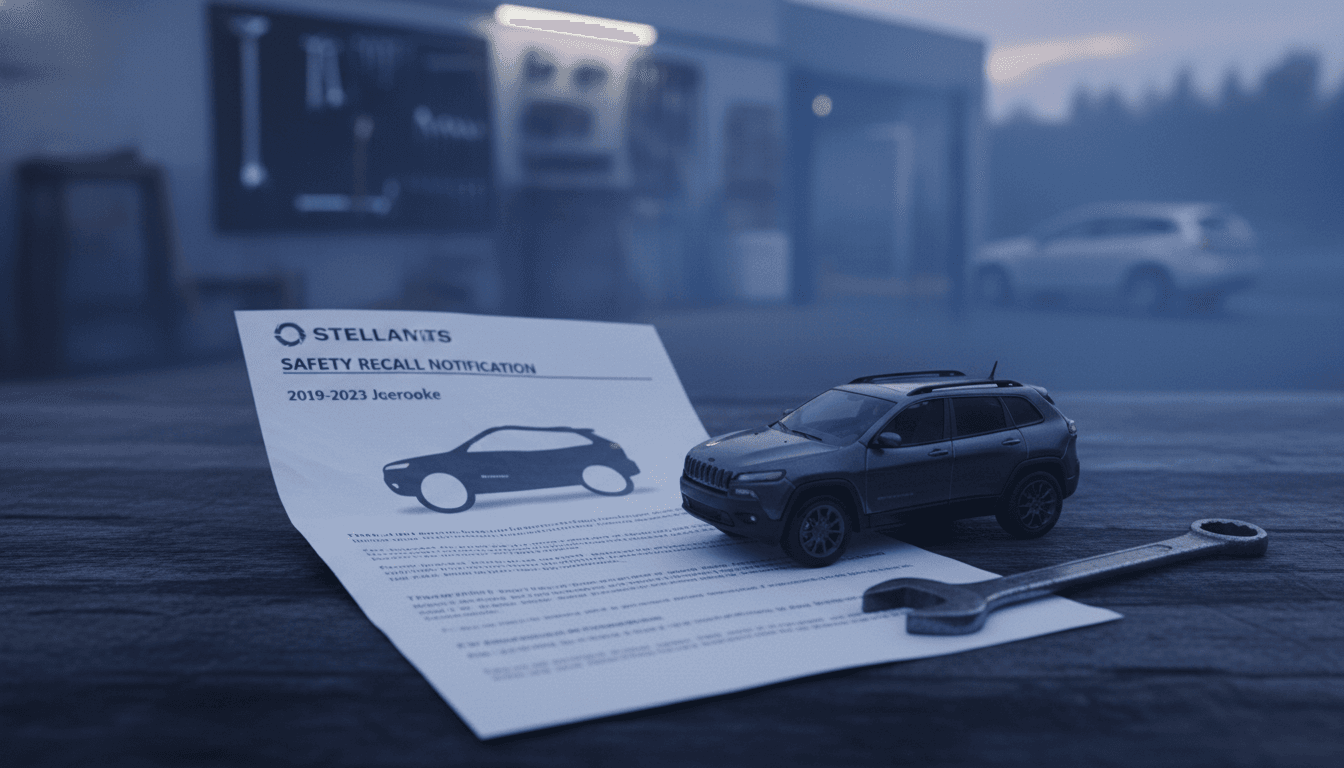
A significant Jeep Cherokee recall is impacting approximately 61,500 vehicles across model years 2019-2023, posing a critical safety concern where affected units may unexpectedly lose drive power or, more alarmingly, roll when placed in park. This widespread issue, announced on Tuesday, May 19, 2026, by Pickup Truck +SUV Talk, underscores a potentially severe mechanical flaw that could lead to accidents and injuries, casting a shadow over Stellantis’s quality control.
The recall specifically targets Jeep Cherokee models manufactured between 2019 and 2023. The core problem revolves around a defect that could cause the vehicle to lose propulsion while driving, an immediate hazard on any road. Equally concerning is the risk of the vehicle rolling even when the transmission is ostensibly in the ‘park’ position, presenting a grave danger, particularly on inclines or when occupants are entering or exiting the vehicle. While the exact technical fault has not been detailed in the initial report, such issues often stem from transmission component failures, powertrain control module glitches, or shifter assembly defects. Owners of these specific model years are advised to exercise extreme caution and await further instructions from Stellantis regarding the necessary repairs.
Impact Analysis
This Jeep Cherokee recall has immediate and broad implications for the automotive and EV landscape. For Stellantis, the parent company of Jeep, this represents a significant logistical and reputational challenge. Recalling over 60,000 vehicles is a costly undertaking, involving parts manufacturing, dealer service time, and customer communication. More importantly, it can erode consumer trust, a vital currency in a competitive market increasingly scrutinized for vehicle safety and reliability. In an era where electric vehicles are pushing boundaries of software and integrated systems, traditional internal combustion engine vehicles must maintain impeccable mechanical integrity to retain market share and consumer confidence.
“The persistent challenge of ensuring vehicle reliability across complex powertrains remains a top priority for automakers, and this Jeep Cherokee recall highlights the ongoing need for rigorous quality checks throughout the production lifecycle.”
The incident also puts a spotlight on regulatory oversight. The National Highway Traffic Safety Administration (NHTSA) will be closely monitoring Stellantis’s response and the efficacy of the recall process. Delays or inadequate fixes could lead to further penalties and intensified scrutiny. Furthermore, for the broader SUV segment, which has seen immense growth in recent years, any widespread safety issue, even if contained to a single model, can trigger concerns about the entire category’s reliability, potentially influencing future purchasing decisions.
Context & Background
Automotive recalls are a regular occurrence, but the nature of this Jeep Cherokee recall – involving both a loss of drive power and the risk of rolling in park – places it in a category of high-severity defects. Historically, transmission-related issues have been a recurring challenge for many manufacturers, often leading to complex and expensive repairs. Jeep, in particular, has faced various recalls over the years, though not always of this specific type or scale for the Cherokee. The 2019-2023 model years fall within a period of significant technological integration in vehicles, where mechanical systems are increasingly intertwined with electronic controls, sometimes introducing new points of failure. This recall serves as a stark reminder that even well-established models from reputable brands are not immune to critical safety flaws.
What’s Next
Stellantis is expected to promptly notify affected owners of the 2019-2023 Jeep Cherokee models with detailed instructions on how to proceed. This will typically involve scheduling an appointment at an authorized Jeep dealership for inspection and repair, which will be performed free of charge. The company will need to communicate transparently about the root cause of the defect and the technical solution being implemented. Dealers will be tasked with acquiring the necessary parts and training technicians to perform the repairs efficiently to minimize customer inconvenience and restore confidence. Looking ahead, this event might prompt Stellantis to conduct internal reviews of its manufacturing and quality assurance processes for similar vehicle platforms, potentially impacting future model development and rollout strategies. Investors will also be watching closely for any financial implications and how quickly the company can mitigate the reputational damage.
Key Takeaway
The 2019-2023 Jeep Cherokee recall underscores the enduring importance of vehicle safety and reliability, even as the automotive industry rapidly pivots towards electrification and advanced autonomous features. For consumers, it’s a critical reminder to stay informed about recall notices and act promptly to address potential safety hazards. For automakers, it highlights the continuous imperative for stringent quality control at every stage of design and production, as the consequences of mechanical failures can be severe, impacting both lives and brand trust in an increasingly competitive global market. The resolution of this Jeep Cherokee recall will be a key test for Stellantis in managing a significant safety challenge.