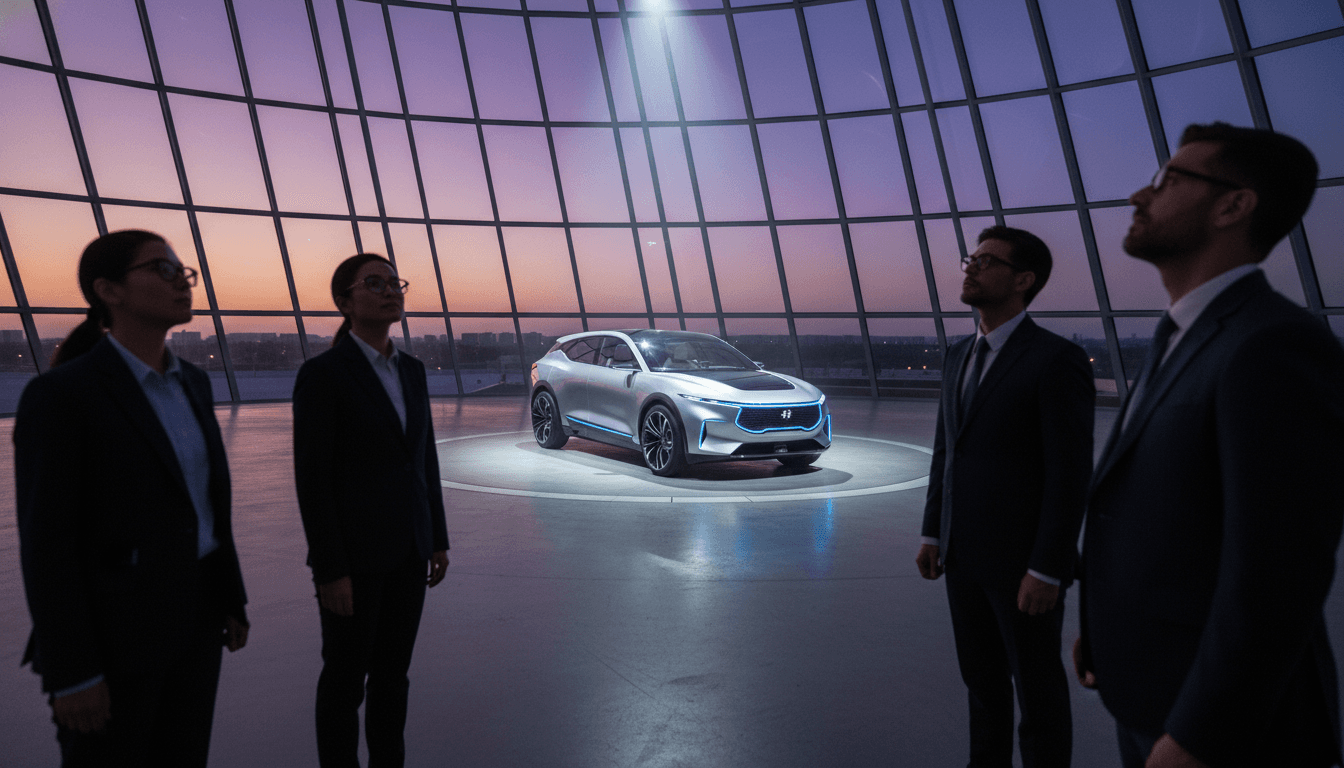
Honda’s future hybrid three-row SUV is set to challenge established players like the Toyota Kluger, Kia Sorento, and Hyundai Palisade, signaling a significant strategic move in the competitive family SUV segment. The Japanese automaker has indicated plans for this new offering to arrive by 2026, marking a clear intent to expand its electrified portfolio and capture a larger share of the lucrative market for spacious, fuel-efficient family vehicles.
This development, reported on Tuesday, June 2, 2026, highlights Honda’s commitment to hybrid technology as a bridge to a fully electric future, while addressing immediate consumer demand for practical and economical large SUVs. The announcement comes amidst a broader industry trend towards electrification, with hybrid models proving particularly popular as consumers navigate rising fuel prices and environmental concerns without fully committing to battery-electric vehicles.
The Strategic Play in Three-Row SUV Market
Honda’s entry into this specific segment with a hybrid three-row SUV is a calculated move. The Toyota Kluger, Kia Sorento, and Hyundai Palisade have long dominated this space, offering a blend of utility, comfort, and increasingly, advanced powertrain options. By targeting these established rivals, Honda aims to leverage its reputation for reliability and engineering prowess, now combined with the appeal of a hybrid drivetrain.
The 2026 timeframe suggests that Honda is developing a vehicle designed to meet future emissions standards and consumer expectations for connectivity and safety features. This new model will likely incorporate Honda’s latest e:HEV hybrid technology, which has been successfully deployed in other models like the HR-V, offering a compelling blend of power and fuel efficiency. For consumers, this means another strong contender in a segment where practicality and running costs are paramount.
“Honda’s commitment to hybrid technology in a high-volume segment like the three-row SUV demonstrates a pragmatic approach to market evolution, offering a compelling alternative to both traditional ICE and pure EV options,” says a leading automotive analyst.
The move also reflects a broader industry shift where manufacturers are diversifying their offerings to cater to varied consumer preferences. While pure EVs are gaining traction, hybrids provide a crucial stepping stone, offering reduced emissions and lower operating costs without range anxiety or the need for extensive charging infrastructure.
Impact on the Automotive & EV Landscape
The introduction of a new Honda hybrid three-row SUV will undoubtedly intensify competition within the family SUV market. For Toyota, Kia, and Hyundai, this means a formidable new rival that could siphon off sales, particularly from those seeking a fresh alternative with a strong hybrid focus. This increased competition is beneficial for consumers, likely driving innovation and potentially leading to more competitive pricing and feature sets across the segment. Related automotive & EV articles often discuss how new entrants spur existing players to innovate.
Furthermore, Honda’s emphasis on a hybrid powertrain for such a significant model reinforces the enduring relevance of hybrid technology in the transition to full electrification. It underscores a strategy where hybrids act as a crucial volume driver, generating revenue and brand loyalty while R&D continues on next-generation battery electric vehicles. This approach contrasts with some manufacturers who are accelerating directly to EVs, suggesting Honda is hedging its bets and catering to a wider demographic.
The announcement also comes at a time when global supply chains are stabilizing, allowing manufacturers to plan for new product launches with greater certainty. The 2026 target for the future hybrid three-row SUV gives Honda ample time to refine the vehicle, optimize its manufacturing processes, and establish robust supply chains for its hybrid components.
What’s Next for Honda and its Rivals
As 2026 approaches, the automotive world will be closely watching for more details regarding Honda’s future hybrid three-row SUV. Specifics on its design language, interior features, powertrain configurations, and pricing will be critical in assessing its potential impact. Rivals like Toyota, Kia, and Hyundai are unlikely to stand still; they will undoubtedly respond with updates to their own Kluger, Sorento, and Palisade models, or even introduce new hybrid or plug-in hybrid variants to counter Honda’s challenge.
The broader implications extend to the charging infrastructure and energy sectors. A successful hybrid model in this segment could further drive demand for diverse fuel options and potentially influence government policies on vehicle incentives and emissions targets. The market will also be keen to see how this new SUV fits into Honda’s global electrification strategy, and whether it foreshadows similar hybrid offerings in other key segments.
Ultimately, Honda’s move to introduce a hybrid three-row SUV by 2026 is a significant declaration of intent. It signals a robust commitment to hybrid technology and a direct challenge to established players in a highly contested segment. This strategic decision will likely reshape market dynamics, intensify competition, and provide consumers with more diverse and compelling options as the automotive industry continues its journey towards a greener future.