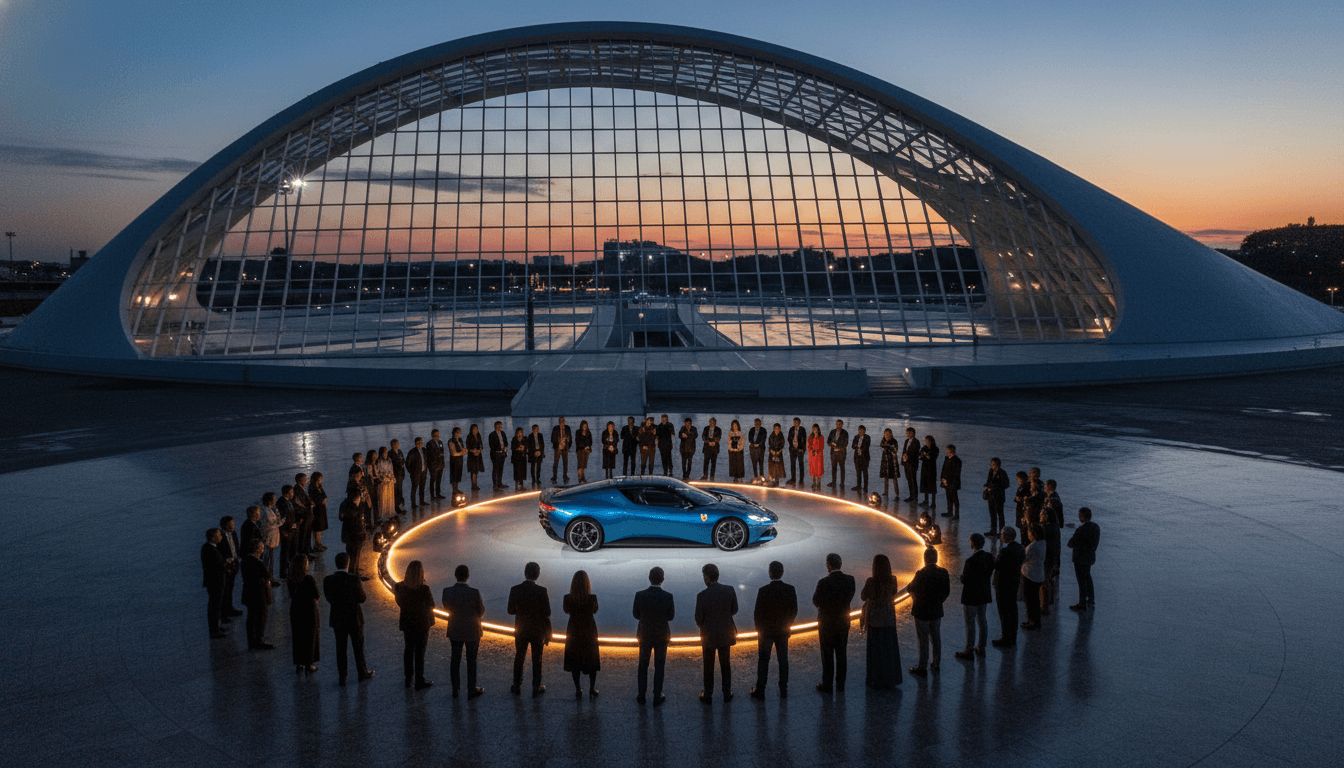
The Ferrari Luce launch, the Italian marque’s first fully electric vehicle, has sent shockwaves through the market, causing the luxury carmaker’s shares to fall sharply by 6.3% on Tuesday. Unveiled in the symbolic setting of the Vela di Calatrava, Città dello Sport in Rome, the Luce, meaning “light,” represents a significant strategic pivot for Ferrari, a company long synonymous with roaring combustion engines and classic design.
Ferrari CEO Benedetto Vigna described the launch as a “very, very important day” and the opening of “a new chapter” for the company. However, the market reaction suggests a deep skepticism, particularly as other luxury automakers like Porsche and Lamborghini have recently scaled back their own EV ambitions due to tepid demand. This divergence in strategy, coupled with the Luce’s departure from traditional Ferrari aesthetics, appears to have rattled investors and purists alike.
Ferrari Luce Launch: Market Rejection and Brand Evolution
The immediate and sharp decline in Ferrari’s stock, which has also seen a nearly 27% drop over the last 12 months, underscores the high stakes involved in this electrification gambit. Analysts point to a confluence of factors for the negative sentiment. Michael Field, chief equity strategist at Morningstar, highlighted “design hate” and the classic market adage of “travel and and arrive,” indicating that Ferrari’s stock had already seen significant appreciation in anticipation of the launch. Field further noted that many fans feel the embrace of the EV concept dilutes the supercar brand’s identity, which has historically been built on raw, combustion-engine power and timeless design.
From an investment perspective, the substantial research and development costs associated with an EV model are a major concern. Field explained that these costs place immense pressure on the brand to recoup its investment, potentially diluting returns for the business. Anthony Dick, an auto analyst at Oddo BHF, succinctly summarized the market’s verdict:
“By far the sharpest reaction we’ve seen for a car design — the market has spoken.”
The Luce, priced at approximately 550,000 euros (roughly $640,000) with deliveries slated for the fourth quarter, is also Ferrari’s first-ever five-seater car, capable of hitting 60 mph in about 2.5 seconds and a top speed of 192 mph.
Broader Automotive & EV Landscape Implications
The Ferrari Luce launch is not just a story about one luxury brand; it reflects a broader struggle within the high-end automotive sector to navigate the transition to electric vehicles. While mainstream manufacturers race to electrify their lineups, the luxury segment faces unique challenges. The emotional connection to engine sound, heritage design, and raw performance is paramount for brands like Ferrari. The market’s reaction to the Luce suggests that even a brand with Ferrari’s unparalleled prestige is not immune to skepticism when fundamentally altering its core offering. This could lead other luxury brands to further scrutinize their EV timelines and strategies, potentially slowing the electrification pace at the very top of the market. The in-house development and manufacturing of all components in Maranello, coupled with design entrusted to Jony Ive’s LoveFrom, speaks to Ferrari’s commitment, yet the market remains unconvinced.
Context and Background: A Shifting Tide
Ferrari’s decision to push ahead with a full EV comes at a peculiar time for the broader EV market. As mentioned, rivals like Porsche and Lamborghini have recently tempered their EV rollout plans, citing weaker-than-anticipated demand. This recalibration suggests a more cautious approach is emerging, particularly in segments where the premium for electrification might not yet align with consumer willingness or regulatory pressure. Ferrari, under CEO Benedetto Vigna, however, seems determined to carve its own path. Vigna stressed the importance of “respect” for new technology, ensuring its proper representation in design. He believes the Luce will appeal to both existing clientele and attract new customers, despite its departure from the aesthetic of typical Ferraris. The challenge, as Dick from Oddo BHF noted, lies in the Luce marking “the furthest deviation from the brand’s ethos we’ve ever seen,” posing a significant risk to brand equity and profitability if sales falter. Related automotive & EV articles have explored similar brand dilemmas.
What’s Next: A Defining Period for Maranello
The coming quarters will be critical for Ferrari. The success or failure of the Luce, with customer deliveries beginning in the fourth quarter of 2026, will serve as a bellwether for the future of electrification in ultra-luxury sports cars. If the Luce manages to attract new buyers and appease a portion of the traditional Ferrari faithful, it could validate Vigna’s vision and potentially reverse the negative market sentiment. Conversely, poor sales could force a re-evaluation of Ferrari’s EV strategy, impacting future product development and potentially leading to further pressure on its stock price. The emphasis on emotional connection, with Vigna stating the Luce will provide the “same sensation” as a typical model, albeit with an electric engine’s distinct sound, will be key to its reception.
Key Takeaway: The Price of Innovation
The Ferrari Luce launch illustrates the immense challenges even iconic brands face when attempting to innovate and adapt to seismic industry shifts. While electrification is an undeniable trend, the path for luxury automakers is fraught with unique brand identity and customer expectation hurdles. Ferrari’s bold move, met with a significant market downturn, highlights that for some brands, the transition to an electric future is not just about engineering, but about preserving an intangible heritage that commands a premium. The market has indeed spoken, and its message is one of caution and skepticism regarding how far a brand can deviate from its celebrated past without alienating its core.