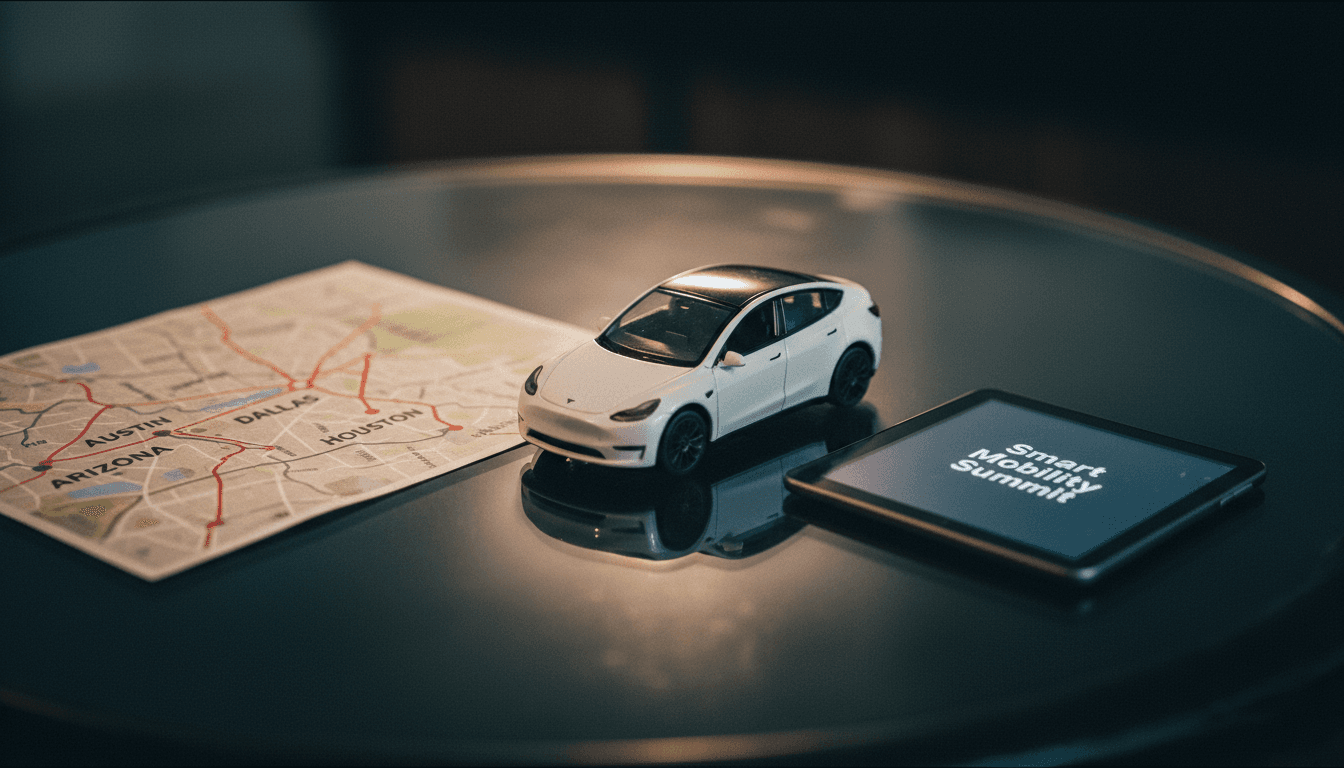
Tesla CEO Elon Musk expects a dramatic uptick in the number of fully autonomous vehicles on U.S. roads without safety monitors in the second half of 2026. This ambitious forecast, delivered via livestream at the Smart Mobility Summit in Tel Aviv, suggests a significant acceleration in the deployment of driverless technology, following initial deployments in Texas cities earlier this year.
Musk outlined a vision where the majority of road miles will soon be autonomously driven.
“Five years from now and certainly 10 years from now … probably 90% of all distance driven will be driven by the AI in a self-driving car,” he stated, according to Reuters. “So overwhelmingly, it’ll be quite a niche thing in 10 years to actually be driving your own car.”
This bold prediction sets a challenging benchmark for Tesla’s Full Self-Driving (FSD) system, which has been under development for years, often accompanied by Musk’s notoriously optimistic timelines.
Expansion of Self-Driving Cars Without Monitors
The planned expansion of self-driving cars without monitors builds on Tesla’s recent regulatory success, including securing approval from Arizona for testing. The initial rollout in the first six months of 2026 has focused on key Texas metropolitan areas: Austin, Dallas, and Houston. The move to expand operations without human safety monitors marks a critical step towards widespread adoption, albeit one that has historically been met with skepticism given the complexities of real-world autonomous navigation.
Musk’s long-standing bullishness on autonomous driving technology is well-documented. However, his previous predictions regarding FSD capabilities and deployment timelines have frequently missed the mark, a fact he has occasionally acknowledged with self-deprecating humor during public appearances and earnings calls. This history of ambitious, yet often delayed, pronouncements means the industry and regulators will be closely scrutinizing Tesla’s progress.
Market Context and Pricing Adjustments
This news regarding the expansion of self-driving cars without monitors arrives amidst other significant developments for Tesla. The company recently implemented its first price increase of the year in the U.S. The Model Y premium all-wheel drive and Model Y premium rear-wheel drive saw a $1,000 hike, reaching $49,990 and $45,990 respectively. The Model Y Performance all-wheel drive also increased by $500 to $57,990. While the Model Y hadn’t seen a price adjustment since a $1,000 increase across all variants in 2024, the slow-selling Cybertruck experienced a more substantial $15,000 price increase for its Cyberbeast version last fall.
The broader automotive and EV landscape continues to evolve rapidly. While Tesla focuses on autonomous capabilities, competitors like Rivian have begun production of their second EV, with R2 deliveries anticipated in Q2. Conversely, reports suggest General Motors may be pumping the brakes on full-size EV production, indicating a varied strategic approach across the industry. The success of Tesla’s self-driving initiatives could significantly influence the direction of these broader industry trends.
The Road Ahead for Autonomous Driving
The coming months will be crucial for Tesla as it attempts to validate Musk’s latest predictions. The expansion of self-driving cars without monitors into more regions and the promised acceleration in the second half of 2026 will test the robustness of Tesla’s FSD system and its regulatory acceptance. The industry is watching to see if Tesla can overcome the technical and safety hurdles that have historically plagued widespread autonomous deployment.
If Tesla achieves its goals, it could fundamentally reshape urban mobility and the role of human drivers. However, the regulatory environment and public trust remain significant factors. The company’s ability to deliver on these promises will not only impact its own trajectory but also set a precedent for the entire autonomous vehicle sector, influencing investment, development, and consumer adoption for years to come.