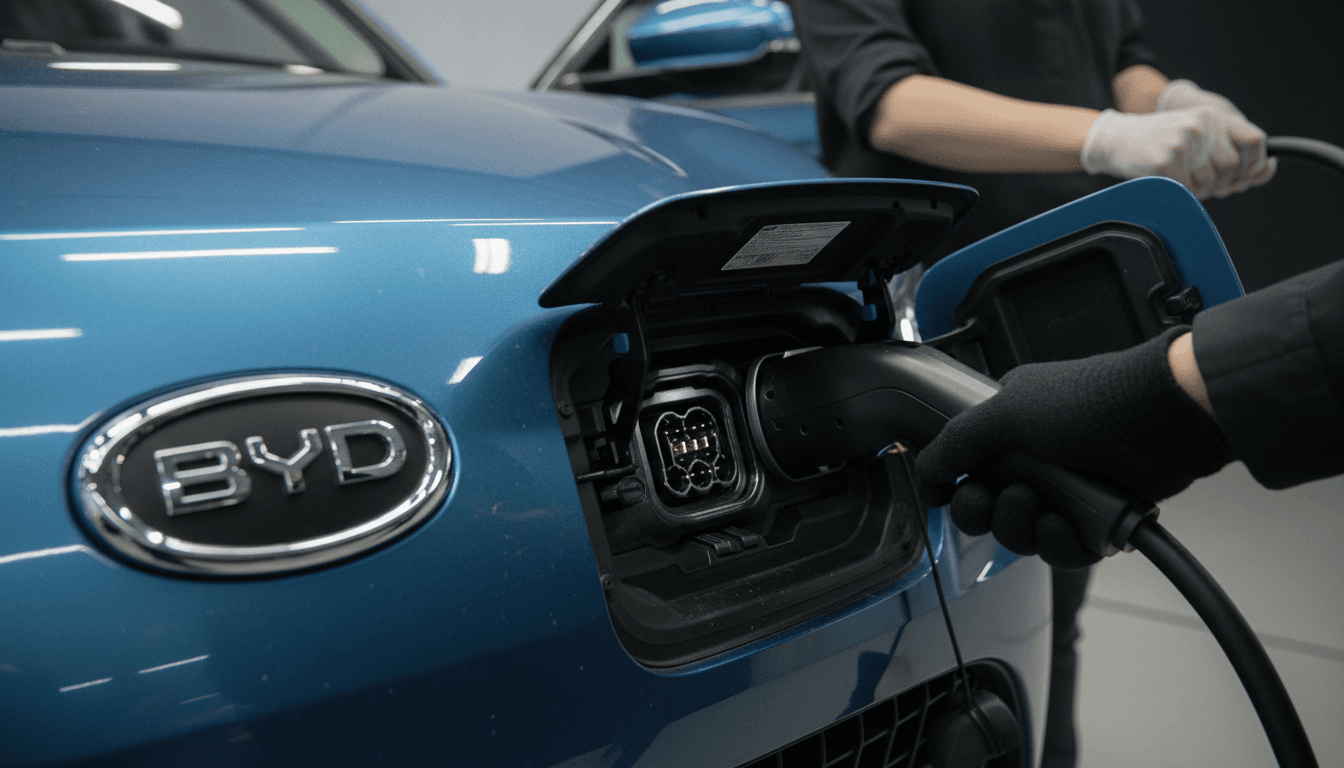
BYD overseas sales surge, positioning the electric vehicle giant for significant growth as global oil prices continue their upward trajectory. The Chinese automaker, despite facing headwinds in its domestic market, is rapidly accelerating its export strategy, with recent developments in global energy markets creating a potent tailwind for its international ambitions. This shift is particularly timely given the persistent pressure BYD has experienced in China, marked by a brutal price war and intensified low-cost competition.
For seven consecutive months leading up to March 2026, BYD has reported year-over-year sales declines in its home market. In March, sales of new-energy vehicles (NEVs), which encompass both full-electric and plug-in hybrid models, stood at just over 300,000 units. While this represented a 57% surge over February, it still marked a decline compared to March of the previous year. The domestic market has been characterized by a pullback in government incentives and eroding margins, compelling BYD to pivot aggressively towards international expansion.
Exports Accelerate Globally
The strategic pivot to exports is yielding impressive results. In March, BYD exported a robust 120,083 NEVs, a remarkable 65% increase over the prior year. Cumulatively, for the first three months of 2026, the company has sold over 321,000 NEVs overseas. This rapid expansion is not merely a short-term reaction but part of a larger, long-term growth narrative supported by localized production facilities coming online and a continuous stream of new model launches across various vehicle segments globally.
Just three months ago, BYD projected overseas sales of 1.3 million NEVs for 2026. This estimate has since been revised upwards by 15% to 1.5 million NEVs, underscoring the company’s heightened confidence in its international prospects. In March, nearly 40% of BYD’s total sales originated from overseas markets, a figure that CEO Wang Chuanfu anticipates could realistically reach half of its total sales within the next one to two months. Chuanfu reportedly told analysts in late March that rising oil prices are expected to propel overseas EV sales to “another level” in 2026. This statement was made prior to recent geopolitical developments, including a ceasefire in the Iran war and the U.S. blockade of the Strait of Hormuz, which could further impact global oil prices and, consequently, EV demand.
“The automaker is selling as many vehicles in a single day as it normally would in two weeks in markets such as Australia, the Philippines, and New Zealand.”
Further evidence of BYD’s burgeoning international success was observed at the Bangkok Motor Show, Southeast Asia’s largest auto exhibition, where BYD reportedly secured more orders than any other automotive brand during the nearly two-week event. This strong performance in key emerging markets highlights the appeal of BYD’s incredibly affordable lineup, even when factoring in potential tariffs in some regions.
BYD Overseas Sales Surge: Market Impact
While the prolonged year-over-year sales declines in China might be a point of concern for some investors, they are increasingly being viewed as a temporary speed bump within a consolidating domestic market. The significant upside lies in the accelerating overseas expansion, where BYD’s higher-margin sales are quickly becoming the primary growth engine. The confluence of BYD’s affordable offerings and the sustained elevation of global oil prices creates a compelling market dynamic.
The broader automotive and EV landscape is keenly watching BYD’s international strategy. As a direct competitor to Tesla in global EV sales, BYD’s ability to navigate domestic challenges by leveraging international opportunities, particularly those amplified by energy market shifts, offers a blueprint for other manufacturers. The company’s proactive approach to localized production and diversified model launches positions it favorably for sustained long-term growth in the global EV market, regardless of the precise trajectory of oil prices. The strategic shift towards exports, especially into regions highly sensitive to fuel costs, underscores a robust and adaptable business model.
The sustained demand for alternatives to gasoline-powered vehicles in regions experiencing high fuel costs will continue to drive BYD overseas sales surge. The company’s ability to capitalize on these global trends, while simultaneously adapting to a fiercely competitive domestic environment, solidifies its position as a formidable player in the future of mobility. Investors and industry observers will be closely monitoring BYD’s quarterly reports for further indications of its overseas growth trajectory and its impact on the company’s overall profitability and market share.