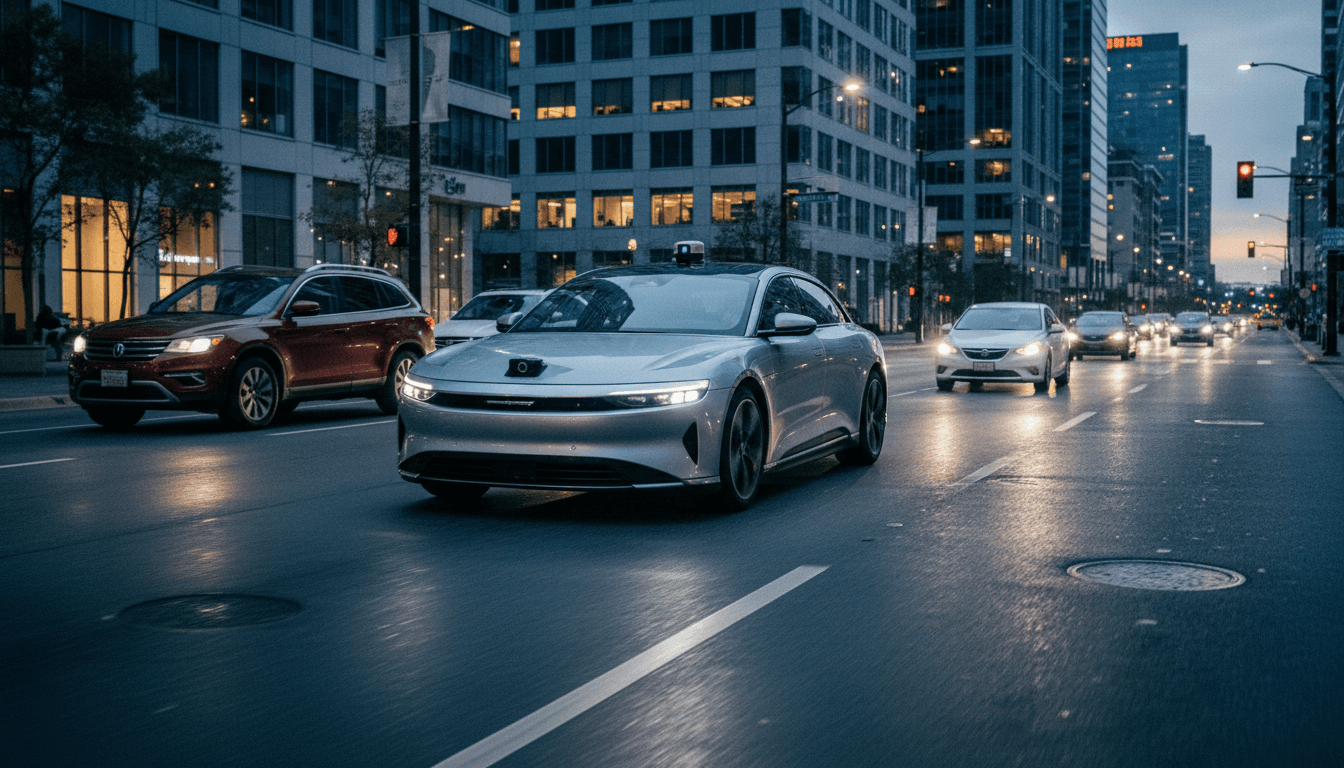
The autonomous vehicle future is taking a significant turn with major players like Lucid Group and Saudi Arabia’s Public Investment Fund (PIF) making strategic moves, signaling a deepening commitment to the development and deployment of self-driving technologies. This latest flurry of activity, reported on Tuesday, April 21, 2026, highlights a dynamic landscape where established automotive giants, sovereign wealth funds, and cutting-edge tech firms are all vying for leadership in the rapidly evolving autonomous mobility sector.
The core of this recent news revolves around several key developments. Lucid Group, the luxury EV manufacturer, continues to be a central figure, its operations and strategic direction often influenced by its primary investor, the PIF. While specific details of new investments or partnerships were not explicitly detailed beyond their ongoing involvement, their continued presence underscores the significant capital flowing into AV research and development. This financial backing is crucial as the industry navigates complex technological hurdles and regulatory frameworks. Simultaneously, other major players are making their own strides. Uber, a pioneer in ride-hailing, remains committed to autonomous driving, likely through partnerships or its own internal divisions, despite past setbacks. Nuro, known for its autonomous delivery vehicles, continues to expand its operational footprint, demonstrating the practical application of AVs in logistics. Even traditional labor forces are weighing in, with the Illinois Teamsters engaging in discussions that will undoubtedly shape the integration of AVs into commercial transportation.
Impact Analysis
The implications of these movements are far-reaching for the broader automotive & EV landscape. The sustained investment by entities like PIF into companies such as Lucid Group ensures a robust capital injection into the high-cost, high-reward AV sector. This financial muscle allows for accelerated R&D, potentially bringing advanced self-driving capabilities to market faster. For EV manufacturers, the integration of sophisticated autonomous features is becoming a key differentiator, moving beyond mere electric powertrains to offer a holistic future mobility solution. The involvement of logistics players like Nuro signifies the increasing specialization of AV applications, moving beyond passenger transport to reshape supply chains and last-mile delivery. The engagement of labor unions like the Illinois Teamsters is particularly impactful, as the transition to autonomous fleets will inevitably raise questions about job displacement and the need for new skill sets within the transportation industry. Their involvement suggests a move towards negotiating the terms of AV integration rather than outright opposition, a pragmatic shift that could smooth the path for wider adoption.
Beyond these direct impacts, the competitive landscape is intensifying. Qualcomm and NVIDIA, two titans of chip manufacturing, are locked in a fierce battle to provide the computational backbone for these advanced vehicles. Their ongoing innovation in AI processors and sensor fusion technologies is fundamental to the performance and safety of autonomous systems. Meanwhile, global players like GAC Aion and WeRide from China are showcasing the rapid advancements being made in Asian markets, challenging the traditional dominance of Western companies. The collaboration between technology providers and vehicle manufacturers is becoming more critical than ever, forming complex ecosystems that integrate hardware, software, and services.
Autonomous Vehicle Future: Context & Background
The pursuit of an autonomous vehicle future is not new, but its current trajectory is marked by a blend of cautious optimism and aggressive investment. Early promises of fully autonomous vehicles by specific dates have largely been pushed back, as the technical and ethical challenges proved more formidable than initially anticipated. However, progress in specific domains, such as geofenced autonomous ride-hailing and automated logistics, has been steady. Companies like Uber, having previously divested parts of their self-driving divisions, are now re-evaluating their strategies, often opting for partnerships rather than sole development, recognizing the immense capital and expertise required. The involvement of sovereign wealth funds like PIF, which has invested heavily across various future technologies, underscores a national strategic interest in becoming a leader in the next generation of mobility. This long-term view helps stabilize an industry prone to boom-and-bust cycles.
Previous events, such as high-profile accidents involving autonomous test vehicles, have also shaped the current cautious approach, leading to more rigorous testing protocols and a greater emphasis on fail-safe systems. The regulatory environment is also a patchwork, with different regions and countries adopting varying stances on testing, deployment, and liability. This fragmented regulatory landscape adds another layer of complexity for companies aiming for global deployment of their autonomous solutions. The ongoing debate about human oversight versus full autonomy, and the role of remote operators, continues to evolve as technology advances.
What’s Next
Looking ahead, the autonomous vehicle future will likely see continued consolidation and strategic alliances. Smaller players with niche technologies may be acquired by larger automotive groups or tech giants seeking to fill gaps in their offerings. We can anticipate further legislative developments as governments grapple with standardizing regulations for autonomous operation, insurance, and data privacy. The role of AI and machine learning will become even more pronounced, with advancements in predictive algorithms and real-time decision-making being paramount. The competition between Qualcomm and NVIDIA will intensify, as will the race to develop more efficient and powerful chips capable of handling the massive data streams generated by autonomous sensors.
The integration of AVs into urban infrastructure will also be a key focus, requiring smart city planning and communication protocols between vehicles and traffic management systems. Furthermore, the commercialization of specific autonomous applications, particularly in logistics and public transport, is expected to accelerate before widespread private consumer adoption of Level 4 or Level 5 autonomy. We may see more pilot programs and limited deployments in designated zones before a broader rollout. The discussions with labor unions like the Illinois Teamsters will be crucial in defining the future workforce and ensuring a smoother transition for those whose livelihoods are tied to traditional driving roles.
“The convergence of significant capital investment, rapid technological advancement, and a maturing regulatory environment is setting the stage for the next phase of autonomous vehicle evolution.”
Key Takeaway
The ongoing strategic maneuvers by Lucid Group, PIF, Uber, Nuro, and the engagement of labor organizations like the Illinois Teamsters, alongside the relentless technological competition between Qualcomm and NVIDIA, collectively signal a pivotal moment for the autonomous vehicle sector. This is not merely about incremental improvements; it represents a concerted push towards redefining mobility, logistics, and urban living. The substantial financial backing, coupled with continuous innovation and a more pragmatic approach to deployment, suggests that while the road to full autonomy remains challenging, the industry is more determined and better equipped than ever to navigate it, ultimately shaping a fundamentally different automotive and transportation landscape for decades to come. The emphasis is now on practical, scalable solutions and the careful integration of these technologies into society, rather than just the pursuit of technical capability.