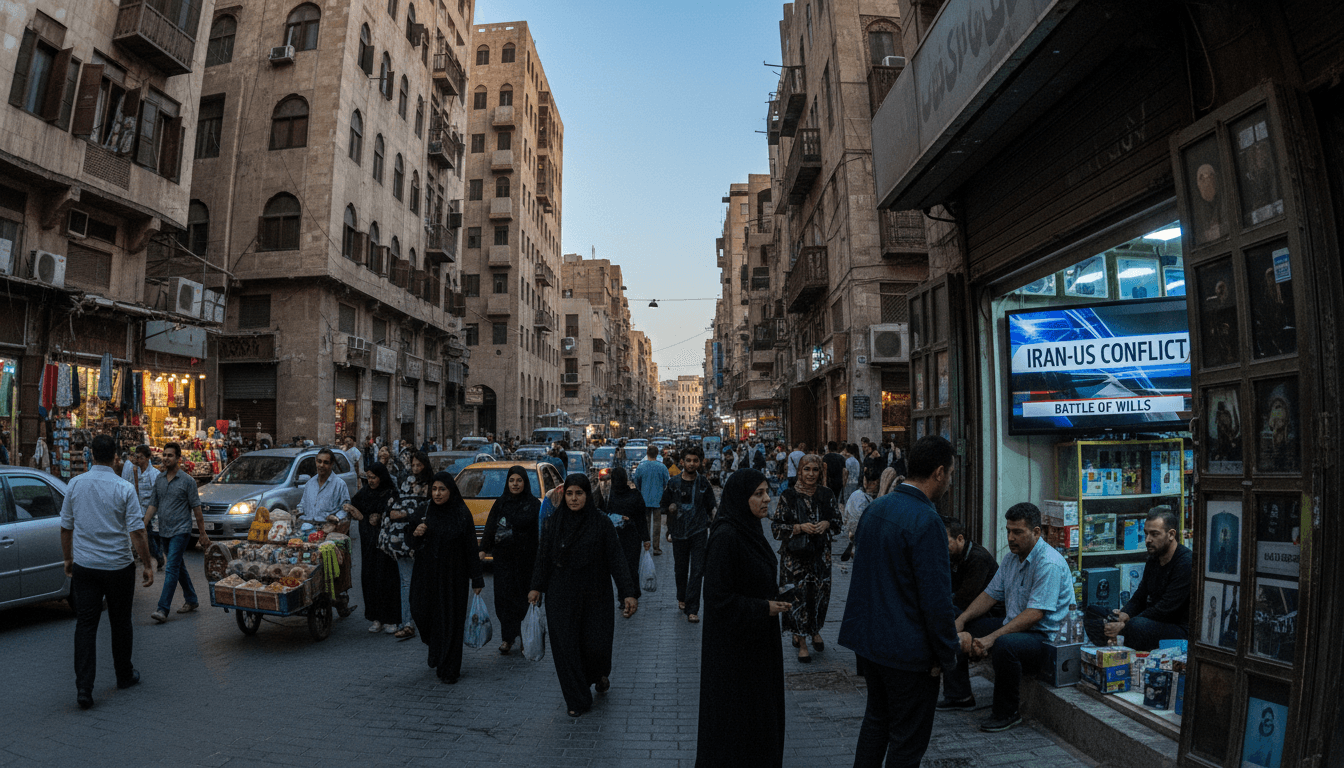
The Iran-US conflict enters ‘battle of wills’ phase, according to analysts on Friday, June 5, 2026, as a fragile ceasefire holds, marking a critical juncture in the long-standing geopolitical rivalry. This development signifies a shift from direct confrontation to a more nuanced contest of strategic resolve and diplomatic maneuvering, with both sides testing the other’s patience and commitment to de-escalation while maintaining their core objectives.
The Shifting Dynamics of Engagement
The current ‘battle of wills’ phase involves key players from both the Islamic Republic of Iran and the United States, alongside their respective regional allies and proxies. While specific incidents leading to this ‘fragile ceasefire’ were not detailed, the implication is a cessation of overt military actions or significant escalations, replaced by a more covert and strategic competition. Analysts cited by Anadolu Ajansı on June 5, 2026, emphasize that this period is characterized by each party attempting to outmaneuver the other through non-military means, including economic pressure, cyber operations, and proxy influence, all while avoiding a direct return to hostilities. The core details suggest a deliberate strategy by both Washington and Tehran to avoid a full-scale conflict, recognizing the immense costs, yet unwilling to fully concede their positions.
Impact on Global Geopolitics
This ‘battle of wills’ phase has significant implications for the broader world news landscape. A prolonged, high-stakes standoff between Iran and the U.S., even without direct military engagement, fuels regional instability in the Middle East, impacting global energy markets, trade routes, and international security. Allies of both nations are closely watching, with many navigating complex diplomatic waters to avoid being drawn into the direct line of fire. The fragile nature of the ceasefire means any miscalculation or perceived provocation could rapidly unravel the current détente, leading to renewed escalation. This situation also tests the efficacy of international diplomacy and mediation efforts, as external actors attempt to facilitate a more stable resolution. The ongoing tension serves as a constant reminder of the volatile nature of superpower rivalries and their ripple effects across continents. For more insights into regional dynamics, see our related world news articles.
Historical Context and Precedent
The Iran-US conflict has a deep and complex history, marked by decades of mistrust, sanctions, and proxy confrontations. Previous periods have seen direct military threats, targeted actions, and significant economic sanctions imposed by the U.S. on Iran. Tehran, in turn, has often responded by bolstering its regional influence, developing its missile program, and pursuing its nuclear ambitions, which remain a central point of contention. The current ‘battle of wills’ phase can be seen as a continuation of this complex relationship, albeit under a different guise. It echoes historical periods where major powers engaged in protracted ideological and strategic contests without direct warfare, relying instead on indirect pressure and the demonstration of resolve. Industry trends indicate a broader shift in international relations towards hybrid warfare and strategic competition below the threshold of armed conflict, a trend exemplified by the current Iran-US dynamic. This context highlights the enduring nature of the rivalry and the strategic depth behind the current, seemingly calmer, period.
“The current ‘battle of wills’ is a high-stakes poker game where both sides are showing their cards without fully committing to a hand. It’s about perception, endurance, and the ability to project strength without firing a shot,” an unnamed analyst commented.
What Lies Ahead: Future Implications
The future implications of this ‘battle of wills’ are manifold. Upcoming decisions from both Washington and Tehran, particularly concerning economic sanctions, nuclear negotiations, and regional proxy support, will be crucial in determining the longevity of the fragile ceasefire and the trajectory of the conflict. Analysts predict a period of sustained diplomatic pressure, intelligence gathering, and indirect competition. There is a potential for new forms of engagement, perhaps through back channels or third-party mediation, to explore avenues for de-escalation or even a more permanent resolution. However, the inherent distrust and fundamental disagreements over regional influence and nuclear capabilities suggest that a true rapprochement remains distant. Any perceived weakness or aggressive move by either side could quickly reignite tensions, making the current phase a precarious balancing act. The world will be watching closely for signs of either compromise or renewed confrontation, particularly as the political landscapes in both countries evolve.
Key Takeaway: A Sustained Test of Resolve
The entry of the Iran-US conflict into a ‘battle of wills’ phase underscores a sustained test of resolve between two formidable adversaries. This period, characterized by a fragile ceasefire as of Friday, June 5, 2026, represents a calculated strategy to avoid direct military confrontation while continuing to pursue geopolitical objectives. It highlights the complex interplay of power, diplomacy, and strategic patience in modern international relations, with the potential for both continued stability and rapid escalation hanging in the balance. The global community remains attentive, recognizing that the outcome of this ‘battle of wills’ will not only shape the future of the Middle East but also influence the broader contours of international security and power dynamics for years to come.