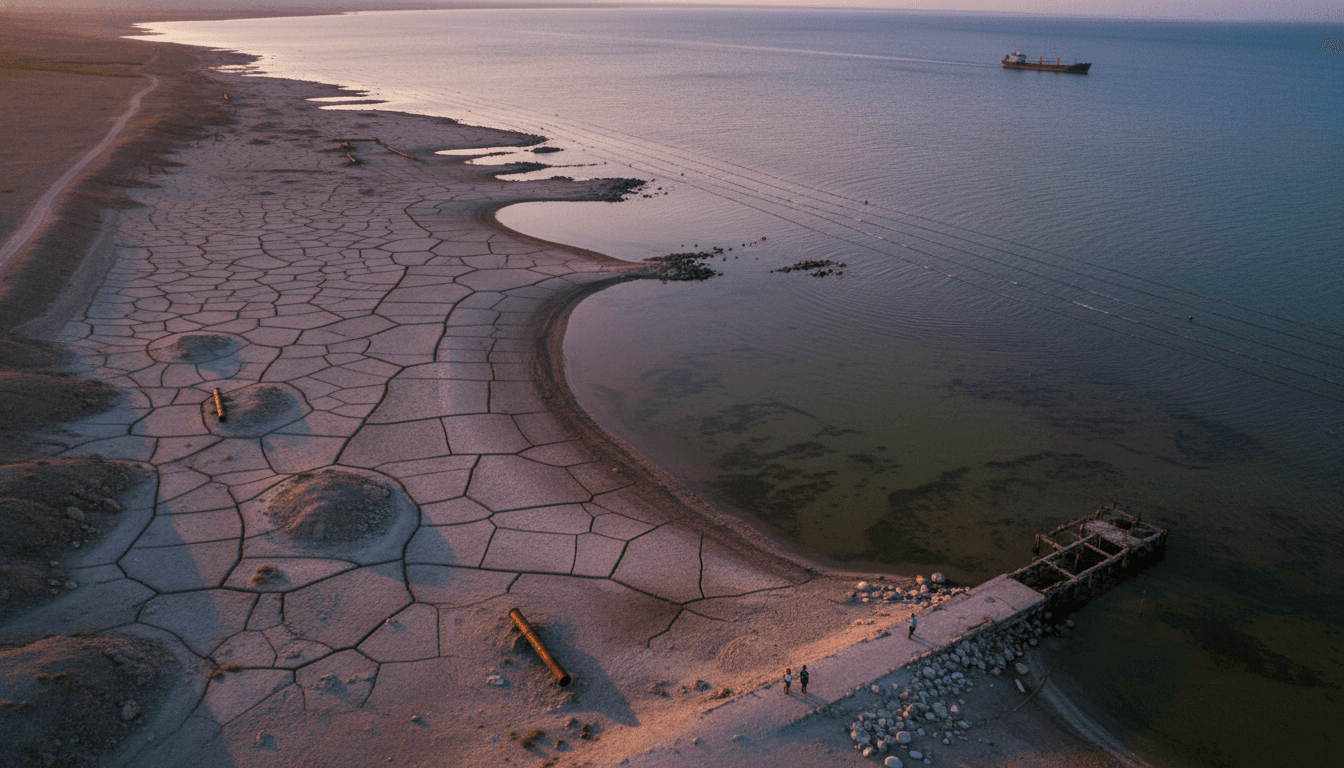
President Ilham Aliyev warns of a potential Caspian Sea crisis, delivering a stark message during his World Environment Day speech on Friday, June 5, 2026. The Azerbaijani leader highlighted the urgent environmental threats facing the world’s largest inland body of water, underscoring the need for immediate regional and international cooperation to avert ecological catastrophe and its far-reaching economic and geopolitical ramifications.
Addressing a global audience, President Aliyev detailed the escalating challenges, including fluctuating water levels, pollution, and the impact of climate change, that are collectively pushing the Caspian Sea toward a critical tipping point. His remarks serve as a direct call to action, emphasizing that the degradation of this vital ecosystem poses significant risks to the five littoral states – Azerbaijan, Iran, Kazakhstan, Russia, and Turkmenistan – and beyond. The warning comes amidst growing international concern over environmental security and its intersection with regional stability and economic prosperity.
The Caspian Sea Crisis Unfolds
The core of President Aliyev’s warning revolves around the multifaceted environmental pressures converging on the Caspian Sea. Declining water levels, a phenomenon observed over recent decades, threaten biodiversity, shipping routes, and coastal infrastructure. This hydrological shift is compounded by pollution from industrial activities, agricultural runoff, and oil and gas extraction, which further degrade water quality and impact marine life, including the endangered Caspian seal and various sturgeon species. The long-term economic consequences for fisheries, tourism, and hydrocarbon industries are substantial, potentially disrupting livelihoods across the region.
The Azerbaijani president’s speech on World Environment Day, a global platform for environmental awareness, strategically amplified the urgency of the situation. By framing the issue as a ‘crisis,’ Aliyev aimed to galvanize political will and resource allocation from both Caspian littoral states and the broader international community. His emphasis on collective responsibility and shared destiny underscores the interconnectedness of environmental health and regional stability. Related world news articles often highlight how environmental degradation can exacerbate geopolitical tensions and economic vulnerabilities, a dynamic clearly at play with the Caspian Sea.
“The Caspian Sea is not merely a regional asset; it is a global ecological treasure whose health is inextricably linked to the well-being of millions and the stability of a critical geopolitical region. Averting this crisis requires immediate, concerted action and a unified vision from all stakeholders.”
Impact Analysis
President Aliyev’s warning about a Caspian Sea crisis carries significant weight in the broader world news landscape. It elevates an environmental concern into a geopolitical imperative, demanding attention from international organizations, environmental bodies, and global powers. The Caspian Sea is a crossroads of energy, trade, and strategic interests, making any substantial environmental disruption a potential trigger for economic instability and diplomatic friction among the littoral states. The warning could spur renewed diplomatic efforts to finalize a comprehensive legal status for the sea, an issue that has remained contentious for decades, partly due to the competing interests over resource exploitation and environmental protection.
Economically, a deepening Caspian Sea crisis could impact global energy markets, given the region’s importance as a source of oil and natural gas. Environmental degradation could complicate extraction projects, increase operational costs, and deter foreign investment, thereby affecting supply chains and energy security. Furthermore, the ecological health of the Caspian influences the migratory patterns of birds and fish, impacting biodiversity far beyond its immediate shores and potentially triggering broader ecological alerts.
Context & Background
Concerns about the Caspian Sea’s environmental health are not new, but President Aliyev’s explicit declaration of a ‘crisis’ marks an escalation in rhetoric. Historically, the Soviet era saw significant industrial development around the Caspian, leading to substantial pollution. Post-Soviet independence brought new challenges, including increased oil and gas exploration and exploitation, often with varying environmental regulations across the five nations. Efforts to establish a unified legal framework for the Caspian have been ongoing since the collapse of the Soviet Union, culminating in the 2018 Convention on the Legal Status of the Caspian Sea. However, the implementation and enforcement of environmental protocols remain a complex challenge, often overshadowed by economic and political considerations. Previous events, such as significant fish die-offs and noticeable retreats of the coastline, have periodically brought the Caspian’s plight into focus, but a coordinated, high-level response has often been elusive.
What’s Next
President Aliyev’s warning is likely to prompt a series of diplomatic engagements and technical discussions among the Caspian littoral states. We can anticipate calls for increased scientific research, data sharing, and joint environmental monitoring programs. The immediate future may see renewed impetus for implementing existing environmental agreements and potentially negotiating new protocols specifically addressing water level management, pollution control, and biodiversity conservation. International organizations, such as the United Nations Environment Programme (UNEP), may be called upon to facilitate these discussions and provide technical assistance. Furthermore, energy companies operating in the region may face heightened scrutiny and pressure to adopt more stringent environmental safeguards. The decisions made in the coming months and years will be critical in determining whether the Caspian Sea crisis can be averted or if its environmental degradation will accelerate.
Key Takeaway
President Aliyev’s warning on World Environment Day serves as a critical reminder that environmental challenges, particularly those affecting shared resources like the Caspian Sea, transcend national borders and demand a unified international response. The potential Caspian Sea crisis highlights the delicate balance between economic development and ecological preservation, underscoring that long-term prosperity is inextricably linked to environmental sustainability. Failure to address these pressing issues could lead to severe ecological damage, economic instability, and increased geopolitical tensions in a strategically vital region.