Volkswagen job cuts totaling 50,000 positions were officially confirmed today, marking a watershed moment for the global automotive industry as Germany’s premier manufacturer grapples with a collapse in profitability and a stagnant electric vehicle transition. The announcement, delivered on Tuesday, March 10, 2026, follows a fiscal year described by board members as “dismal,” sending shockwaves through the European industrial heartland and signaling a radical contraction of the 88-year-old automotive giant.
The restructuring plan is the most aggressive in the company’s history, aimed at stabilizing a balance sheet that has been battered by high operational costs and shifting geopolitical winds. According to the group’s 2025 annual report, net profits plummeted by 44%, falling to €6.9 billion from €12.4 billion the previous year. This represents the company’s lowest profit level since the 2016 “Dieselgate” scandal, a comparison that underscores the existential nature of the current crisis. While revenue remained relatively stable at €321.9 billion, the group’s operating margin dropped to a critical 2.8%, a figure that CEO Oliver Blume and CFO Arno Antlitz admit is far below the long-term target of 8% to 10% required for sustainable innovation.
Analyzing the Scale of Volkswagen Job Cuts
The decision to implement 50,000 Volkswagen job cuts by 2030 represents a significant escalation of previous efficiency drives. The workforce reduction is tiered across the group’s various divisions: 35,000 positions will be eliminated from the core Volkswagen brand—a figure initially proposed in late 2024—while an additional 15,000 roles will be cut across the premium Audi and Porsche brands, as well as the group’s embattled software subsidiary, CARIAD. Management has emphasized that these reductions will be achieved through voluntary departures, early retirement packages, and phased retirement schemes, effectively ruling out involuntary layoffs to maintain a fragile peace with the powerful IG Metall union.
“This represents the company’s lowest profit level since the 2016 ‘Dieselgate’ scandal.”
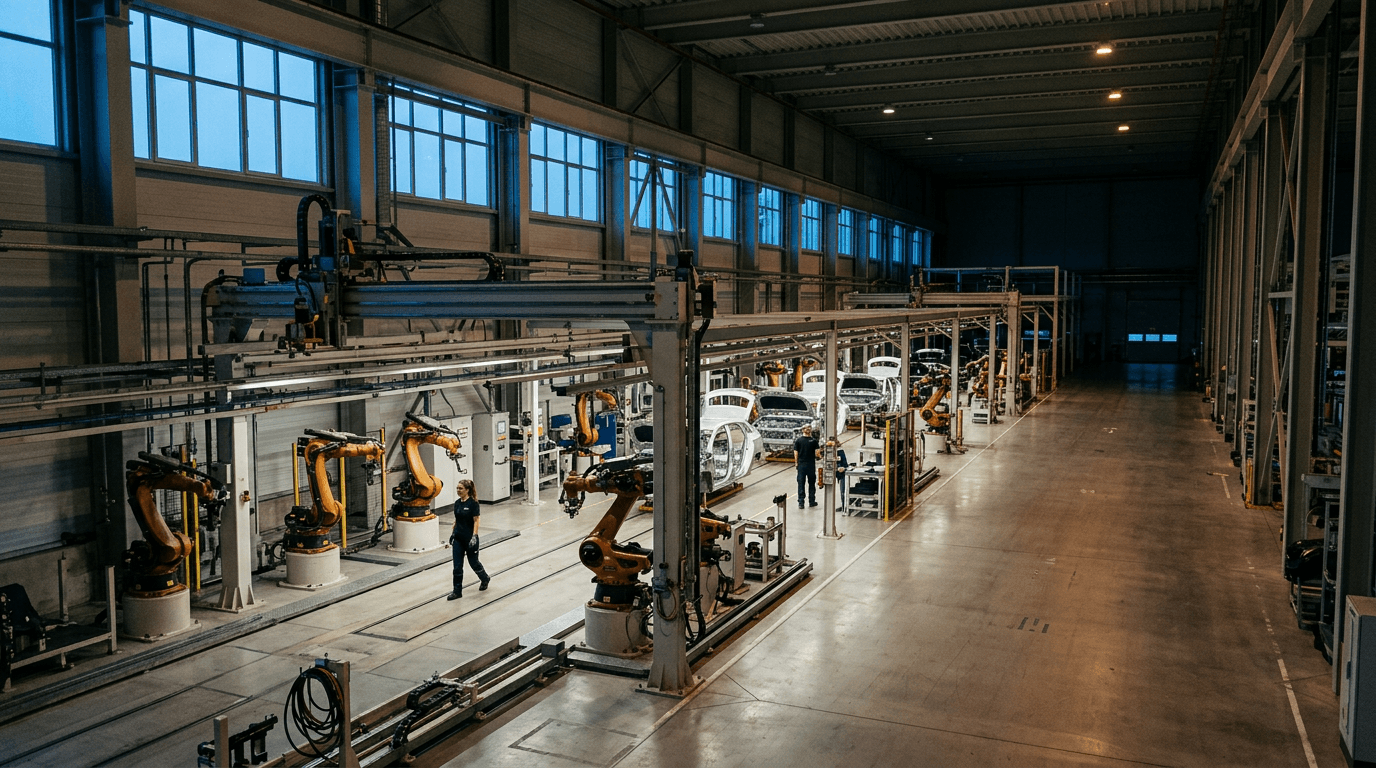
For the first time in its history, the group is also moving to shutter domestic production facilities. The Dresden “Transparent Factory,” long a symbol of the company’s modern manufacturing prowess, is slated to cease vehicle production by the end of 2026. Furthermore, the Osnabrück plant faces total closure in 2027. These closures highlight the grim reality of excess capacity in an era where European demand has failed to return to pre-pandemic levels. While vehicle deliveries in Europe saw a modest 5% uptick, this was insufficient to offset a 6% decline in China and a staggering 12% drop in North America, where the group failed to reach its 9-million-car milestone.
The drivers of this crisis are what leadership calls a “triple whammy” of market pressures. In China, formerly the group’s most reliable profit engine, local competitors such as BYD and Geely have seized dominance in the EV sector, leading to an 8.4% shrinkage in VW brand sales within the region. Simultaneously, the global adoption of electric vehicles has proved more volatile than anticipated. High development costs for the ID. series have strained cash flow, forcing the luxury subsidiary Porsche to pivot back toward internal combustion engine (ICE) production—a strategic reversal that incurred €3 billion in extraordinary expenditures. For more on how global markets are shifting, see more trending stories on our platform.
Geopolitical friction has added further strain. The re-imposition of US tariffs on non-American carmakers has cost the group billions, eroding margins in what was once a key growth territory. Industry analysts suggest that the Volkswagen job cuts are a necessary, if painful, correction to a business model that has become uncompetitive. High labor and energy costs in Germany have made it increasingly difficult for the company to compete with leaner, vertically integrated Chinese manufacturers who benefit from lower overheads and more agile software development cycles.
Market reaction to the announcement was cautiously optimistic. Volkswagen shares rose nearly 4% as the trading day progressed, with investors seemingly relieved by the group’s commitment to achieving €6 billion in net annual savings by 2030. However, the stock remains 12% lower than its position at the start of the year, reflecting deep-seated concerns about the long-term viability of the group’s €160 billion investment plan for future technologies. Success in this restructuring will depend heavily on the group’s ability to fix its software woes at CARIAD and regain lost ground in the Chinese market.
As the automotive world watches, the implementation of these Volkswagen job cuts will serve as a bellwether for the broader European industrial sector. The transition to a digital, electric future is proving far more treacherous than the optimistic forecasts of the early 2020s suggested. Whether Volkswagen can emerge from this period as a leaner, more competitive entity—or if these cuts are merely the first of many—will be the defining story of the decade for the German economy. For now, the focus remains on the thousands of workers facing an uncertain future and the management team tasked with navigating a “perfect storm” of trade wars and technological disruption. You can find more trending stories regarding the automotive sector and global trade on our main news feed.
The coming months will be critical as the group enters detailed negotiations with labor representatives. While the commitment to voluntary departures avoids immediate strikes, the closure of historic plants like Osnabrück marks a psychological shift in the relationship between the German state and its most iconic brand. Investors and employees alike will be watching for signs that the €6 billion in savings are being effectively funneled into the high-margin software and battery technologies that will dictate the next century of transport.