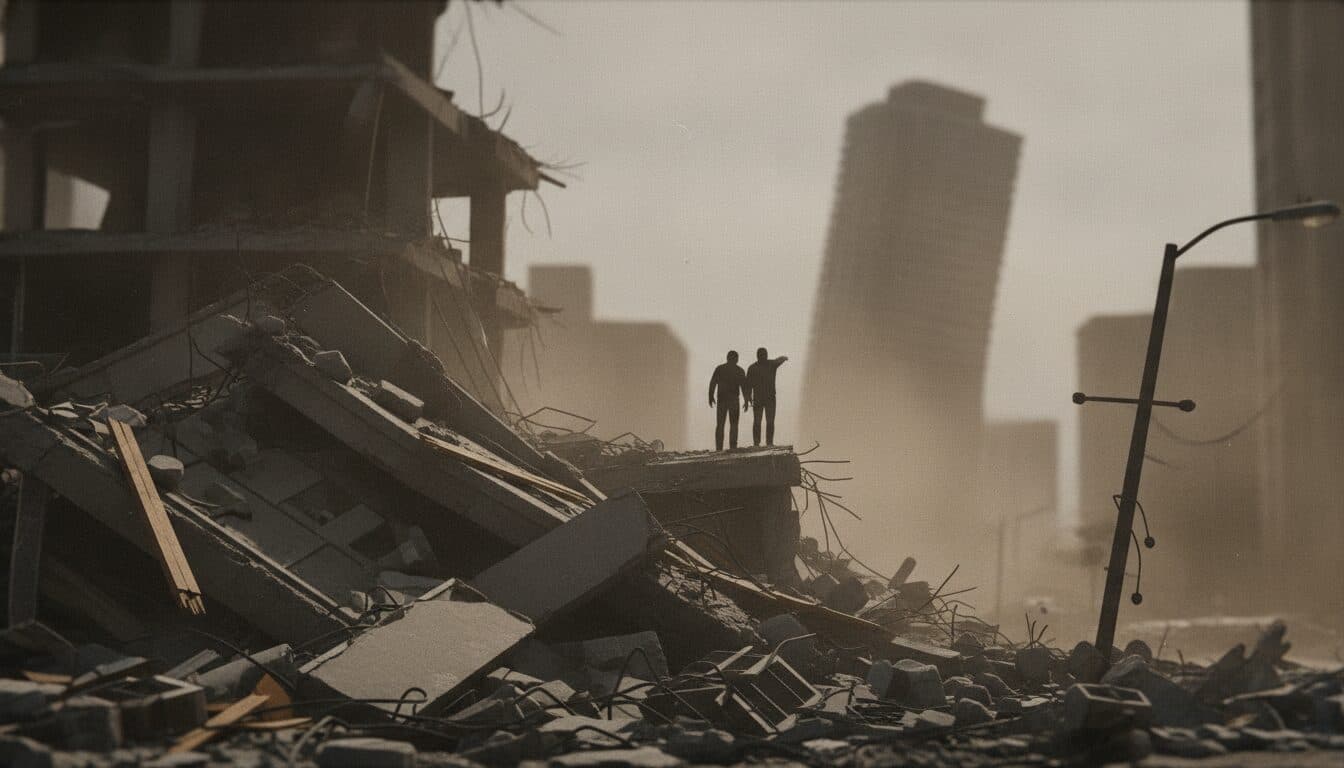
Venezuela is grappling with the immediate aftermath of two catastrophic earthquakes that struck on Wednesday, June 24, 2026, leaving a trail of death, injury, and widespread destruction. The back-to-back tremors, registering magnitudes 7.2 and 7.5, represent the strongest seismic events to hit the nation in over a century, and their profound impact is only just beginning to unfold. As of early Thursday, Acting President Delcy Rodríguez reported at least 164 fatalities and 971 injured, figures that are tragically expected to escalate as arduous rescue operations continue across the hardest-hit regions.
The seismic shockwaves, occurring within a mere 39 seconds of each other at approximately 6:05 p.m. local time, had their epicenters in Yaracuy, west of Caracas. The initial 7.2 magnitude quake was classified as a foreshock, preceding the more powerful 7.5 magnitude event. The tremors were felt extensively across Venezuela, prompting evacuations as far afield as northeastern Colombia, northern Brazil, and even Caribbean nations like Aruba, Bonaire, and Curaçao. More than 20 aftershocks have been recorded, with the largest measuring magnitude 4.5, underscoring the ongoing instability and threat to rescue workers and survivors.
Venezuela Earthquakes Devastate Infrastructure, Economy
The scale of structural damage is immense, with dozens of buildings collapsing, particularly in the state of La Guaira, located approximately 20 miles north of the capital. La Guaira has been officially designated a disaster zone, bearing the brunt of the destruction. Caracas itself experienced significant damage, with buildings toppling and critical infrastructure in shambles. Other affected states include Miranda, Aragua, Carabobo, and Falcón. The Simón Bolívar International Airport near Caracas, the country’s primary air hub, has sustained damage and remains closed, while subway and natural gas services in Caracas have been suspended. Power and telecommunications outages are widespread, further complicating rescue and relief efforts.
Experts are already weighing in on the nature of the structural failures. Maria Mohammed, president of the Structural Engineers Assn. of Southern California, observed that many of the collapsed structures appear to be “non-ductile concrete buildings,” a construction type notoriously lacking in sufficient steel reinforcement to withstand severe seismic forces. This vulnerability, coupled with Venezuela’s location along the active boundary between the Caribbean and South American tectonic plates, explains the country’s susceptibility to such devastating events.
The human toll is particularly grim. Beyond the confirmed fatalities and injuries, over 10,000 people are reported missing. Predictive models from the U.S. Geological Survey (USGS) paint a stark picture, suggesting that fatalities could range from 1,000 to 10,000, with a concerning 40% chance of the death toll reaching between 10,000 and 100,000. These figures highlight the catastrophic potential of the disaster and the immense challenge facing Venezuelan authorities and international aid organizations.
“We are fully mobilised to support the people of Venezuela following the deadly and devastating earthquakes that hit the country yesterday,” stated Under-Secretary-General for Humanitarian Affairs and Emergency Relief Coordinator Tom Fletcher, emphasizing the global response.
In response to the crisis, Acting President Delcy Rodríguez has declared a state of emergency, urging healthcare professionals to report to hospitals and redirecting rescue teams to the hardest-hit areas like La Guaira. The Venezuelan Red Cross has activated its Emergency Operations Center, deploying ambulances, mobilizing rescue personnel, and preparing shelter facilities for the displaced. School classes nationwide have been cancelled for several days, with some school buildings repurposed as shelters and donation centers.
International solidarity has been swift and substantial. The United States, under President Trump’s direction, is deploying search and rescue teams, medical resources, and humanitarian aid, with Secretary of State Marco Rubio pledging a “big, fast, and effective” response. The Netherlands is contributing a rescue team and approximately €2 million for relief efforts, while Switzerland has also pledged a large rescue team and equipment. The UN has mobilized to support Venezuela, coordinating the deployment of Urban Search and Rescue Teams and surging a rapid response team to reinforce its in-country presence. Other nations, including Argentina, Bolivia, Brazil, Chile, Ecuador, El Salvador, Mexico, Panama, and Uruguay, have also offered crucial assistance. The UN has also urged the Venezuelan government to lift restrictions on websites to help people access vital information, underscoring that it could be “a matter of life and death.”
The economic ramifications for Venezuela, already grappling with a fragile economy, are expected to be severe. The closure of the main international airport, disruption of critical infrastructure, and widespread damage to commercial and residential properties will undoubtedly exacerbate existing financial challenges. The cost of rebuilding and recovery will be astronomical, placing immense strain on a nation already facing significant economic headwinds. Investors will be closely watching the long-term impact on key sectors, including oil production and infrastructure development, as the country navigates this unprecedented crisis. For more insights on regional economic impacts, see our related trending articles.
The 7.5 magnitude event now stands as the largest to strike Venezuela since a 7.7 magnitude earthquake in 1900, which killed 21 people offshore. The memory of the 1967 magnitude 6.6 quake near Caracas that claimed 240 lives serves as a stark reminder of the city’s inherent seismic vulnerability. As rescue efforts intensify and the full scope of the tragedy becomes clear, the international community’s coordinated response will be crucial in mitigating the long-term human and economic fallout of these devastating Venezuela earthquakes.