Caracas, Venezuela – The confirmed death toll from Wednesday’s catastrophic “doublet” earthquake in Venezuela has surged to 1,430, with over 3,238 injured and tens of thousands still missing, as international aid efforts rapidly intensify across the devastated northern coast. The two powerful tremors, measuring 7.2 and 7.5 magnitude and striking within 39 seconds of each other, represent the strongest seismic event to hit Venezuela in over 125 years, triggering a humanitarian crisis that is now testing the nascent leadership of interim President Delcy Rodriguez.
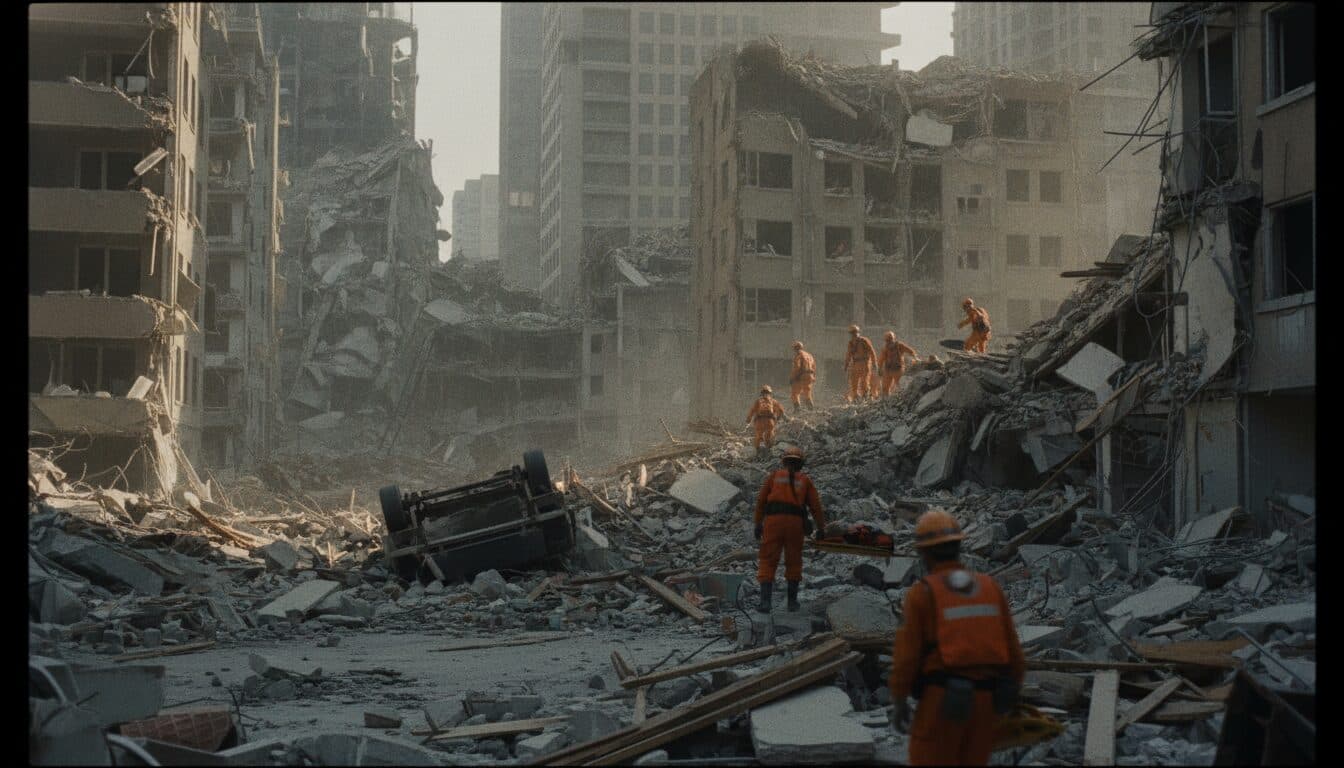
The sheer scale of the destruction is staggering, particularly in the Capital District, La Guaira, Miranda, Carabobo, and Yaracuy states. The shallow depth of the mainshock, just 10 kilometers, concentrated immense destructive energy at the surface, leading to widespread building collapses in densely populated cities like Caracas, Valencia, and Maracay. La Guaira has been declared a disaster area, bearing the brunt of infrastructure damage and ongoing rescue operations. Initial satellite analysis by the IOM and Microsoft AI for Good Lab revealed that 31.5% of buildings in Catia La Mar alone suffered damage. Essential services, including Simón Bolívar International Airport and numerous hospitals, have sustained critical damage, crippling power, telecommunications, and transport systems. Over 302 aftershocks, including a magnitude 5.1 event, have continued to rattle the region, sustaining high-risk conditions and forcing many families to sleep outdoors, fearing further collapses.
Venezuela Earthquake Death Toll Rises Amid Desperate Search
The human cost of the Venezuela earthquake is escalating with terrifying speed. While the confirmed death toll stands at 1,430, the number of missing persons remains a grave concern, with estimates ranging from 50,000 to 55,000. These figures likely include individuals cut off by communication outages, but the sheer volume underscores the immense challenge facing rescue teams. The U.S. Geological Survey (USGS) PAGER service had previously estimated a significant probability of the death toll reaching well into the tens of thousands, highlighting the potential for this figure to climb even higher as search efforts continue.
International solidarity has been swift and substantial. Rescue teams from 17 nations are now on the ground, working tirelessly against the clock to locate survivors trapped beneath the rubble. The European Commission has been a significant player, deploying rescue teams and emergency assistance from eight member states, including Czechia, Spain, and Germany, through the EU civil protection mechanism. This mobilization includes over 520 rescuers, medical staff, and vital telecommunications equipment. The EU’s Copernicus satellite service has also been activated, providing crucial emergency mapping to guide operations. The United States has pledged a substantial $150 million in humanitarian assistance, signaling a significant commitment to recovery efforts.
The International Federation of Red Cross and Red Crescent Societies (IFRC) has launched an Emergency Appeal for 50 million Swiss francs, aiming to assist 300,000 people, primarily in La Guaira and Greater Caracas. The IFRC has already dispatched 17 tonnes of humanitarian supplies, including kitchen sets, hygiene kits, and mosquito nets. Despite their own national headquarters suffering damage, the Venezuelan Red Cross is playing a critical role in search and rescue, first aid, and damage assessments. Other global organizations like UNICEF USA, Save the Children, and Americares are also scaling up their emergency support. The UN’s International Organization for Migration (IOM) estimates that up to 6.76 million people could be affected by the earthquakes, with approximately 2 million residing in Caracas alone, underscoring the vast scope of the humanitarian challenge.
“We are going to rescue the people who are trapped,” interim President Delcy Rodriguez stated, welcoming international aid.
The unfolding tragedy carries significant political implications for interim President Delcy Rodriguez, who assumed office on January 5, 2026, following the U.S. intervention and the capture of Nicolás Maduro. Sworn in by her brother, Jorge Rodríguez, the president of the National Assembly, her administration faces its first major crisis. While she has publicly welcomed international rescuers and humanitarian aid, citizens in the hardest-hit areas report a noticeable scarcity of government rescuers, compelling many to initiate their own desperate searches for loved ones. This perceived gap in immediate government response has fueled public frustration. On Friday night, Venezuelan authorities announced they would restrict access to La Guaira, citing the need to manage chaos and traffic impeding search efforts – a move that, while perhaps necessary, could further strain public trust during this critical period. President Donald Trump and Secretary of State Marco Rubio have reportedly reaffirmed America’s pledge to assist in recovery efforts, offering crucial external validation and support to the new government.
Looking ahead, the immediate focus remains on search and rescue, with the grim expectation that the Venezuela earthquake death toll will continue to climb. The long-term implications involve massive reconstruction efforts, economic recovery, and the challenge of rebuilding trust between the new government and its populace. The ability of the Rodriguez administration to effectively coordinate aid, manage reconstruction, and address public grievances in the coming weeks will be a defining test of its legitimacy and capacity. For investors and international observers, the stability of Venezuela’s new political landscape, heavily reliant on U.S. backing, will be under intense scrutiny as the country grapples with this unprecedented natural disaster.