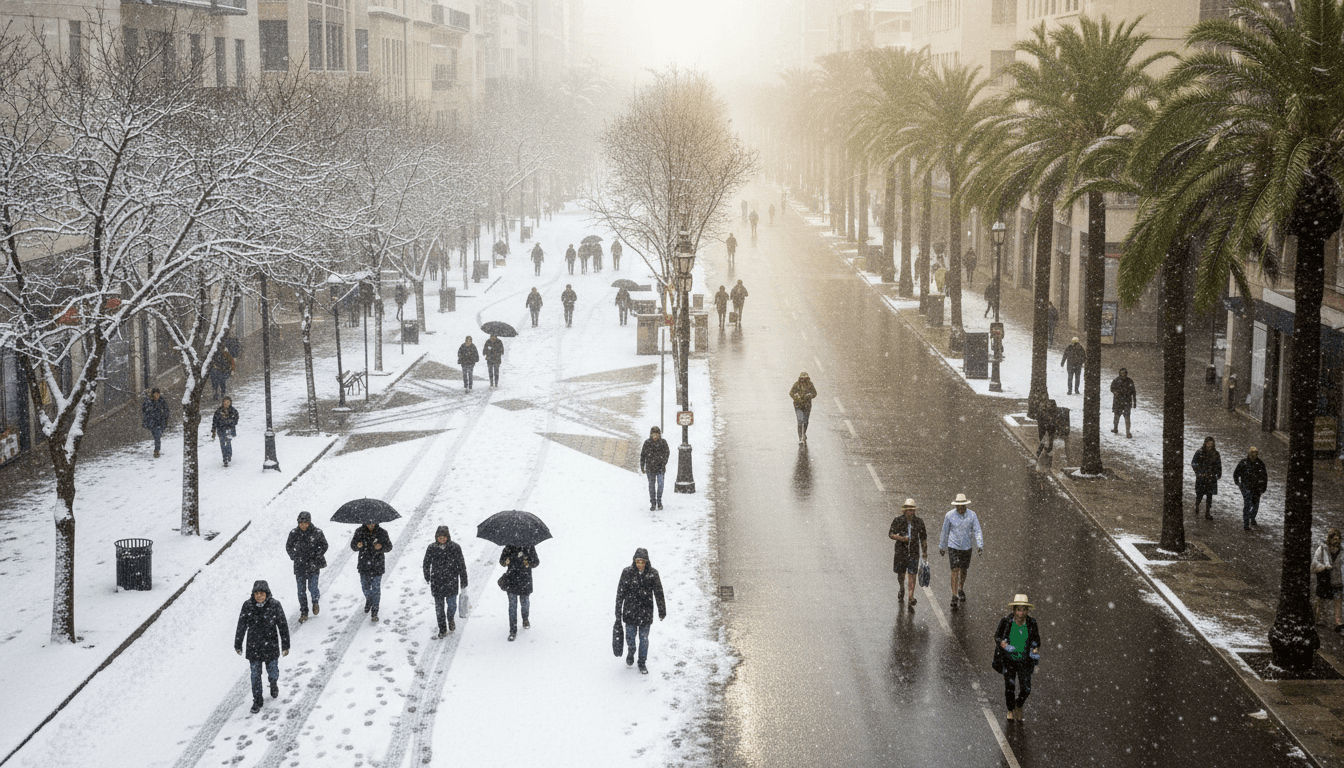
A rare confluence of US weather extremes, including blizzards, heat domes, and atmospheric rivers, is set to impact the nation simultaneously, raising significant concerns about widespread disruption and resource strain. This unprecedented convergence, unfolding this week and into next, marks a pivotal moment for infrastructure, emergency services, and the broader economy, as nearly every part of the U.S. prepares for or is already experiencing significant weather events.
The Multi-Front Assault: Blizzards, Heat Domes, and Atmospheric Rivers
The severity of the current situation cannot be overstated. From the northern Great Lakes to the Southwest, and stretching across the Pacific Northwest to Hawaii, the United States is grappling with a meteorological trifecta. Two consecutive storm systems are forecast to bring significant snowfall to the northern Great Lakes states, with some areas potentially receiving 3 to 4 feet of snow. The first system, which moved into the Pacific Northwest on March 11, 2026, and then into the Northern Plains on March 12, brought strong winds and 3-6 inches of snow along the U.S.-Canada border, with 6-12 inches in Michigan’s Upper Peninsula. The second system, expected from Saturday, March 14, to Monday, March 16, is predicted to bring even more snowfall and a higher risk of blizzard conditions, potentially developing into a “bomb cyclone” over land. Simultaneously, the polar vortex is anticipated to bring “soul-crushing Arctic chill” to the Midwest and Eastern states.
While the northern states brace for winter’s fury, the Southwest is contending with an entirely different threat: a burgeoning heat dome. Temperatures are expected to reach triple digits, an occurrence unprecedented for this early in the year. Phoenix, Arizona, for instance, is forecast to hit 98 degrees Fahrenheit on Tuesday, March 17, followed by 103, 105, and two consecutive days of 107 degrees Fahrenheit. Historically, Phoenix has never reached 100 degrees before March 26. This follows unusual 90-degree March weather already experienced in Los Angeles. Heat domes occur when a high-pressure system traps hot air, leading to prolonged periods of extreme heat, exacerbating drought conditions and increasing energy demand.
Adding another layer of complexity, the Pacific Northwest is currently experiencing a long-duration atmospheric river event that made landfall on March 11, 2026, bringing heavy rain and snow to parts of Washington and Oregon. This event is expected to continue through early March 14, with forecasts indicating over 90% probability of more than 60 hours of AR3 conditions (a scale for atmospheric river intensity) in coastal southern Washington and Oregon, and localized AR4 conditions. Total accumulations of 4-7 inches of rain are expected across the northern Oregon Coast Range and the Cascades, with localized totals exceeding 10 inches at higher elevations. Hawaii is also experiencing an atmospheric river, leading to persistent heavy rain and significant flooding concerns.
Economic Fallout and Resource Strain from US Weather Extremes
The economic ramifications of such widespread and diverse extreme weather events are profound. In 2024, the U.S. experienced 27 individual weather and climate disasters with damages exceeding $1 billion, totaling approximately $182.7 billion – ranking as the fourth-costliest year on record. From 1980 to 2024, the U.S. has experienced 403 weather and climate disasters costing over $1 billion each, with a cumulative cost exceeding $2.915 trillion.
“Nearly every part of the U.S. is being, or is about to be, impacted by this wild weather. We anticipate extreme weather in all 50 states,” stated former NOAA chief scientist Ryan Maue, underscoring the national scope of the crisis.
The simultaneous occurrence of these events is likely to stretch national resources to their limits. Blizzards and severe cold lead to power outages, travel chaos, and increased demand for heating fuel. Heat domes cause increased energy consumption for cooling, pose significant health risks, and can worsen drought conditions, impacting agriculture and water supplies. Atmospheric rivers, while sometimes beneficial for drought relief, can also cause severe flooding, landslides, and infrastructure damage, costing an average of $1.1 billion annually on the West Coast. The unpredictability and increasing intensity of these US weather extremes are alarming the insurance industry, which bases premiums on previous trend data, potentially leading to widespread economic effects. A new study suggests there’s a 50-50 chance that U.S. disasters will cause over $1 trillion in damages between 2026 and 2030.
A Jet Stream Gone Wild: Climate Change’s Shadow
Meteorologists like Marc Chenard of the National Weather Service’s Weather Prediction Center and Ryan Maue attribute this unusual pattern to a “jet stream gone wild,” with near-vertical drops and ascents. Numerous studies connect unusual jet stream and polar vortex activity to shrinking Arctic sea ice and human-caused climate change. The dramatic rise in the intensity of weather events, such as droughts and floods, has been observed over the past five years, with figures from last year reaching twice the 2003-2020 average, according to NASA data. This steep increase was not foreseen by researchers, who point to climate change as the most likely cause. Rising temperatures are disrupting key drivers like the jet stream and the polar vortex, altering weather patterns.
The World Meteorological Organization calculates an 80% chance that at least one of the next five years will surpass 2024 as the warmest year on record, indicating continued increases in global temperatures and climate risks. This context suggests that the current convergence of US weather extremes is not an isolated anomaly but potentially a harbinger of a more volatile climatic future. Businesses, governments, and communities must urgently adapt to this new reality.
As the nation braces for the full impact of these converging weather systems, the immediate focus is on emergency response and mitigation. However, the long-term implications for infrastructure resilience, economic stability, and societal well-being are undeniable. The coming days will test the limits of national preparedness, offering a stark reminder of the escalating costs and challenges posed by a rapidly changing climate.