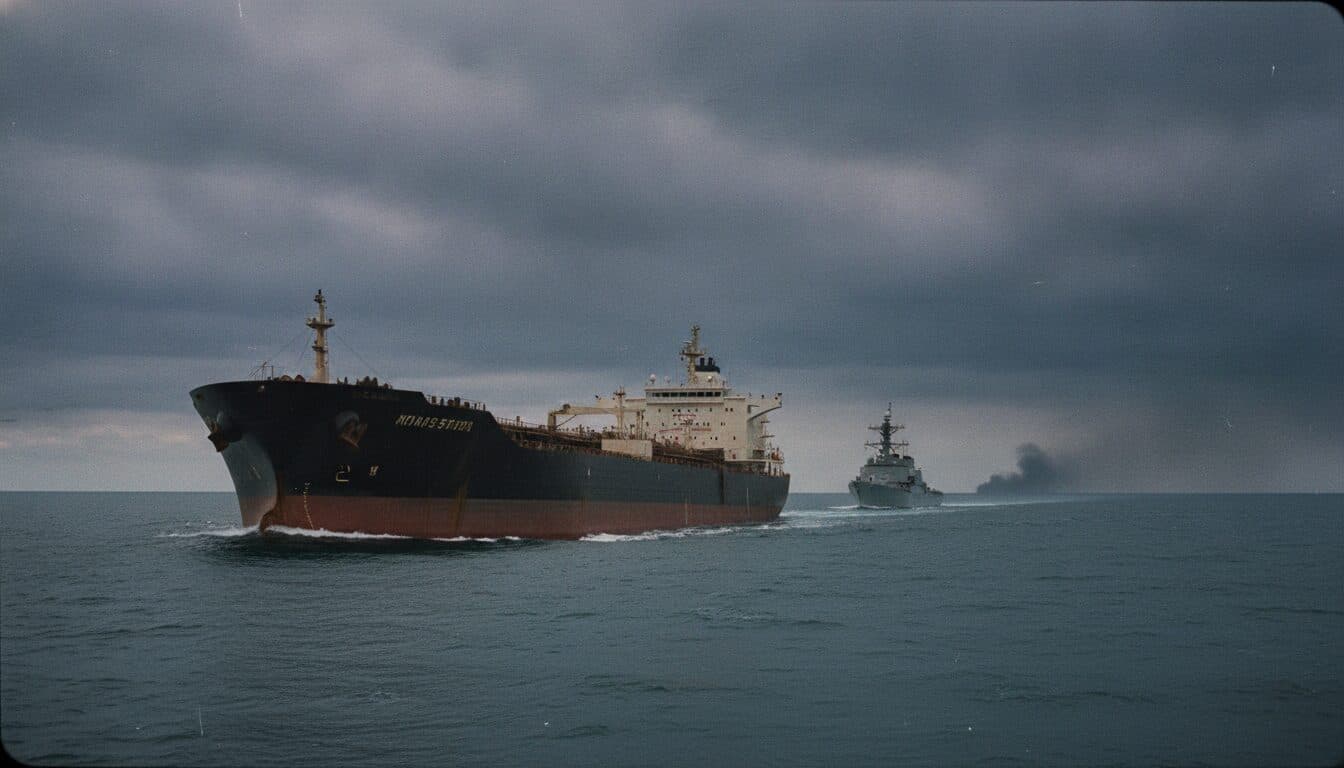
The global energy market braces for further volatility as a US-led task force, operating under the banner of “Project Freedom,” commenced efforts on Monday, May 4, 2026, to reroute ships in the critical Strait of Hormuz. This strategic maneuver, aimed at guiding stranded vessels through an “enhanced security area,” comes amidst escalating tensions with Iran, whose military has issued stark warnings of military retaliation against any foreign armed forces attempting to enter the waterway without coordination.
The Strait of Hormuz, a narrow passage between Oman and Iran, is an indispensable chokepoint for international trade, particularly for global oil and gas supplies. An estimated 20% of the world’s oil trade and a substantial portion of liquefied natural gas (LNG) transits this waterway daily. Its continued disruption, which began in March with Iran’s initial closure, carries severe implications for the global economy, threatening to push energy prices higher and exacerbate recessionary fears.
Project Freedom Navigates Dual Blockades
President Donald Trump characterized “Project Freedom” as a “humanitarian gesture” designed to aid vessels running low on supplies, promising that the US would “guide” trapped ships. The US Central Command (CENTCOM) confirmed its support, detailing a robust deployment including over 100 aircraft, several guided-missile destroyers, and 15,000 troops. While the exact nature of the assistance – whether direct escorts or primarily navigational guidance – remains somewhat ambiguous, the intent is clear: to restore some semblance of order and passage in the Strait of Hormuz.
This initiative directly challenges Iran’s assertion of control over the strait. Major General Ali Abdollahi, commander of Khatam al-Anbiya military headquarters, reiterated that the security of the Strait is “in our hands” and that safe passage requires explicit coordination with Iranian forces. Adding a layer of intense uncertainty, Iranian state media, specifically the Fars news agency, claimed on Monday that two missiles struck a US warship near Jask Island after it disregarded Iranian warnings. CENTCOM swiftly denied these claims via a post on X, stating unequivocally that “no US Navy ships have been struck” and affirming the ongoing enforcement of a naval blockade on Iranian ports.
The current crisis is a direct outgrowth of a broader conflict involving the US, Israel, and Iran, which ignited on February 28, 2026. Iran’s initial closure of the Strait of Hormuz in March prompted the US to impose a naval blockade on Iranian ports on April 13, 2026, aiming to cripple Iran’s oil revenue. This has created a precarious “dual blockade” scenario, trapping an estimated 20,000 seafarers on vessels in the Persian Gulf, raising urgent humanitarian concerns as supplies dwindle.
“The rerouting of ships in the Strait of Hormuz is not merely a logistical challenge; it is a high-stakes geopolitical gambit with profound implications for global trade and energy security. The direct confrontation between US and Iranian claims underscores the fragility of the current ceasefire.”
The delicate ceasefire, in effect since April 7, has done little to de-escalate tensions surrounding the vital waterway. Diplomatic efforts to resolve the conflict and fully reopen the strait have proven exceptionally difficult, highlighting the deep-seated animosity between the parties involved.
Market Volatility and International Reactions
The immediate impact of these developments is palpable across global markets. Oil and gas prices, already elevated by the ongoing conflict, are poised for further surges as traders factor in increased risk premiums and potential supply disruptions. The uncertainty surrounding the Strait of Hormuz directly threatens the stability of energy-dependent economies worldwide, prompting fears of inflationary pressures and a potential global recession. Shipping insurance rates for vessels operating in the Persian Gulf are expected to skyrocket, adding further costs to an already strained supply chain.
Internationally, reactions are mixed. French President Emmanuel Macron has called for a coordinated US-Iran effort to reopen the Strait of Hormuz, indicating that France would not participate in what he termed an “unclear” military operation. This stance reflects a broader international apprehension about the potential for wider regional conflict and the desire for a diplomatic resolution that ensures the free flow of commerce through this indispensable maritime artery.
The Path Ahead for the Strait of Hormuz
The coming days and weeks will be critical in determining the trajectory of this standoff. The success or failure of “Project Freedom” in safely rerouting ships without direct military engagement will be closely watched. Any verifiable incident involving US and Iranian forces in the Strait of Hormuz could rapidly escalate the conflict beyond its current parameters, with devastating consequences for the region and the global economy.
Experts suggest that a sustainable resolution hinges on renewed diplomatic engagement and a de-escalation of military posturing. However, with both sides entrenched in their positions and conflicting reports of engagements, the prospects for a swift resolution remain dim. Investors and policymakers alike must contend with the significant risk of prolonged disruption in the Strait of Hormuz, preparing for continued energy market volatility and the broader economic fallout.
The situation in the Strait of Hormuz serves as a stark reminder of the interconnectedness of global trade and geopolitics. The ability to navigate this critical chokepoint safely and reliably is not merely a matter of regional security but a fundamental pillar of global economic stability. The world watches anxiously as the US-led task force attempts to carve a path through increasingly perilous waters.