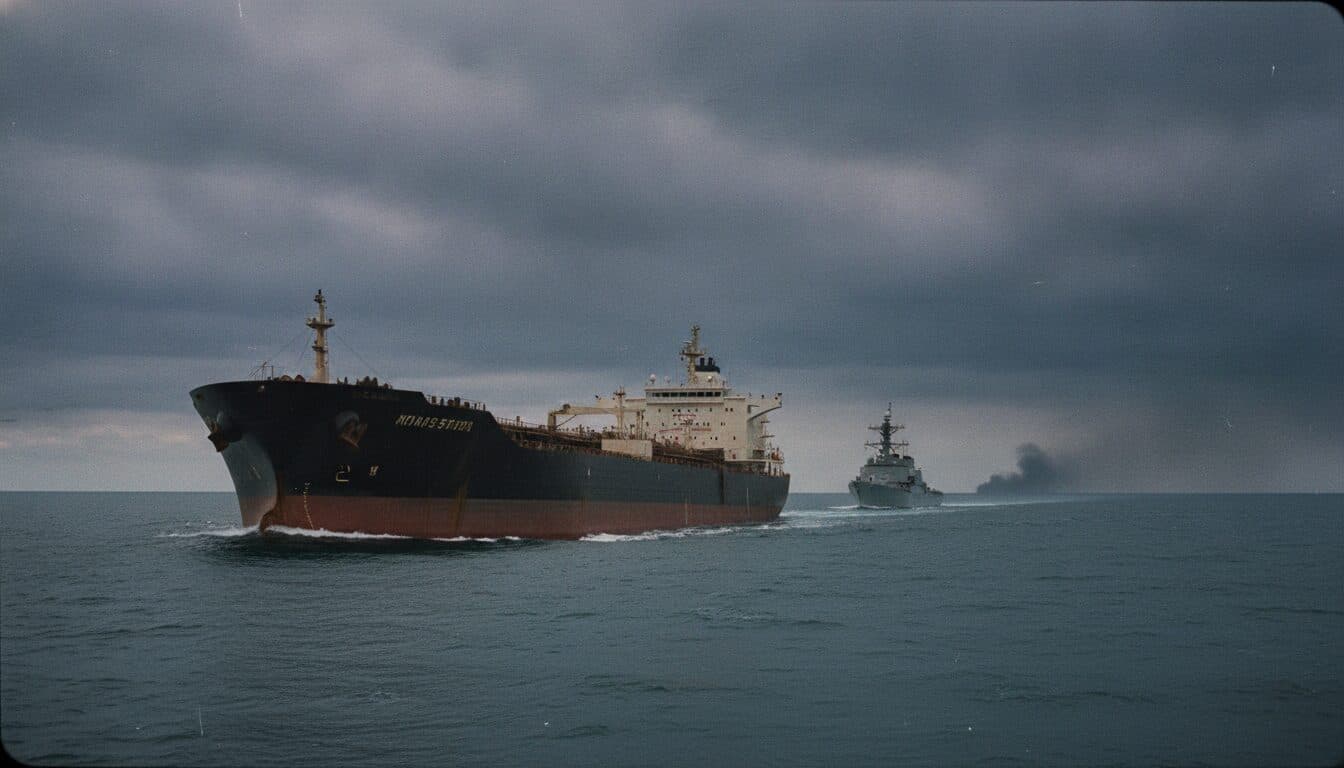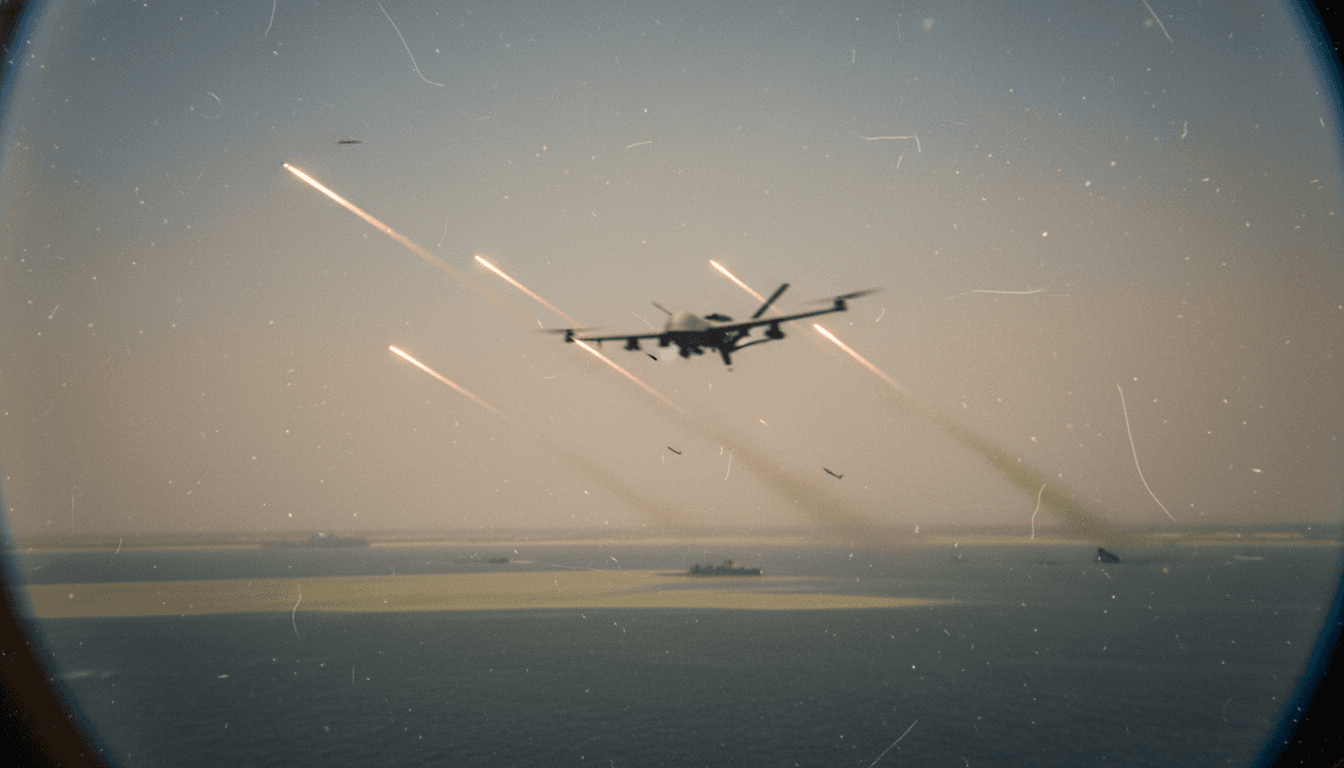
The volatile relationship between the United States and Iran has once again flared into direct military confrontation, casting a long shadow over ongoing peace negotiations. In a significant escalation of tensions, the US launched strikes in southern Iran on Monday, May 25, 2026, targeting what it described as missile launch sites and Iranian boats attempting to emplace mines. This action was swiftly followed by Iran’s claim on Tuesday, May 26, 2026, that its air defense units had shot down a US MQ-9 Reaper drone over the Persian Gulf, further ratcheting up the stakes in an already precarious regional standoff. The incident underscores the fragility of diplomatic efforts and the inherent dangers of maintaining a substantial military presence in a highly contested geopolitical arena.
According to US Central Command (CENTCOM) spokesperson Captain Tim Hawkins, the strikes were conducted as “self-defense strikes” to protect US troops from perceived threats posed by Iranian forces. Hawkins emphasized the US military’s “restraint during the ongoing ceasefire,” even as unconfirmed reports placed some of these strikes in Bandar Abbas, a strategic port city near the Strait of Hormuz. The Iranian response was immediate and defiant. The Islamic Revolutionary Guard Corps (IRGC) not only reported the downing of the MQ-9 Reaper drone, alleging it had entered Iranian airspace, but also claimed its forces “fired upon an RQ-4 drone and an intruding F-35 fighter jet,” forcing them to retreat. Tragically, Iranian state media reported the deaths of four naval personnel—Abbas Eslami, Ghodrat Zarangari, Abdolreza Golzari, and Hossein Sotoudeh—in the overnight US airstrikes, adding a human cost to the escalating tensions.
Iran’s Foreign Ministry vehemently denounced the US strikes as a “grave violation of the ceasefire” and a clear sign of “bad faith and unreliability.” They issued a stern warning that “The Islamic Republic of Iran will leave no act of aggression unanswered” and held the US regime “fully responsible for all consequences arising from these acts of aggression.” Echoing this sentiment, Iran’s Supreme Leader, Mojtaba Khamenei, declared that regional countries would no longer serve as “shields for American bases,” asserting a perceived decline in US influence in the region. These pronouncements highlight the deep mistrust and zero-sum mentality that often characterize US-Iran relations, making any path to de-escalation fraught with challenges.
US Strikes Iran: A Pattern of Confrontation
This recent exchange of hostilities is not an isolated incident but rather fits into a broader pattern of escalating tensions between the US and Iran, particularly involving drones and military actions. A notable precedent occurred on June 20, 2019, when Iran’s Air Defense Forces shot down a United States RQ-4A Global Hawk BAMS-D surveillance drone over the Strait of Hormuz. While Iran maintained the drone violated its airspace, the US contended it was operating in international airspace. That incident brought the two nations to the brink of armed conflict, with then-President Donald Trump famously reversing a planned military strike. Instead, the US opted for cyberattacks and new sanctions, demonstrating a preference for non-kinetic retaliation at that time.
More recently, on February 3, 2026, a US Navy F-35C fighter jet engaged and shot down an Iranian Shahed-139 drone that was described as “aggressively approaching” the aircraft carrier USS Abraham Lincoln in the Arabian Sea. This encounter transpired just hours after Iranian forces reportedly harassed a US-flagged merchant vessel in the Strait of Hormuz. These incidents, occurring within a relatively short timeframe, illustrate a consistent and dangerous cat-and-mouse game being played out in the skies and waters of the Middle East, where miscalculation or overreaction could trigger a wider conflict.
Despite these military actions, diplomatic channels remain, albeit precariously, open. Negotiations are ongoing in Doha, Qatar, aimed at securing a peace agreement to end a months-long conflict. Both Washington and Tehran have indicated that these talks are still alive. However, Iranian officials have voiced frustration, citing “frequent changes” and contradictions from the US side as significant obstacles to reaching a final deal. Secretary of State Marco Rubio, while acknowledging the difficulties, has stated that an agreement with Iran is still possible, reiterating President Trump’s stance that he wants either “a good deal” or “no deal at all.” This rhetoric, while perhaps intended to project strength, also adds an element of inflexibility to the negotiating process.
The United States maintains a substantial military footprint across the Middle East, with over 40,000 soldiers deployed in at least ten countries, including Bahrain, Egypt, Iraq, Israel, Jordan, Kuwait, Qatar, Saudi Arabia, Syria, and the United Arab Emirates. This extensive presence includes significant naval assets and permanent bases, such as Al Udeid Air Base in Qatar, which alone hosts over 10,000 US military personnel. This deployment has been expanded in recent years, primarily to deter threats from Iran and its affiliated groups. However, as the recent incidents demonstrate, this forward posture, while intended to project strength and ensure regional stability, also inherently increases the risk of direct confrontation with Iranian forces. Related trending articles often highlight the delicate balance the US attempts to strike between deterrence and de-escalation in the region.
“The recurring pattern of military engagement between the US and Iran, even amidst diplomatic overtures, underscores a deeply entrenched cycle of mistrust and reactive posturing. The danger lies in the inherent unpredictability when both sides believe they are acting in self-defense.”
The immediate impact of these events on global markets, particularly oil prices, will be closely watched. Any disruption to shipping in the Strait of Hormuz, a critical chokepoint for a significant portion of the world’s oil supply, could have severe economic repercussions. Investors will be wary of further escalation, which could lead to increased volatility in energy markets and potentially broader economic uncertainty. The defense sector, conversely, might see renewed interest, although the broader economic fallout of a prolonged conflict would likely outweigh any sectoral gains.
Looking ahead, the immediate future hinges on the trajectory of the Doha peace talks. Can diplomacy prevail over military posturing? Expert predictions are mixed, with many analysts suggesting that the current military actions serve as leverage in the negotiations rather than a complete abandonment of them. However, the loss of life and the destruction of military assets could harden positions on both sides, making a breakthrough even more challenging. The coming days will reveal whether this latest chapter of US strikes Iran and the subsequent drone incident will push the region closer to peace or further toward the brink of a wider conflict. The international community will undoubtedly exert pressure for de-escalation, but ultimately, the responsibility lies with Washington and Tehran to navigate this treacherous path without succumbing to the allure of further confrontation.
The key takeaway for readers and investors is the enduring volatility of the US-Iran relationship, which continues to pose a significant geopolitical risk. While direct conflict has been largely averted in recent years, the current situation demonstrates that the potential for escalation remains high. Vigilance regarding diplomatic developments and military movements in the Persian Gulf region is paramount, as events there can rapidly ripple across global markets and international relations.