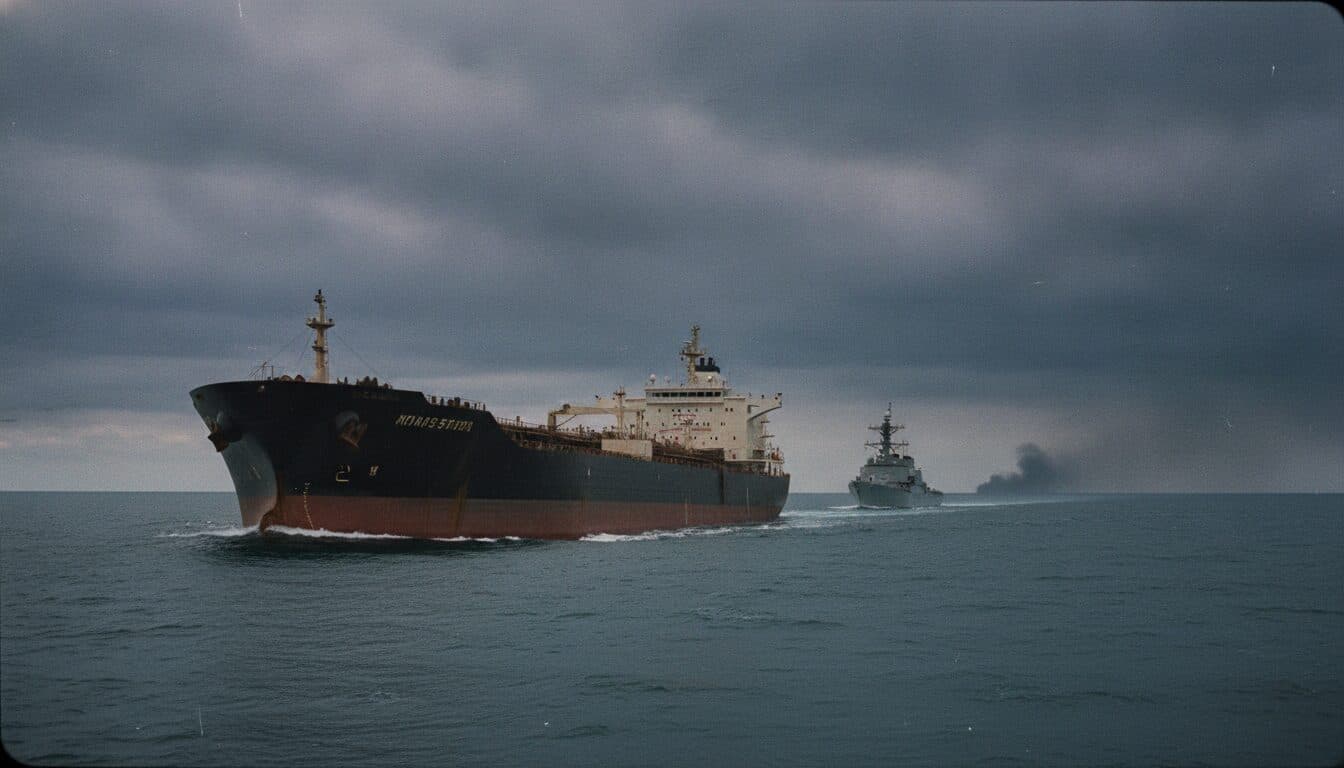
The volatile Strait of Hormuz has once again become the flashpoint for military action, as the United States launched retaliatory strikes against Iranian targets on Friday, June 26, 2026. This direct military response follows a drone attack by Iran’s Islamic Revolutionary Guard Corps (IRGC) on a Singapore-flagged cargo ship, the M/V Ever Lovely, a day earlier. The escalation poses a significant challenge to the fragile ceasefire framework between Washington and Tehran and raises immediate concerns about a broader conflict in a critical global shipping lane.
On Thursday, June 25, 2026, the M/V Ever Lovely was struck by an IRGC drone as it exited the Strait of Hormuz along the Omani coast. President Donald Trump confirmed that Iran launched at least four one-way attack drones, with one hitting the cargo ship’s upper deck and causing damage. Three other drones were reportedly shot down by US forces. While the British military’s UK Maritime Trade Operations center confirmed the vessel was hit off Oman, no casualties or environmental impact were reported, and the ship continued its journey.
The drone attack occurred amidst attempts by the United Nations’ International Maritime Organization (IMO) to facilitate the evacuation of hundreds of ships stranded in the Persian Gulf. The IMO had established a new, alternative shipping route hugging the shores of Oman. However, Iran’s Persian Gulf Strait Authority had previously warned that transit outside its designated routes would not be covered by safe passage guarantees. Following the incident, the IMO temporarily paused its evacuation operations, pending reconfirmed safety assurances for vessels in the region.
In response to what it characterized as “unwarranted aggression,” US Central Command (CENTCOM) announced on Friday that American forces struck Iranian missile and drone storage locations, as well as radar sites. These targets were situated along Iran’s coastline bordering the Strait of Hormuz and on the strategic Iranian-controlled Qeshm Island. A senior US official confirmed the military struck four targets using six aircraft, emphasizing that the actions were aimed at degrading capabilities used to threaten maritime traffic. President Trump condemned the drone attack as a “foolish violation” of the ceasefire agreement, with Vice President JD Vance stating on social media, “violence will be met with violence.”
Iran’s Islamic Revolutionary Guard Corps (IRGC) claimed to have attacked US sites in the Gulf region following the American strikes. Iranian state media labeled the US actions a “blatant violation” of the peace deal and warned of a “broader” response if aggression is repeated. The Iranian foreign ministry also reiterated its position that, under Article 5 of the Iran-US memorandum of understanding, transit management in the Strait of Hormuz falls under Iran’s responsibility.
This exchange of strikes represents a significant test for the interim understanding reached between the US and Iran just a week prior, an agreement intended to conclude their months-long conflict and reopen the Strait of Hormuz. The Strait of Hormuz is a vital global artery, through which a substantial portion of the world’s oil and liquefied natural gas flows. The escalating Middle East tensions have ignited concerns about regional stability and the future of maritime traffic. Despite the immediate flare-up, oil prices reportedly fell on hopes that traffic through Hormuz would continue to recover.
“The direct military engagement between the US and Iran over maritime security in the Strait of Hormuz marks a dangerous new phase, threatening to unravel any diplomatic progress and potentially disrupt global energy markets.”
The immediate impact on global markets has been somewhat muted, with initial oil price reactions showing a decline, suggesting that investors are currently betting on a contained conflict. However, any sustained disruption in the Strait of Hormuz would inevitably lead to significant economic repercussions, given its role as a choke point for global energy supplies. Industries reliant on timely shipping and stable energy prices are closely monitoring the situation, as prolonged instability could lead to increased insurance premiums and rerouting costs, impacting supply chains worldwide.
This latest incident is set against a backdrop of long-standing animosity and intermittent clashes in the Persian Gulf. The region has seen numerous incidents involving shipping and military assets over the years, often linked to geopolitical rivalries and sanctions. The recent ceasefire framework was a delicate attempt to de-escalate these tensions, making the current US strikes Iran a critical moment for regional stability. The Iranian warnings about transit outside designated routes highlight the contested nature of maritime control in the area.
Looking ahead, the immediate focus will be on whether either side seeks further military action or if diplomatic channels can be re-engaged to prevent a wider conflagration. The IMO’s decision to pause evacuation operations underscores the immediate safety concerns for commercial shipping. Future developments will likely depend on the diplomatic efforts, or lack thereof, by both the US and Iran, as well as the reactions of other regional and international powers. Investors and global businesses will be watching closely for any signs of de-escalation or further military posturing, which could dictate the trajectory of commodity prices and global trade in the coming weeks and months.
The key takeaway from this escalating situation is the profound fragility of stability in the Middle East and its immediate implications for global commerce. The direct US strikes Iran, coupled with Iranian retaliation claims, underscore the ever-present risk of miscalculation in a region critical to global energy supply chains. For investors, understanding the potential for both short-term market volatility and long-term disruptions to shipping and energy prices is paramount.