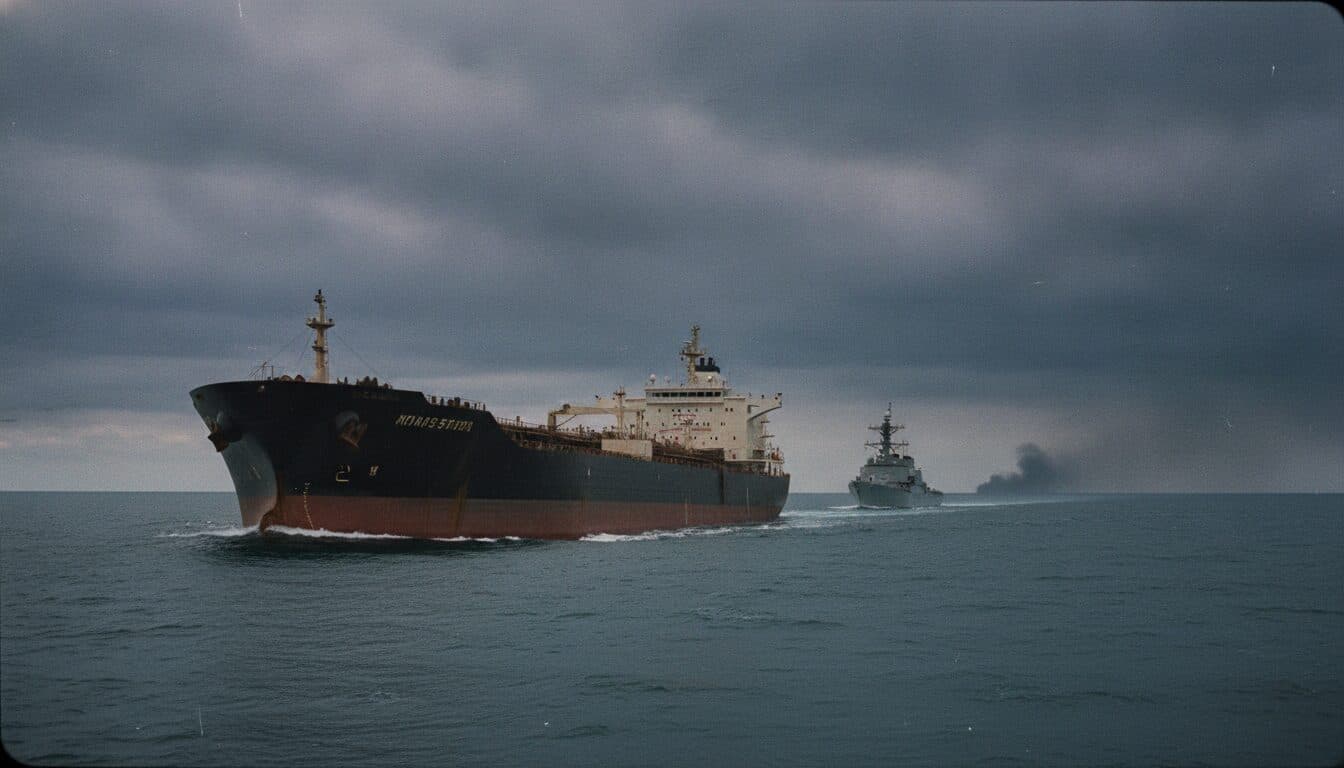
The US military blockade on Iranian ports has dramatically escalated global tensions today, Monday, April 13, 2026, driving oil prices above $100 a barrel and casting a long shadow over the world economy. This critical development follows the collapse of peace talks between the US and Iran over the weekend, pushing the longstanding conflict into a dangerous new phase.
The US Central Command (CENTCOM) announced that the blockade, effective 10 a.m. EDT, targets all vessels entering or departing Iranian ports and coastal areas, including those in the Arabian Gulf and Gulf of Oman. Notably, US forces will not impede vessels transiting the Strait of Hormuz to and from non-Iranian ports. This clarified stance diverges from President Trump’s earlier social media post, which had threatened a broader blockade of “any and all Ships trying to enter, or leave, the Strait of Hormuz.”
The immediate trigger for this escalation was the failure of negotiations in Islamabad, mediated by Pakistan. Vice President JD Vance, leading the US delegation, cited Iran’s unwavering refusal to abandon its nuclear ambitions as the primary sticking point. This impasse effectively ended a two-week ceasefire that had been in place since the US-Iran conflict began on February 28, 2026, with US and Israeli strikes on Iran.
Global Impact of the Blockade on Iranian Ports
The economic repercussions of this military action were instantaneous and severe. Global oil prices surged, with US crude rising to $104.24 a barrel and Brent crude, the international standard, reaching $102.29. Brent crude was up 7% to $101.75 a barrel, and West Texas Intermediate futures were up 7% to $103.48 on Monday. Some experts are now predicting a barrel could hit $110, fueling widespread fears of damaging inflation that could push up the cost of gasoline, food, and other basic goods globally. Global stock markets also experienced significant volatility.
The Strait of Hormuz is an indispensable global chokepoint, through which approximately one-fifth of the world’s oil and liquefied natural gas (LNG) passes. In 2024, an average of 20 million barrels per day (b/d) of oil flowed through the strait, accounting for about 20% of global petroleum liquids consumption. The vast majority of these oil exports, around 84% in 2024, are destined for Asian markets, with China, India, Japan, and South Korea being the top importers. The current US military blockade on Iranian ports threatens to severely disrupt these vital energy supplies.
“The blockade of Iranian ports is an act of war, effectively ending the existing ceasefire and pushing the region to the brink of a full-scale conflict with global economic ramifications.”
Iran has vehemently condemned the blockade as illegal and an act of “piracy,” threatening decisive retaliation if the US impedes traffic to and from its ports. Tehran has warned that no Gulf ports will be safe if its own are blocked and has stated it will respond forcefully to any aggressor in the Strait of Hormuz and elsewhere.
Context and Legal Implications
The legal framework surrounding the Strait of Hormuz adds another layer of complexity. International law grants vessels the right of transit passage, which cannot be unilaterally suspended or restricted. While Iran has not ratified the 1982 United Nations Convention for the Law of the Sea (UNCLOS), the US considers UNCLOS to reflect customary international law. The US blockade of Iranian ports is widely regarded as an act of war, fundamentally altering the calculus of the conflict. Prior to this, Iran had already been exerting significant control over traffic through the Strait of Hormuz, with only a fraction of the usual number of ships passing since the war began, contributing to earlier oil price spikes. Reports also indicate that Iran has mined the Strait of Hormuz, posing further challenges to its safe reopening.
This latest move by the US military blockade on Iranian ports marks a dangerous turning point. The failure of diplomatic efforts in Islamabad underscores the profound differences between Washington and Tehran, particularly regarding Iran’s nuclear ambitions. The economic fallout, driven by soaring oil prices, will be felt globally, exacerbating inflationary pressures and potentially slowing economic growth in major importing nations.
What’s Next
The immediate future is fraught with uncertainty. The world will be watching closely for Iran’s threatened retaliation, which could take various forms, from direct military action to cyberattacks or proxy engagements. The stability of global energy markets hinges precariously on developments in the Strait of Hormuz. International diplomacy will be crucial, but with peace talks having failed, avenues for de-escalation appear limited. The potential for miscalculation on either side remains alarmingly high, with the risk of a broader regional conflict looming larger than ever.
Readers should understand that this blockade not only represents a significant military escalation but also a profound threat to global economic stability. The interplay between military action, international law, and critical energy infrastructure makes this a situation of unprecedented gravity, demanding constant vigilance from policymakers, markets, and citizens worldwide.