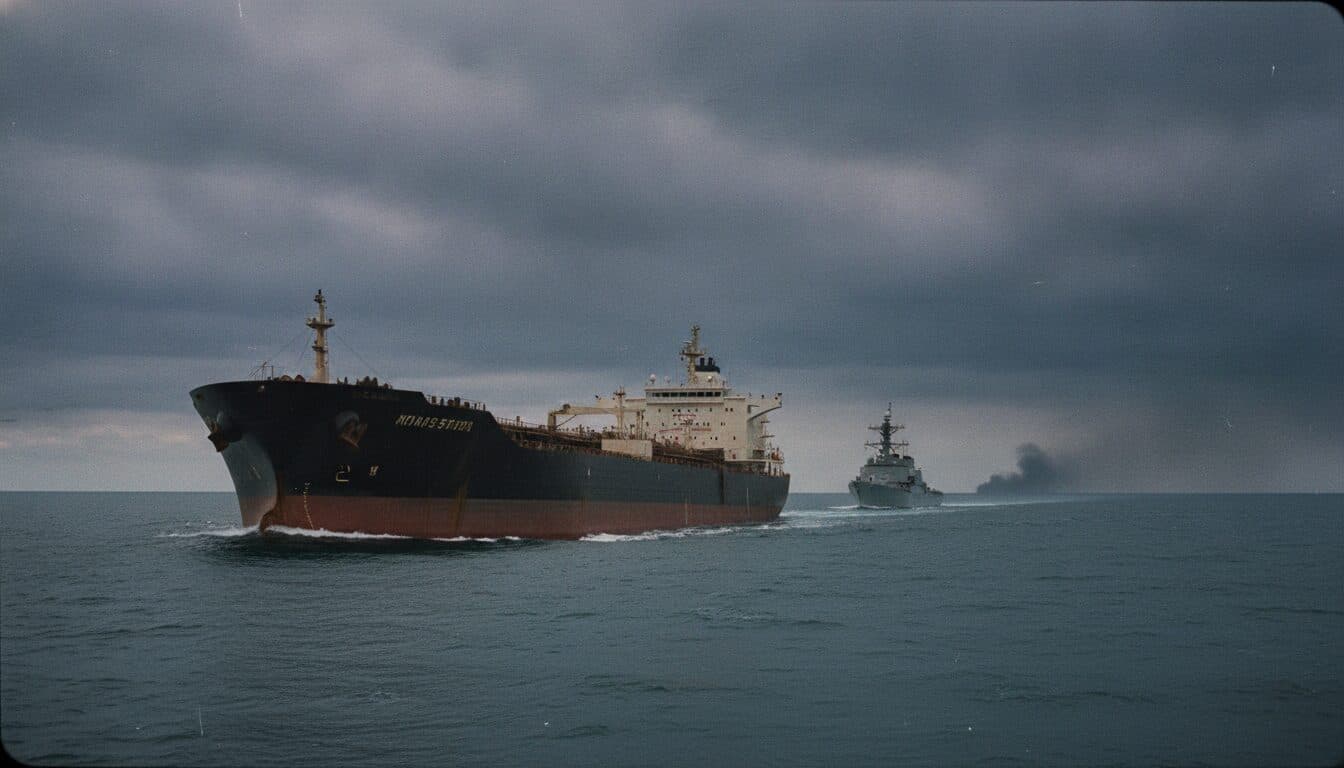
The Strait of Hormuz, a critical artery for global energy flow, has become the epicenter of escalating tensions between the United States and Iran, sending immediate shockwaves through oil markets and casting a long shadow over the global economy. Monday, May 4, 2026, witnessed a series of conflicting reports and direct confrontations, raising fears of a broader military conflict in the vital waterway.
The day’s events unfolded rapidly, beginning with the launch of ‘Project Freedom’ by the United States. Announced by President Donald Trump on Sunday, this initiative aims to guide ships from non-belligerent nations safely through the Strait of Hormuz. US Central Command (CENTCOM) outlined a substantial deployment for Project Freedom, including guided-missile destroyers, over 100 land and sea-based aircraft, multi-domain unmanned platforms, and 15,000 service members. However, some US officials clarified that the project is more a coordination effort to identify safe navigation lanes rather than a direct military escort.
Amidst this new US operation, Iran’s Fars news agency, linked to the Islamic Revolutionary Guard Corps (IRGC), made a significant claim: an American warship had been struck by two missiles near the Strait of Hormuz. This assertion was swiftly denied by CENTCOM spokesperson Captain Tim Hawkins, who stated the claims were “not true” and no US Navy ships had been hit. Further escalating the narrative, Iran’s military also claimed to have fired “cruise missile warning shots” at US Navy destroyers, preventing one from entering the waterway. Amir Hatami, commander of Iran’s army, posted on X that “American destroyers, using the trick of turning off the radar, were approaching the Strait of Hormuz, but our response was fire.” The US military, in turn, confirmed the presence and transit of two US Navy guided-missile destroyers in the Gulf to support Project Freedom and enforce a blockade of Iranian ports, adding that two US-flagged commercial vessels had successfully transited the Strait under the project’s auspices.
Adding another layer to the day’s hostilities, the United Arab Emirates (UAE) reported intercepting four cruise missiles launched from Iran. Three were successfully engaged over UAE territorial waters, while a fourth landed in the sea. This marks the first such attack since a ceasefire between the US and Iran in early April. The UAE also reported an Iranian drone attack on an ADNOC oil tanker in the Strait of Hormuz, though fortunately, no injuries were reported. Major General Ali Abdollahi, a senior Iranian commander, reiterated Iranian warnings, asserting that the security of the Strait is under Iranian control and any foreign armed force, particularly the US military, attempting to approach or enter without coordination would be attacked.
“The direct confrontation and conflicting reports between the US and Iran in the Strait of Hormuz are causing significant concern over potential military escalation and its immediate impact on oil prices and the global economy.”
The immediate impact of these escalating US-Iran tensions is most acutely felt in global markets. Oil prices have surged dramatically, with Brent crude gaining a staggering 50% in March alone. The effective closure of the Strait of Hormuz, which typically handles about 20% of the world’s seaborne oil trade and 20% of liquefied natural gas, has created immense supply concerns. The global stock market has reacted cautiously, with major indices like the S&P 500 and Nasdaq Composite experiencing drops. Beyond the financial implications, hundreds of commercial vessels and an estimated 20,000 seafarers have been stranded in the Gulf for weeks or months due to the dual blockade, facing acute shortages of food and essential supplies.
This current flashpoint is rooted in a broader conflict that ignited on February 28, 2026, following US and Israeli airstrikes against Iran, including the assassination of Supreme Leader Ali Khamenei. In retaliation, Iran launched missile and drone attacks on Israel, US military bases, and US-allied Gulf states. Iran subsequently closed the Strait of Hormuz, prompting the US to impose a naval blockade on Iranian ports on April 13, 2026, creating a “dual blockade” of the strait. While a temporary ceasefire was agreed upon in early April and later extended indefinitely by President Trump, underlying tensions over the Strait of Hormuz have remained critically high, culminating in Monday’s dramatic developments.
Looking ahead, the situation in the Strait of Hormuz remains highly volatile. The success and nature of ‘Project Freedom’ will be closely watched, as will Iran’s continued response to US naval presence. The international community is bracing for further developments, with energy markets particularly sensitive to any shifts. The safety of international trade routes and the avoidance of direct military conflict are paramount concerns, making the Strait of Hormuz a focal point for global diplomacy and security in the coming days and weeks. Investors and policymakers will be keenly observing any signs of de-escalation or, conversely, further military engagements that could push oil prices to unprecedented levels and destabilize the global economic recovery.