Global oil markets are bracing for renewed turbulence as the fragile two-week ceasefire between the United States and Iran teeters on the brink of collapse, set to expire on Wednesday, April 22, 2026, at 8 p.m. Eastern time. The escalating US-Iran tensions, particularly concerning the vital Strait of Hormuz, are sending shockwaves through the world economy, driving oil prices to elevated levels and fueling intense market uncertainty.
The current standoff, which began with a ceasefire on April 8, 2026, has seen a series of aggressive maneuvers and counter-threats. President Trump has maintained a U.S. naval blockade on Iranian ports, initiated on April 13, 2026, declaring it will remain until a peace deal is struck. This blockade, targeting all Iranian-linked vessels, has been described by Trump as “absolutely destroying Iran,” costing them an estimated $500 million per day. U.S. Central Command (CENTCOM) reports that 27 ships have been turned back since its implementation.
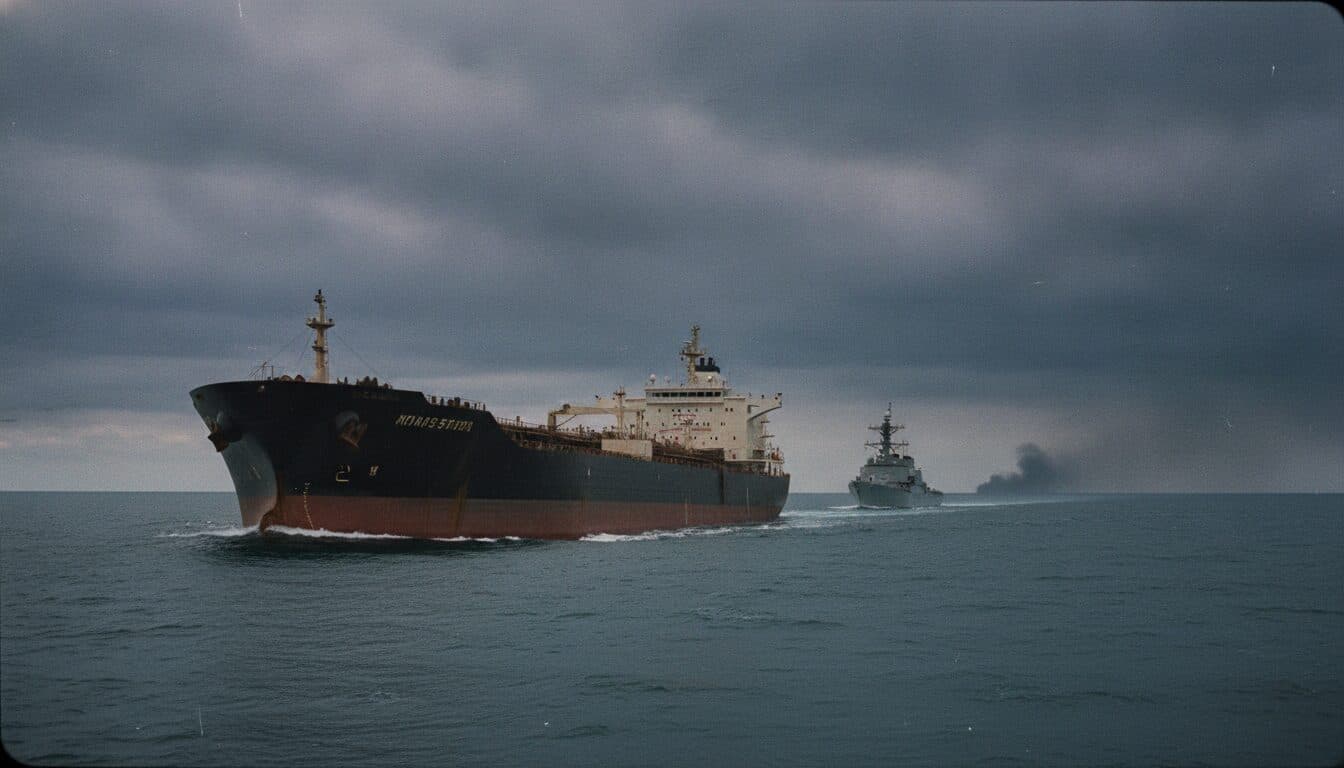
Iran has vehemently denounced the blockade as illegal and an act of piracy, vowing retaliation. Its military has warned that if the security of its ports is jeopardized, “no port in the Persian Gulf and the Gulf of Oman will be safe,” further asserting that enemy-affiliated vessels have no right to transit the Strait of Hormuz. The strategic waterway, a critical global oil transit chokepoint, briefly reopened to commercial traffic on April 17, 2026, only to be re-closed the following day after the U.S. refused to lift its blockade. Shipping traffic through the strait remained at a virtual standstill on April 20, 2026.
A significant flashpoint occurred on April 19, 2026, when U.S. forces attacked and seized the Iranian-flagged cargo ship, the M/V Touska, in the Gulf of Oman, claiming it attempted to breach the blockade. Iran’s joint military command condemned this as a ceasefire violation and an act of piracy, promising a response. Iranian state media subsequently reported drone attacks on U.S. ships in the Gulf of Oman, signaling a dangerous escalation of hostilities.
The Economic Fallout of US-Iran Tensions
The economic ramifications of these US-Iran tensions are profound, particularly for global energy markets. Oil prices have become a barometer of the escalating risk. Brent crude futures surged 5.6% to settle at $95.48 on April 20, 2026, driven by fears of Iran completely blocking the Strait of Hormuz. While the initial ceasefire announcement on April 8, 2026, saw Brent crude fall 13% to $94.80 per barrel and U.S. WTI decline over 15% to $95.75, these prices remain significantly higher than pre-conflict levels of approximately $70 per barrel. As of April 21, 2026, a glimmer of hope for renewed talks saw prices dip slightly, with Brent crude at $94.95 a barrel and U.S. WTI at $88.04 a barrel.
The Strait of Hormuz is indispensable to global energy security. In 2025, an average of 20 million barrels per day (mb/d) of crude oil and oil products traversed the strait, accounting for roughly 25% of the world’s seaborne oil trade. In 2022, this figure stood at 21 mb/d, or about 21% of global petroleum liquids consumption. Any sustained disruption to this chokepoint has immediate and severe consequences for world oil markets, a situation described as the most severe chokepoint disruption in modern energy market history.
“Geopolitical risk premiums are now a dominant force shaping global energy markets, with oil prices amplifying far beyond the actual physical supply at risk when strategic chokepoints face disruption threats,” noted one energy analyst.
This premium is clearly evident in the current market volatility, where even the threat of disruption drives prices higher.
Attempts at de-escalation have largely failed. Peace talks mediated by Pakistan in Islamabad collapsed on April 12, 2026. While President Trump expressed optimism about new talks and indicated a U.S. delegation, including Vice President JD Vance, would head to Pakistan, Iranian officials have publicly rejected further negotiations “under the shadow of threats,” citing “deep historical mistrust” towards the U.S. government. This divergence in diplomatic willingness further complicates the path to a peaceful resolution.
Further complicating the regional landscape is a separate 10-day ceasefire between Israel and Lebanon, agreed upon on April 17, 2026, which aimed to pause fighting between Israel and the Iranian-backed Hezbollah militant group. While Israel agreed to this truce, Prime Minister Benjamin Netanyahu confirmed that Israeli troops would maintain their positions in southern Lebanon, highlighting the interconnectedness of regional conflicts and the pervasive influence of Iran.
The immediate future remains highly uncertain. With the ceasefire minutes away from expiring, the world watches to see if US-Iran tensions will boil over into full-scale conflict, or if a last-minute diplomatic breakthrough can avert disaster. The implications for global stability, trade, and energy prices are profound. Investors and policymakers alike are grappling with the potential for further disruptions to oil supplies and the ripple effects across the global economy. The ability of key players to navigate this treacherous geopolitical landscape will dictate the trajectory of commodity markets and international relations in the coming months. For more trending articles on global market impacts, visit our news section.