The already tumultuous global energy markets were thrust into further disarray on Thursday, May 7, 2026, as the United States and Iran engaged in a direct exchange of fire within the strategically vital Strait of Hormuz. This dramatic escalation, following a period of heightened friction and accusations of ceasefire violations, immediately sent Brent crude above $100 a barrel, underscoring the profound geopolitical and economic implications of the rapidly unfolding crisis.
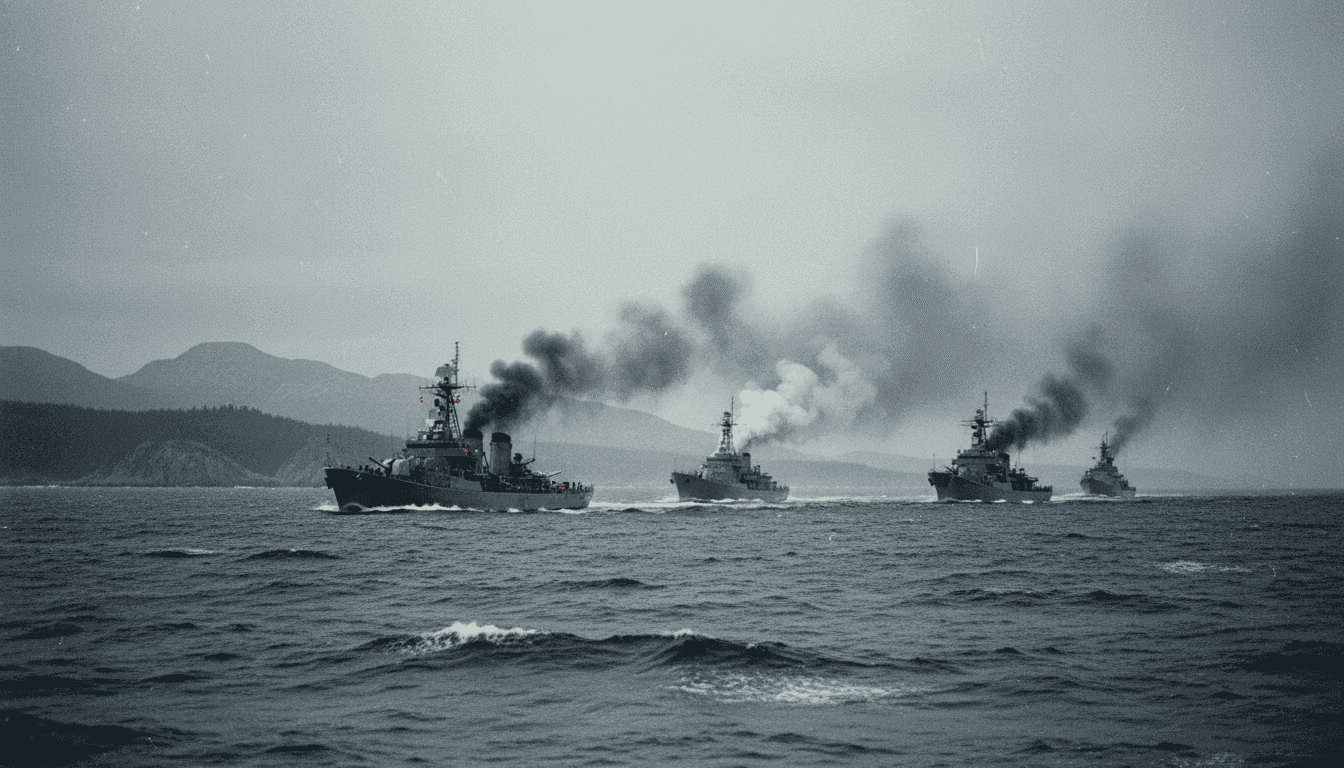
The latest confrontation saw three U.S. Navy destroyers – the USS Truxtun, USS Mason, and USS Rafael Peralta – reportedly come under a “fiercer and more sustained Iranian assault” while transiting the critical shipping lane. U.S. officials detailed a barrage of missiles, drones, and fast-attack boats launched by Iranian forces, prompting American warships to return fire. The U.S. response was comprehensive, utilizing five-inch naval guns, close-in weapon systems (CIWS), small-caliber guns, and Hellfire missiles from Apache helicopters. Crucially, no U.S. assets were struck, and no American casualties were reported.
In response, U.S. Central Command (CENTCOM) confirmed these as “self-defense strikes” on Iranian targets, reportedly hitting two Iranian ports abutting the Strait of Hormuz: Bandar Abbas and Qeshm. CENTCOM specified that these targets included missile and drone launch sites, command and control locations, and intelligence, surveillance, and reconnaissance nodes. Iran, through its state media, vehemently accused the U.S. of violating a ceasefire and retaliated by claiming attacks on U.S. military vessels east of the Strait of Hormuz and south of Chabahar port, alleging “significant damage.” Iranian state TV reported explosions on Qeshm Island at the Bahman pier during what it described as an “exchange of fire” between Iranian armed forces and “the enemy.”
Escalation in the Strait of Hormuz: A Fragile Ceasefire Shattered?
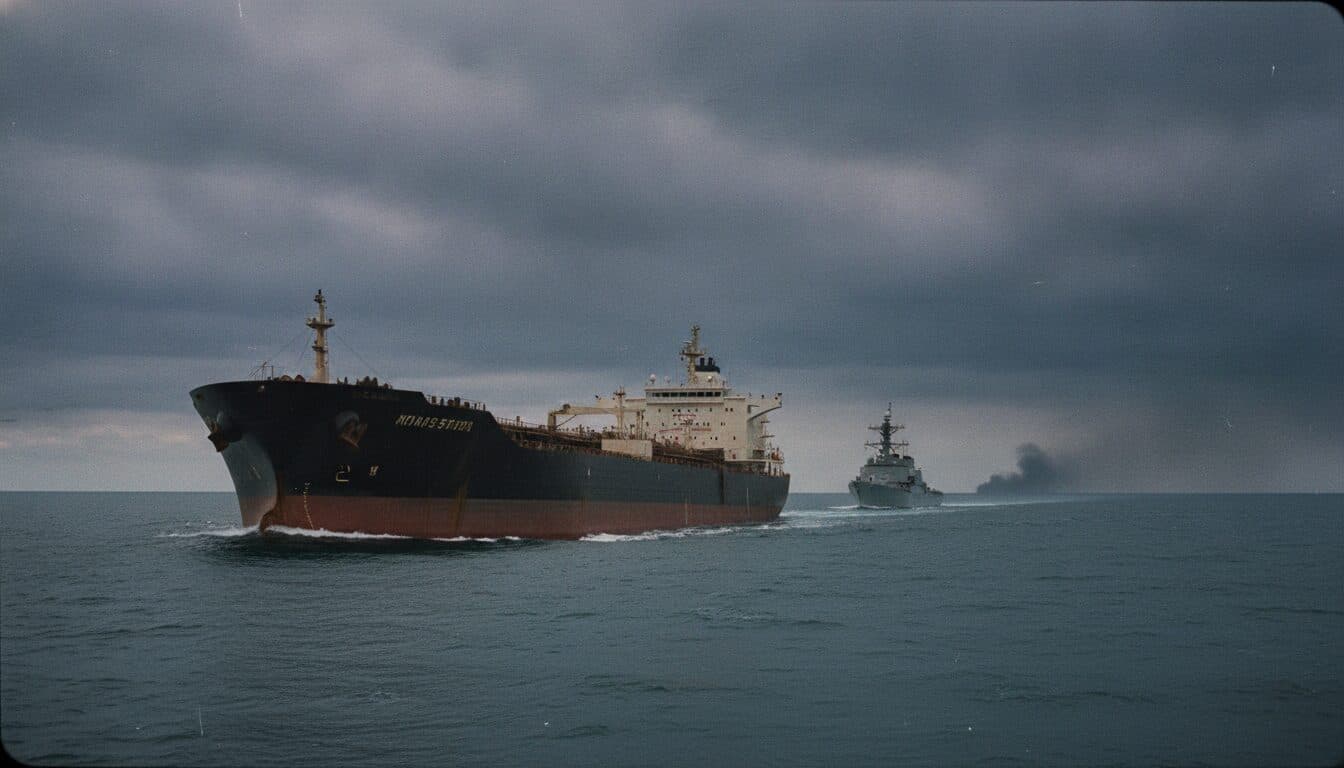
This direct engagement marks a significant intensification of tensions that have simmered for months. It follows a similar incident on Monday, May 4, 2026, where the USS Truxtun and USS Mason also faced an “intense attack” by Iranian forces in the Strait of Hormuz, though without any hits. Just a day prior to the latest confrontation, on May 6, the U.S. Navy struck an Iranian-flagged oil tanker in the Gulf of Oman attempting to bypass the effective blockade of the Strait of Hormuz.
The timing of these events is particularly critical, casting serious doubt on an “increasingly fragile monthlong ceasefire” between the two nations. Iran has consistently accused the U.S. of violating this ceasefire through its blockade of Iranian ports and the recent strikes. Despite the overt hostilities, a U.S. proposal aimed at ending the war and reopening the Strait of Hormuz is reportedly under review by Tehran. President Trump, for his part, maintained that the ceasefire is still in effect, controversially describing the retaliatory strikes as “just a love tap.”
The economic ramifications of these developments are immediate and severe. The Strait of Hormuz, a choke point through which a fifth of the world’s crude oil and liquefied natural gas supplies normally transit, has been largely closed since late February 2026, following the outbreak of conflict between the U.S. and Israel with Iran. This closure has already caused immense disruption to global energy markets. Iran has formalized its control over the Strait by establishing the Persian Gulf Strait Authority (PGSA), which now demands an information declaration and reportedly charges up to $2 million per ship for transit permission.
“The direct exchange of fire in the Strait of Hormuz is a stark reminder of the extreme fragility of global energy supply chains and the profound economic costs of geopolitical instability.”
The U.S. had previously attempted “Project Freedom,” an operation to guide merchant vessels out of the Strait, but President Trump halted it after only one day to pivot towards a deal with Tehran. This decision was reportedly complicated by Saudi Arabia’s unexpected refusal to permit U.S. aircraft involved in the mission to use its airspace, a move that surprised Saudi and other Gulf countries.
The oil markets have reacted with extreme volatility. Brent crude settled above $100 a barrel on Thursday, a significant leap from around $126 last week and $70 before the war. West Texas Intermediate futures, meanwhile, settled below $95 a barrel. Gasoline prices in the U.S. have also surged, with the average price climbing to $4.54 per gallon on Wednesday, a staggering 52% higher than pre-war levels. While there were brief hopes of a peace deal earlier in the week, causing Brent crude to dip below $98 a barrel on Wednesday, renewed doubts have sent prices whipsawing once again.
International concern is mounting. French President Emmanuel Macron has called for an immediate reopening of the Strait of Hormuz and expressed “deep concern” over the escalating tensions, highlighting the global imperative to de-escalate and stabilize this critical region. The sustained closure of the Strait of Hormuz continues to be a major factor in the current energy crisis, impacting economies worldwide.
Looking ahead, the immediate focus will be on whether the fragile ceasefire can be salvaged amidst the direct military confrontation. The U.S. proposal for ending the war and reopening the Strait of Hormuz remains on the table, but the latest hostilities make any diplomatic breakthrough increasingly challenging. The world watches anxiously, as the potential for further escalation in the Strait of Hormuz looms large, threatening to further destabilize energy markets and global security.
For investors and businesses, the volatility in oil prices and the ongoing uncertainty surrounding the Strait of Hormuz underscore the need for extreme caution and robust risk management strategies. The interplay between military action, diplomatic overtures, and energy market reactions will dictate the trajectory of this crisis in the coming days and weeks.