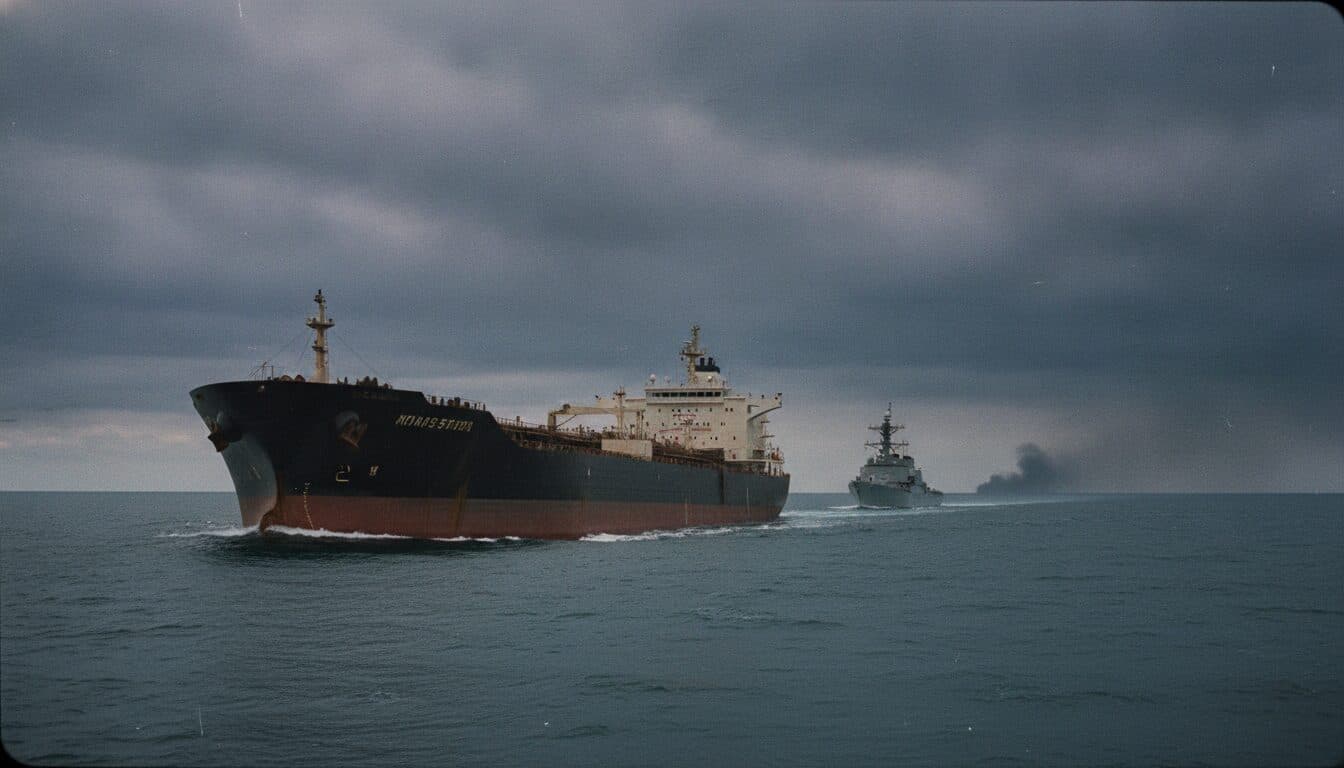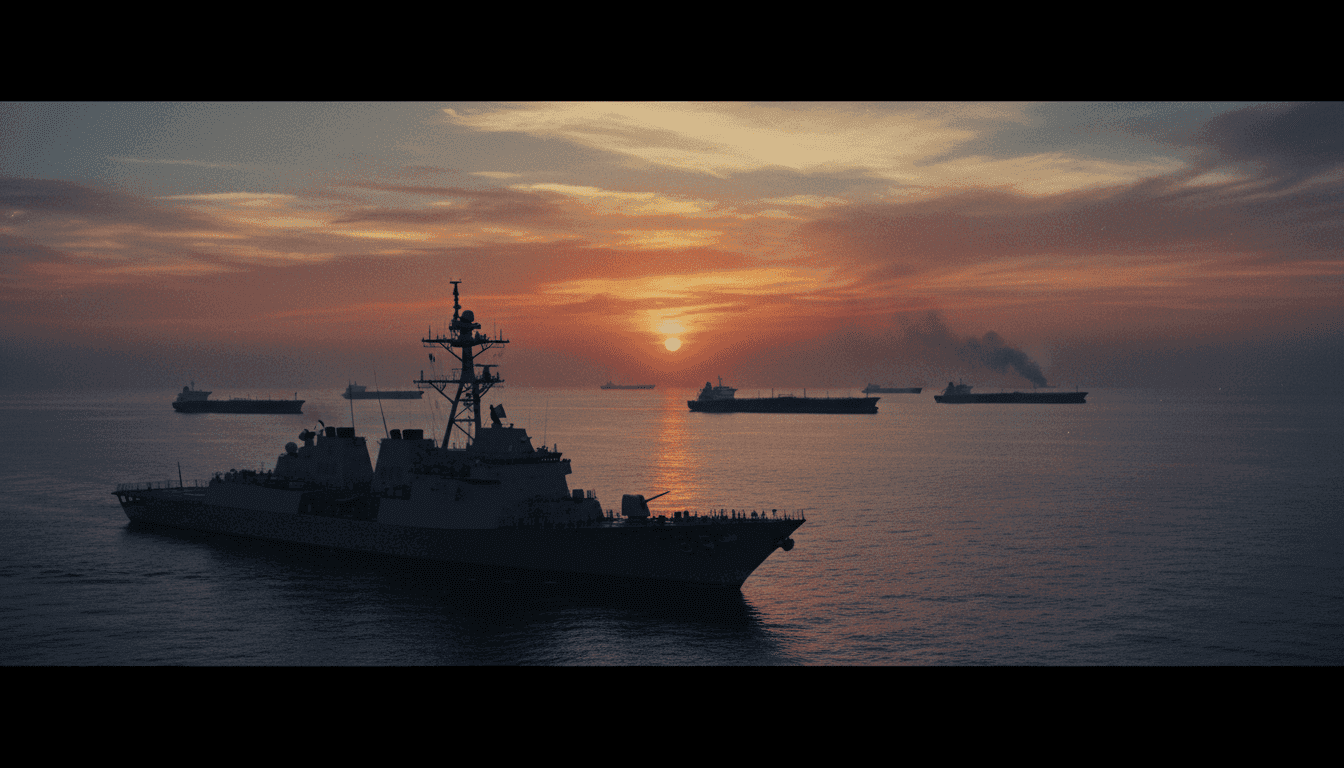
Global oil markets experienced significant volatility this week as the United States and Iran exchanged fire in the critical Strait of Hormuz, a vital chokepoint for global oil shipments. The escalating tensions, driven by the US launch of “Project Freedom” and subsequent Iranian aggression, sent immediate ripples through energy prices and sparked widespread geopolitical concern. The Strait of Hormuz, through which approximately 20% of the world’s oil and liquefied natural gas supply passes, remains a flashpoint for international security.
The latest surge in aggression commenced on Monday, May 4, 2026, with the US initiating “Project Freedom.” This operation, announced by President Donald Trump, aims to guide commercial ships safely through the Strait of Hormuz in response to a series of Iranian attacks on shipping. The US Navy’s role is to provide information and maintain a presence “in the vicinity” to deter further Iranian interference, rather than offering direct escorts to every vessel.
On Monday, as Project Freedom commenced, US forces reported engaging Iranian counterparts, sinking six small Iranian boats that were allegedly targeting commercial vessels. US Central Command (CENTCOM) Commander Admiral Brad Cooper stated that Iran’s military capability in the strait had been “dramatically degraded,” noting the presence of only six small boats compared to the usual 20 to 40. Secretary of Defense Pete Hegseth characterized Project Freedom as a defensive, focused, and temporary measure designed to protect innocent commercial shipping. He delivered a stern warning to Iran, stating that any attack on American troops or commercial shipping would be met with “overwhelming and devastating American firepower.” Two American-flagged merchant ships successfully transited the strait on Monday, according to the US military.
Iran, however, vehemently opposed “Project Freedom,” with parliamentary speaker and chief negotiator Mohammad Bagher Qalibaf accusing the US of undermining regional security and violating a fragile ceasefire that had been in place since April 8, 2026. The Khatam al-Anbiya Central Headquarters, Iran’s military command, issued a stark warning that any foreign armed forces attempting to enter the Strait of Hormuz would be “targeted and attacked.” Iranian media, particularly the Fars News Agency, claimed that two missiles struck a US Navy frigate that had entered the strait without permission and ignored warnings, forcing its retreat. The US unequivocally denied these claims, stating that none of its military vessels were hit. Iran also disputed the US account of sinking six small boats, with an Iranian military commander asserting that two small civilian cargo boats, reportedly traveling from Khasab, Oman, towards Iran, were hit on Monday, resulting in five civilian deaths.
Escalation and Oil Market Reaction in the Strait of Hormuz
Beyond the direct exchanges in the Strait of Hormuz, the United Arab Emirates reported significant Iranian aggression. On Monday, the UAE stated it was attacked by 12 ballistic missiles, three cruise missiles, and four drones fired from Iran. The following day, Tuesday, May 5, 2026, the UAE Defense Ministry reported actively engaging with a new missile and drone attack from Iran, intercepting 15 missiles and four drones. Authorities in Fujairah, UAE, confirmed that one drone attack sparked a large fire at a key oil facility, injuring three Indian nationals. The UAE’s foreign ministry condemned these attacks as a “dangerous escalation” and asserted its right to respond.
The immediate financial implications of this escalation were pronounced. On Monday, Brent crude surged by $6.79, or 6.3%, to reach $114.96 per barrel, hitting a four-year high. US West Texas Intermediate (WTI) crude also climbed by $4.23, or 4.2%, to $106.17. This sharp increase was driven by credible fears of sustained supply disruption from the Strait of Hormuz.
“The Strait of Hormuz is the world’s most critical energy chokepoint. Any direct military confrontation there sends an immediate shockwave through global energy markets, reflecting the deep anxieties about supply security.”
However, Tuesday saw a partial retreat in oil prices. Brent crude fell by $3.43, or 3.0%, to $111.01 per barrel, while WTI crude fell by $4.55, or 4.3%, to $101.87. This decline was partly attributed to a technical correction after the previous day’s dramatic rise, coupled with the US assertion that the ceasefire with Iran remained in place despite the exchanges of fire. The successful transit of at least one vessel through the Strait of Hormuz also helped to ease immediate fears of widespread supply disruption, offering a glimmer of stability amidst the volatile situation.
The current tensions are not isolated; they build on a history of friction in the region. The Strait of Hormuz has long been a focal point for geopolitical maneuvering, with past incidents involving tanker attacks, seizures, and naval confrontations. The fragile ceasefire in place since April 8, 2026, was always precarious, underscoring the deep-seated mistrust and conflicting interests between the US and Iran. The US commitment to “Project Freedom” signals a more assertive stance on protecting maritime commerce, a move that Iran views as a direct challenge to its regional influence.
Looking ahead, the situation remains highly unpredictable. The immediate future hinges on whether “Project Freedom” can effectively deter further Iranian aggression without provoking a broader conflict. Investors and analysts will be closely monitoring transit data through the Strait of Hormuz, as well as any further statements from Washington, Tehran, and regional allies like the UAE. The risk of miscalculation remains high, with potentially devastating consequences for global energy supplies and the broader world economy. Any sustained disruption in the Strait of Hormuz could trigger a severe global energy crisis, impacting everything from manufacturing costs to consumer prices worldwide. The international community faces the daunting task of de-escalation while ensuring the free flow of commerce through this indispensable waterway. For more related trending articles, click here.
The key takeaway for investors and policymakers is the enduring fragility of global supply chains in the face of geopolitical instability. While oil prices saw a temporary correction, the underlying risk premium associated with the Strait of Hormuz has undoubtedly increased. Companies reliant on global shipping and energy markets must factor in this heightened risk, preparing for potential disruptions and sustained price volatility. The incident serves as a stark reminder that even localized conflicts in critical regions can have profound and immediate global economic repercussions.