Global markets are holding their breath as the United States awaits Iran’s formal response to a new peace proposal, a diplomatic overture aimed at de-escalating the simmering conflict and reopening the vital Strait of Hormuz. This critical juncture comes amidst heightened regional instability, underscored by a cargo ship catching fire off Qatar’s coast on Sunday, May 10, 2026, reportedly struck by an unknown projectile – an incident that further strains a month-old ceasefire between Washington and Tehran.
The US has put forth a one-page, 14-point memorandum of understanding, designed to formally end the war, restore free passage through the Strait, and lay the groundwork for future negotiations on Iran’s contentious nuclear program. Iran, for its part, has delivered a counter-proposal via Pakistani mediators, reportedly outlining a three-phase plan. This Iranian plan prioritizes a swift end to the conflict, guarantees against future combined force strikes on Iranian territory, and addresses the Strait of Hormuz in its initial phase, deferring nuclear discussions to a later stage. Iran’s official news agency, IRNA, confirmed on Sunday that Tehran’s response to the latest US proposal has been submitted, with state media indicating a focus on “ending the war in the region,” particularly in Lebanon, and ensuring maritime “security” in the Persian Gulf and the Strait of Hormuz.
Strait of Hormuz Tensions Escalate Amid Blockades
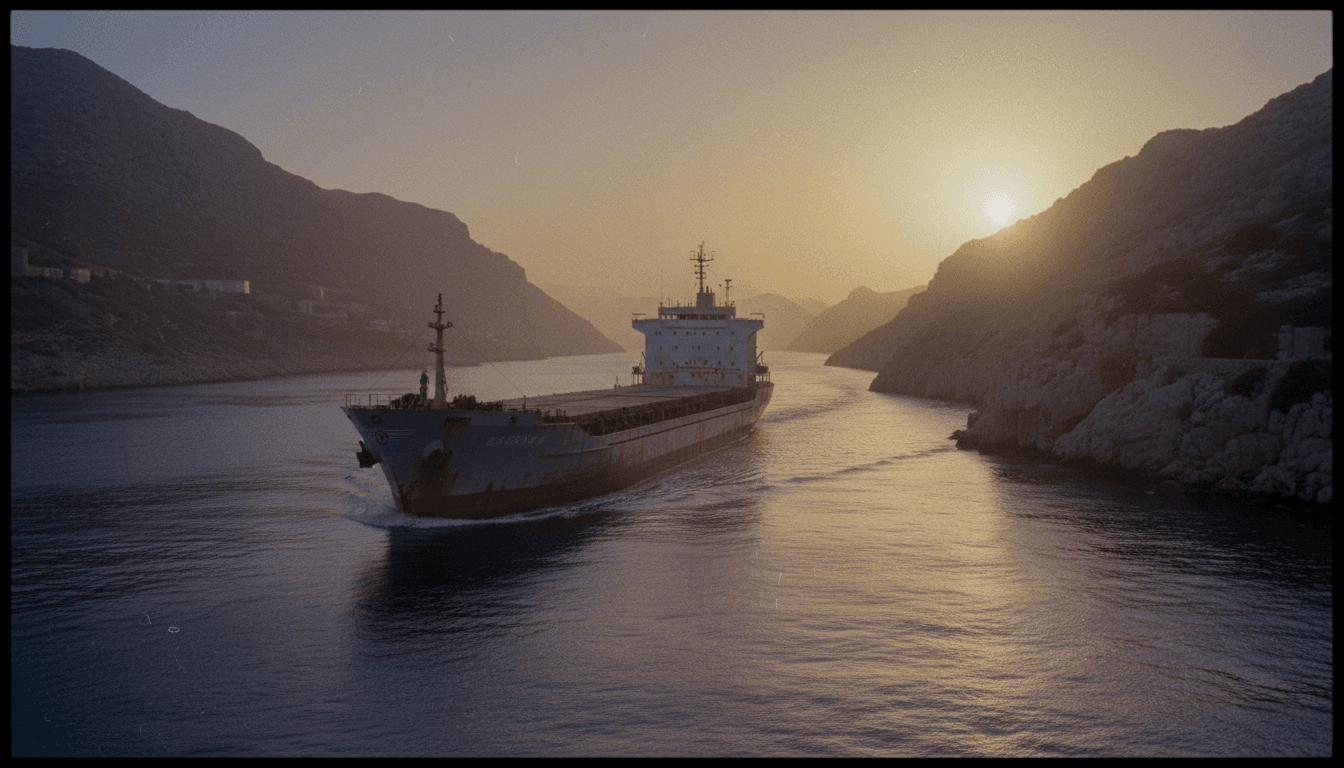
The Strait of Hormuz tensions remain the central flashpoint, with profound implications for global trade and energy security. Since the conflict erupted on February 28, 2026, Iran has largely restricted traffic through the strait, while the US has imposed a reciprocal blockade on Iranian ports. This dual blockade has severely throttled global oil trade, with traffic through the Strait of Hormuz down by a staggering 70% since the conflict’s onset. The economic fallout is already evident: Brent crude rose to $101.29 USD/Bbl on May 8, 2026, representing a 58.49% increase compared to the same period last year. Fitch Ratings has consequently revised its 2026-2027 oil price assumptions, now expecting Brent to hover between $100-$110/barrel for the duration of the effective closure.
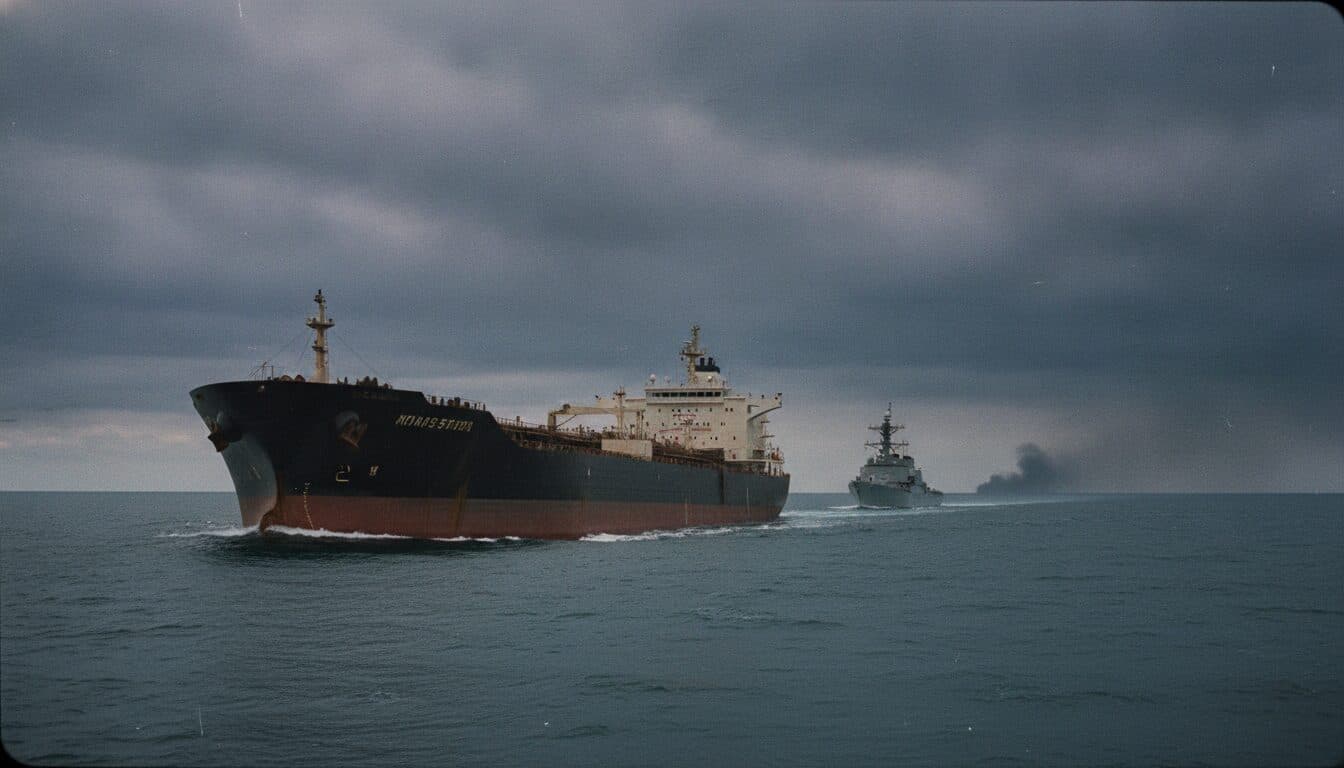
The cargo ship incident off Qatar’s coast serves as a stark reminder of the volatile environment. The British military confirmed a small fire on the bulk carrier, which was extinguished without casualties. Qatar’s Defense Ministry attributed the attack to a drone while the vessel was en route from Abu Dhabi. Qatar’s Prime Minister, Sheikh Mohammed bin Abdulrahman Al Thani, issued a stern warning to Iran, stating that using the Strait of Hormuz as a “pressure tool” would only exacerbate the crisis.
Military actions have intensified in recent days. On May 8, US forces fired on and disabled two Iranian oil tankers after engaging Iranian forces in the Strait. The US Central Command (CENTCOM) reported that as of May 10, US forces have redirected 61 commercial vessels and disabled four others since the blockade commenced on April 13. This operation has prevented over 70 tankers, with a capacity exceeding 166 million barrels of Iranian oil (valued at over $13 billion), from entering or leaving Iranian ports. In response, Iran’s Revolutionary Guards have threatened “heavy attacks” on US sites in the Middle East and enemy ships if Iranian tankers or commercial vessels are targeted. An earlier attempt by President Trump on May 4 to launch “Project Freedom” to escort stranded commercial vessels through the Strait of Hormuz, involving US Navy destroyers, over 100 aircraft, and 15,000 personnel, was suspended after 48 hours, reportedly due to Saudi Arabia’s refusal of permission for US forces to use its bases and airspace.
“The Strait of Hormuz has become the choke point of a global energy crisis, and every incident, no matter how small, sends ripples through international markets. The stakes for de-escalation could not be higher.”
Beyond the immediate conflict, Iran’s nuclear program remains a critical obstacle to lasting peace. The UN nuclear agency reports Iran possesses over 440 kilograms (970 pounds) of uranium enriched to 60% purity – a level alarmingly close to weapons-grade. Israeli Prime Minister Benjamin Netanyahu has unequivocally stated the war is “not over” as long as Iran maintains such a stockpile. Iran’s military has declared “full readiness” to protect its nuclear sites, while the US State Department has urged Iran to engage in serious diplomatic negotiations to resolve the nuclear issue “once and for all.”
The economic ramifications extend beyond oil prices. The disruption has also significantly impacted liquefied natural gas (LNG) flows from Qatar, a major global supplier. Businesses reliant on international shipping routes through the Persian Gulf face increased insurance premiums, longer transit times, and heightened supply chain uncertainty. The ongoing Strait of Hormuz tensions are not merely a regional geopolitical issue; they are a global economic imperative.
What’s next hinges on Iran’s formal response and the diplomatic maneuvering that follows. The US proposal aims for a comprehensive resolution, while Iran’s counter-proposal suggests a phased approach, prioritizing immediate de-escalation and maritime security before tackling the more complex nuclear file. The international community, particularly major energy consumers and trading nations, will be closely watching for any signs of genuine commitment to peace. Any misstep or further escalation, especially in the Strait of Hormuz, could trigger a more widespread conflict with devastating global consequences. Investors and policymakers alike must brace for continued volatility until a clear path to de-escalation emerges from the current diplomatic efforts.