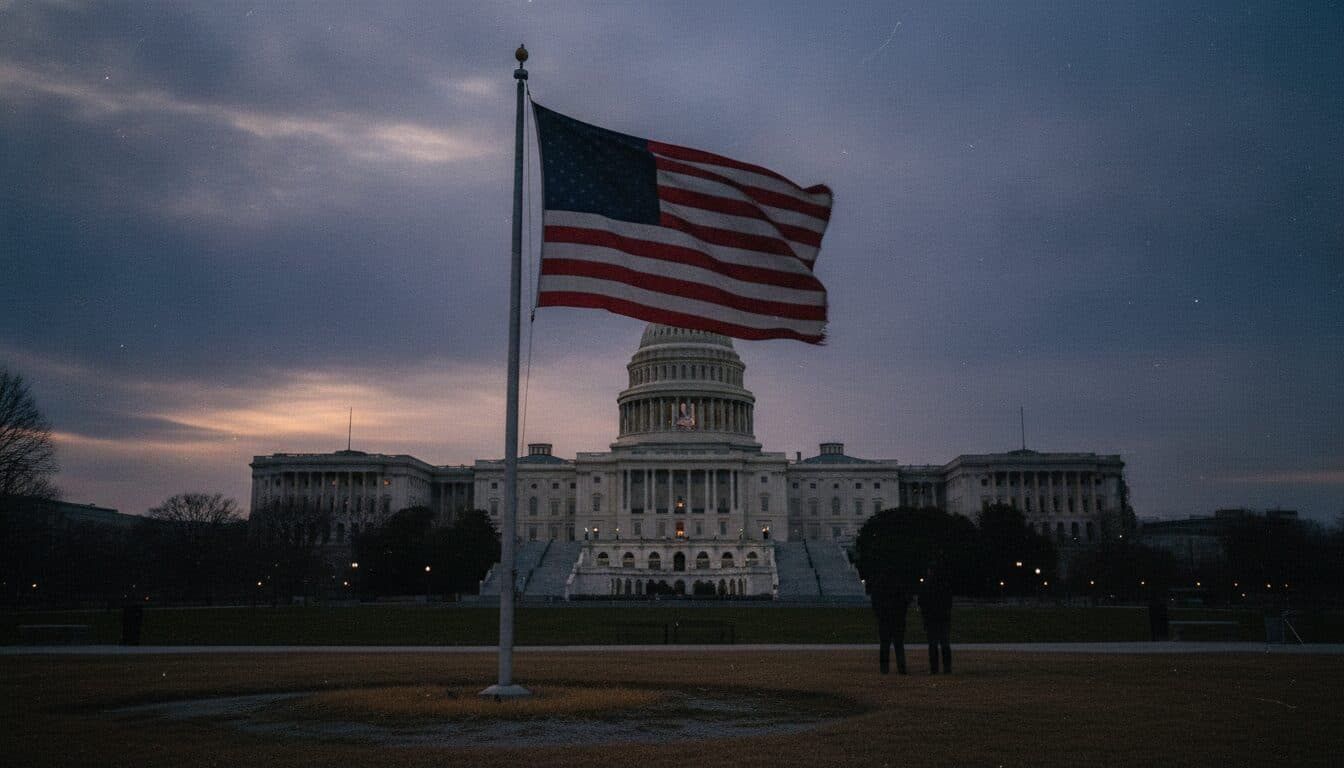
The United States today observes its 250th Independence Day, a seminal national milestone, as celebrations are simultaneously buoyed by grand spectacles and constrained by a severe heatwave and deepening political divisions. The Semiquincentennial, or America250, arrives at a moment of profound introspection and public discourse on American identity and its future trajectory.
A dangerous heatwave, driven by a powerful heat dome, has enveloped the central and eastern United States, impacting over 200 million people this holiday weekend. The National Weather Service (NWS) has issued extreme heat warnings for approximately 102 million individuals, with millions more under watches and advisories. Forecasts project heat index values between 104 and 111°F (40 to 44°C) in major urban centers including New York, Washington D.C., Chicago, and Nashville. Certain regions, particularly from the Midwest to the East Coast, could experience heat index values as high as 115°F (46°C), triggering widespread “Major to Extreme HeatRisk” conditions.
The intense heat has already forced the cancellation of several key festivities. Washington D.C.’s traditional Independence Day parade was called off, and the “Great American State Fair” on the National Mall concluded early on July 3rd after approximately 30 attendees suffered from heat exhaustion. The relentless temperatures are also straining critical infrastructure; New York’s utility provider, Con Edison, reported outages affecting around 60,000 residents. Even international events face disruption, with FIFA World Cup matches held in the US confronting forecast heat indexes of 100°F in Miami and potentially 105°F in Philadelphia for games scheduled on this historic date.
Despite these challenges, numerous events are proceeding. Washington D.C. is hosting military flyovers, remarks by President Trump, and a fireworks display billed as the largest in history, commencing late this evening. To mitigate risks, free hydration stations and increased medical support are deployed across the National Mall. New York City features a dual fireworks display on both the lower East River and the lower Hudson River, alongside the largest parade of tall ships ever assembled. Los Angeles is hosting a benefit concert as part of “America’s Block Party,” featuring artists like Chris Stapleton and Queen Latifah, followed by a drone show and fireworks.
President Donald Trump delivered a patriotic address at Mount Rushmore, where he emphasized American exceptionalism and declared the US the “most exceptional nation.” He is also anticipated to attend the fireworks display in Washington D.C. These celebrations, however, are unfolding against a backdrop of significant political polarization, raising questions about the very nature of American history and identity.
The organization of the Semiquincentennial has been bifurcated, contributing to confusion and accusations of politicization. The congressionally established, non-partisan United States Semiquincentennial Commission (America250), created in 2016, exists alongside the White House Task Force on Celebrating America’s 250th Birthday (Freedom 250), launched by President Trump in 2025. This dual structure has led to concerns, with critics arguing that Freedom 250, closely affiliated with the Trump administration, operates with a distinct tone and structure. Several states have reportedly declined to participate in its “Great American State Fair” due to reservations about political associations and last-minute logistical burdens. Further concerns have been raised regarding the administration’s perceived efforts to redefine American history, emphasizing an “unblemished American greatness” and reviewing historical sites to align with this narrative.
A 2025 Gallup survey revealed that American patriotism has reached its lowest point since 2001, underscoring the fragmented national mood. The survey also indicated that registered Republican voters were 63% more likely than Democrats to participate in Semiquincentennial celebrations. Historians and commentators have expressed apprehension that the anniversary has become a source of division rather than unity. One observer described the prevailing situation as a “theatre of the absurd,” highlighting the stark contrast between the celebratory occasion and the underlying societal schisms. This related trending article further explores the economic implications of national events.
“The Semiquincentennial should be a moment for collective reflection and unity, yet it’s become a stark illustration of our national divides, amplified by the very real challenges of climate change.”
The intersection of extreme weather and political discord on this milestone 250th Independence Day carries tangible financial and societal impacts. Tourism and event planning, typically beneficiaries of such anniversaries, face disruptions and increased costs due to heat mitigation efforts and cancellations. The strain on electricity grids, as seen with Con Edison’s outages, signals broader infrastructure vulnerabilities that could affect economic productivity. For investors, the politicization of national events, coupled with increasing climate-related disruptions, introduces new variables into market stability and consumer sentiment. Looking ahead, the legacy of this 250th Independence Day will likely be defined not just by its grand spectacles, but by how the nation navigates these concurrent challenges of extreme weather and profound political divergence. Future policy decisions regarding climate resilience and national unity will undoubtedly be influenced by the experiences of this significant day. The ongoing debate surrounding the narrative of American history, particularly in educational institutions and public discourse, will continue to shape national identity for decades to come, impacting everything from civic engagement to international relations.
The key takeaway for businesses and policymakers is the escalating confluence of climate risks and political polarization. These factors are not isolated but interact to create complex challenges, impacting everything from public health and infrastructure to national cohesion and economic stability. Understanding and addressing these interconnected issues will be paramount for navigating the coming years.