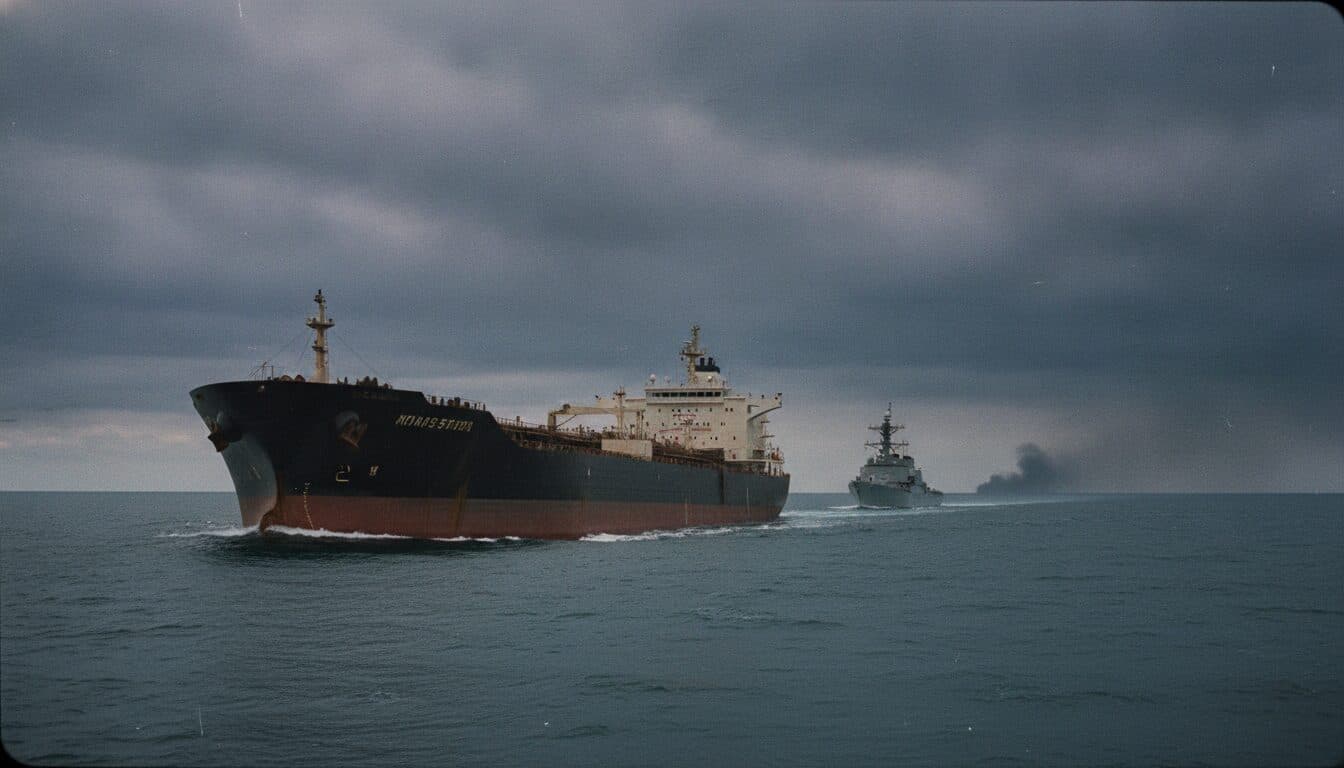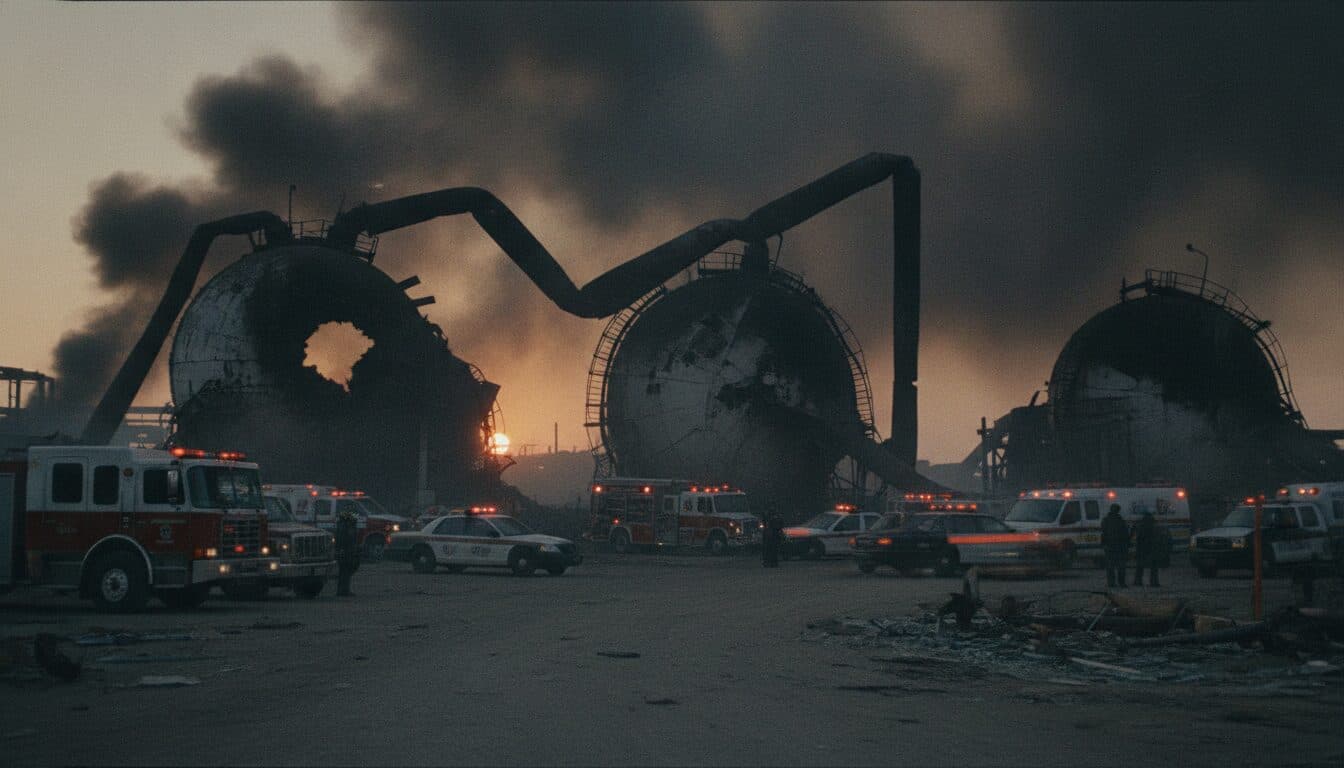
Ukrainian drone attacks targeting Russian oil refineries have ignited a significant domestic fuel crisis across Russia, leading to widespread rationing and a substantial drop in processing capacity. This strategic escalation by Kyiv has simultaneously sent ripples through global energy markets, contributing to a notable surge in global oil prices and deepening concerns over energy supply stability.
The campaign, which intensified throughout 2024 and 2025, has seen Ukrainian unmanned aerial vehicles (UAVs) strike deep into Russian territory, directly impacting the Kremlin’s ability to fuel its war machine and its domestic economy. In 2024 alone, at least 81 strikes hit Russian oil facilities, escalating to a record 16 refineries targeted in May 2026, with at least six more attacked in June.
Russia’s Crippled Refining Capacity and Domestic Shortages
The cumulative effect of these strikes has been devastating for Russia’s refining capabilities. Analysts estimate that Ukrainian drone attacks have crippled approximately a quarter of Russia’s oil refining capacity, resulting in an estimated 15% shortfall in the domestic fuel market. Some reports indicate that as much as one-third of Russia’s total refining capacity is now offline. The six major refineries reportedly knocked offline in May 2026 represent a severe blow to the country’s energy infrastructure.
The tangible impact is evident in production figures. Russia’s crude oil processing into fuel in June 2026 plummeted by 25% year-on-year, reaching 3.95 million barrels per day—its lowest level in over two decades. Gasoline production has fallen 17% to 850,000 barrels a day from 1.03 million a day a year ago, exacerbating the domestic crunch.
The consequences for ordinary Russians are stark. Fuel rationing was in effect across at least 56 Russian regions, including Moscow, as of June 2026. In some critical areas, such as Crimea, authorities declared a state of emergency due to severe disruptions. Limits on gasoline sales, sometimes as low as 15-50 liters per vehicle, and outright bans on filling jerry cans have become commonplace across many regions.
“The amount of gasoline available in Russia at the moment is determined by a race between Ukrainian drones and Russian repair teams.”
Sergey Vakulenko, a senior fellow at the Carnegie Russia Eurasia Centre and an expert on Russia’s energy sector, succinctly captured the precarious situation, noting that the “amount of gasoline available in Russia at the moment is determined by a race between Ukrainian drones and Russian repair teams.”
Wholesale gasoline prices in Russia have consequently soared to historic highs. The benchmark price of AI-92 gasoline on the St. Petersburg International Mercantile Exchange climbed to 71,500 rubles ($890) per ton in August 2025, while AI-95 reached 80,430 rubles ($1,000) per ton, reflecting the severe supply-demand imbalance.
Kremlin’s Admission and Global Repercussions
Russian President Vladimir Putin, on Sunday, June 28, 2026, for the first time publicly acknowledged the severity of the situation. He admitted that Ukrainian attacks on energy infrastructure were indeed affecting domestic fuel supplies, stating, “Of course, they create problems, that’s obvious. Right now we’re observing a certain shortage, but it’s not critical.” Putin also conceded the reality of long lines at gas stations and the unavailability of certain gasoline grades, pledging to boost fuel imports, strengthen refinery protection, and accelerate infrastructure repairs.
In a desperate move to stabilize domestic supplies, Russia imposed a temporary full ban on exports of gasoline and aviation fuel. The government is also reportedly considering a complete ban on diesel fuel exports. Remarkably, Russia, a significant global oil exporter, is now looking to import gasoline, with the Kremlin confirming it is considering importing oil products from other countries.
Ukrainian President Volodymyr Zelenskyy, also on Sunday, June 28, 2026, confirmed that Ukrainian drones had targeted refineries in Krasnodar Krai and Yaroslavl oblast. He asserted that as of May 2026, 40% of Russia’s primary oil refining capacity had been taken offline, describing the strikes as a strategic campaign to pressure Moscow to end the war by undermining its military logistics and supply lines.
The ripple effect of Russia’s domestic fuel crisis has extended to global markets. The Ukrainian drone campaign has significantly contributed to a rise in global oil prices. Russia is the world’s third-largest petroleum and liquid fuels producer and a major crude oil exporter. The ongoing conflict in Ukraine, coupled with other geopolitical factors like the conflict in the Middle East, has amplified volatility and exerted upward pressure on crude oil prices.
Some analysts suggest that the attacks have crippled up to 50% of Russia’s oil export capacity, creating an “unprecedented” supply shock. Brent crude oil prices, a global benchmark, have seen substantial increases since the conflict’s inception, reflecting the tightening global supply outlook.
Strategic Context and Future Outlook
These drone attacks form a crucial part of Ukraine’s broader strategy to weaken Russia’s war effort. By disrupting fuel supplies and bringing the economic consequences of the conflict directly to ordinary Russians, Kyiv aims to increase pressure on Moscow. The strikes underscore Ukraine’s evolving capability to hit strategic targets deep within Russian territory, forcing the Kremlin to divert increasingly scarce resources to protect critical infrastructure.
The repair of damaged refineries is further complicated by Russia’s reliance on Western technologies and the enduring impact of sanctions, which limit access to critical parts and equipment. This makes repairs not only time-consuming but also prohibitively expensive. Chris Weafer, CEO of Macro-Advisory Ltd., noted that about a third of Russia’s oil refining capacity is offline and that reallocating supplies in a country as vast as Russia is a “huge logistics operation.”
Looking ahead, the “race between Ukrainian drones and Russian repair teams” is set to define Russia’s domestic energy landscape. The Kremlin’s pledges to boost imports and accelerate repairs face significant headwinds, particularly given the sanctions regime. For global markets, the sustained pressure on Russia’s refining capacity means continued volatility and upward pressure on global oil prices, with potential inflationary consequences for economies worldwide.
The current situation highlights the direct economic and geopolitical instability stemming from the conflict. As Serhii Kuzan, a former adviser to Ukraine’s Ministry of Defense, explained, “Disruptions to refining capacity create fuel shortages on the domestic market, driving up diesel and gasoline prices. The resulting economic strain fuels public discontent as everyday costs rise.” This dynamic ensures that the Ukraine-Russia conflict continues to exert a profound influence on global energy security and economic stability.