The global economic and geopolitical landscape hangs in a delicate balance as President Donald Trump arrives in Beijing for a high-stakes summit with Chinese leader Xi Jinping. Scheduled for May 14-15, this meeting marks Trump’s first visit to China in nearly a decade and their first direct talks in over six months. The agenda is packed with critical issues, ranging from persistent trade tensions and the contentious Taiwan question to, most pressingly, the escalating war in Iran and its profound global repercussions. This Trump-Xi summit holds the potential to reshape international relations and global markets, making it a focal point for investors and policymakers alike.
The shadow of the three-month-old Iran war looms large over the discussions. President Trump on Monday, May 11, declared the ceasefire with Iran to be “on life support,” emphatically rejecting Tehran’s latest peace offer as “stupid” and “garbage.” His dismissal stemmed from the proposal’s alleged failure to include demands for a major rollback of Iran’s nuclear activities. Trump asserted that Iran had previously agreed to cease nuclear enrichment and permit the U.S. to extract its highly enriched uranium, only to renege on these terms in their recent submission. Iran’s rejected proposal, reportedly submitted on May 10, included demands for compensation for the 40-day US-Israeli war on the Islamic Republic and recognition of Iranian sovereignty over the Strait of Hormuz. Experts suggest that granting Iran sovereignty over the Strait, a vital artery for global oil and gas shipments, would likely violate established international laws on freedom of navigation.
In a swift and pointed response to Iran’s proposal and its continued actions, the U.S. Treasury announced new sanctions on May 11 against 12 individuals and companies. These entities are accused of “enabling” the illicit shipping of Iranian oil to China. Treasury Secretary Scott Bessent stated that “Operation Economic Fury will continue to deprive the regime of funding for its weapons programs, terrorist proxies, and nuclear ambitions,” underscoring Washington’s unwavering resolve.
Global Energy Market Under Duress from Iran War
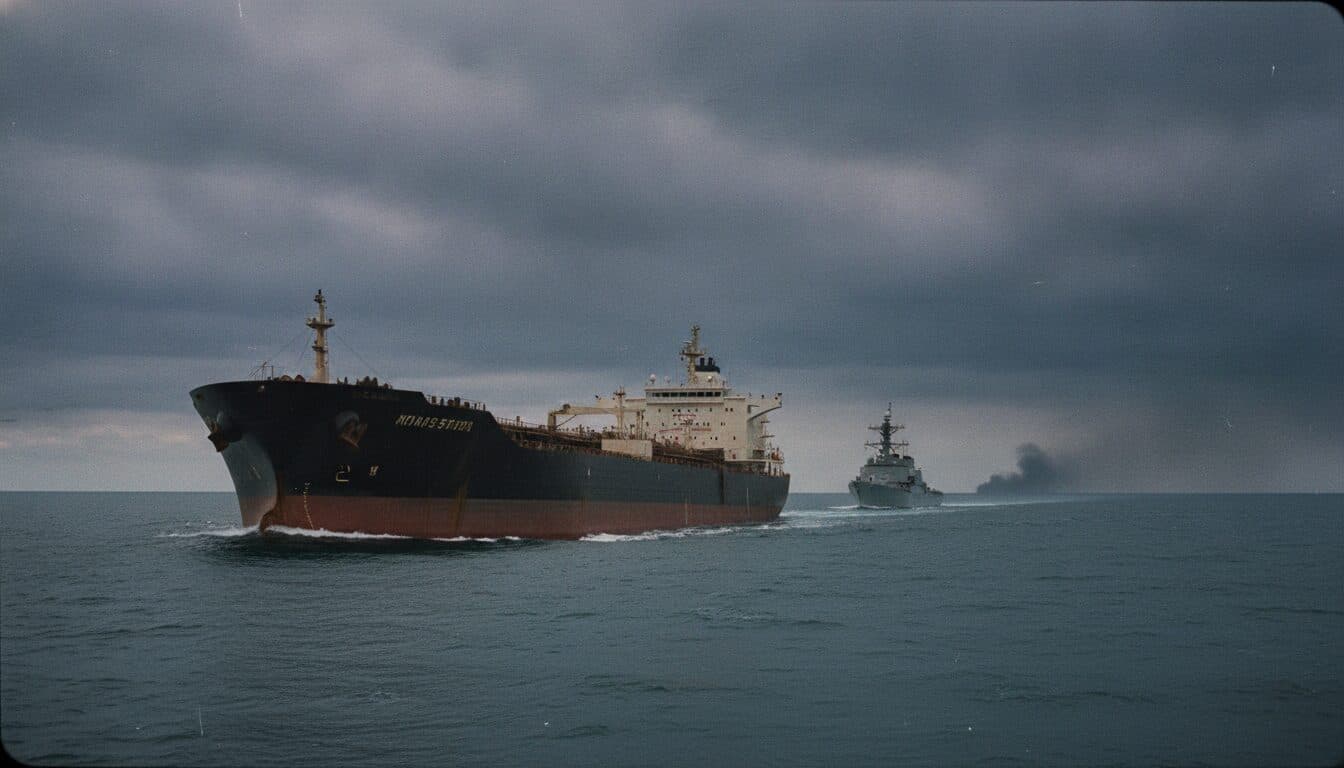
The conflict in Iran has unleashed unprecedented turmoil across global energy markets and supply chains. The closure of the Strait of Hormuz, a critical chokepoint through which approximately 20% of the world’s oil supply transits, has been a primary catalyst for a dramatic surge in crude oil and diesel prices. Brent crude oil, which had already climbed to $80-$82 per barrel by March 2, 2026, surged past $120 per barrel after the Strait’s effective closure on March 4, 2026. This has created immense budget uncertainty and cost pressures for shippers worldwide. The International Energy Agency has starkly characterized the situation as the “greatest global energy security challenge in history.”
“The Strait of Hormuz closure is more than just an oil crisis; it’s a systemic shock to global supply chains, impacting everything from semiconductor production to food security.”
Beyond energy, the war has severely disrupted the supply of crucial industrial inputs. Damage to critical infrastructure, such as Qatar’s Ras Laffan complex – which accounts for 20% of global LNG and 30% of global helium – has created significant ripple effects. Helium, in particular, is indispensable for semiconductor manufacturing, directly impacting tech powerhouses like Taiwan, which relies heavily on the Gulf for its LNG and helium supplies. The widespread disruption to petrochemical complexes and fertilizer production has further exacerbated rising global food prices, adding another layer of complexity to an already volatile economic environment.
The Trump-Xi summit in Beijing will inevitably be dominated by these economic and geopolitical tremors. While the Iran war will cast a long shadow, long-standing trade tensions are expected to be a central focus. The leaders last met in October 2025 in Busan, South Korea, where they extended a trade truce that had temporarily halted many punitive economic measures. The trade war, initiated during Trump’s first term, saw tariffs reach as high as 145% in 2025. China is eager to secure relief on U.S. export controls for advanced technology and protect its vital position in global supply chains, viewing these as essential for its long-term economic stability.
Taiwan remains another deeply contentious issue. China considers Taiwan the “biggest risk” in its complex relationship with the U.S. President Trump has confirmed that Washington’s longstanding support for Taiwan’s defense, including potential arms sales, will be a topic of discussion. This dialogue carries significant weight, given Beijing’s unwavering stance on its territorial claims.
Regarding Iran, Trump is expected to exert pressure on Xi to leverage China’s influence. As Iran’s largest oil buyer and a key diplomatic backer, Beijing holds considerable sway. The U.S. aims for China to encourage Iran to reopen the Strait of Hormuz and agree to an end to the war. However, Beijing has adopted a cautious approach, with some analysts suggesting China has little interest in resolving problems it perceives as U.S.-created in the Middle East. China has also reportedly been working diplomatically behind the scenes, assisting Pakistan in brokering a potential peace agreement.
The stakes for this Trump-Xi summit could not be higher. The outcome of these discussions will not only determine the immediate trajectory of U.S.-China relations but also profoundly influence global energy prices, supply chain stability, and the broader geopolitical balance of power. Investors, businesses, and governments worldwide will be closely watching for any signs of de-escalation or further friction emanating from Beijing.