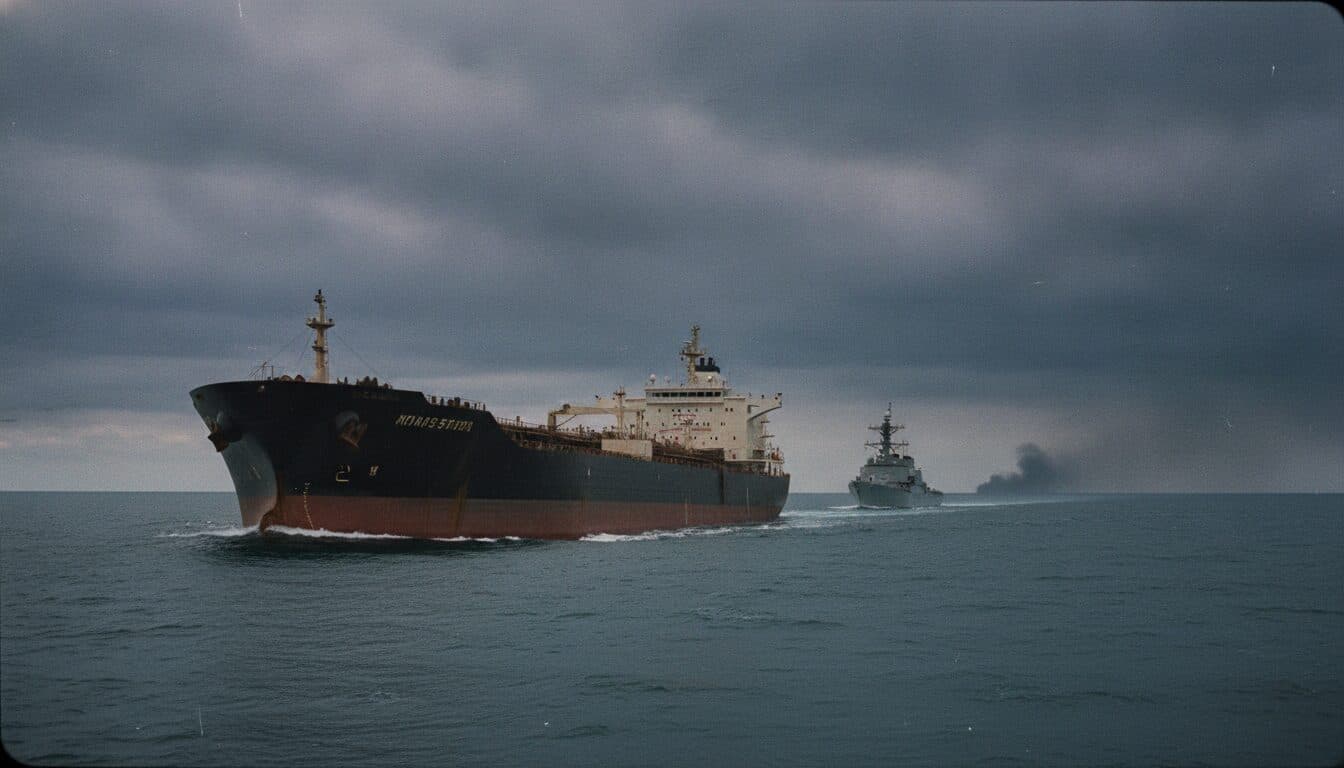
Global oil markets reacted sharply Monday as President Donald Trump’s unequivocal rejection of Iran’s latest peace proposal effectively shattered a fragile Middle East ceasefire, signaling a dangerous escalation in regional tensions. Brent crude prices surged, reflecting deep concerns over the stability of energy supplies through the critical Strait of Hormuz, as the prospect of wider conflict looms large.
President Trump publicly dismissed Iran’s peace offer, delivered via Pakistani mediators, as “totally unacceptable” and “stupid.” Taking to Truth Social, Trump declared, “I have just read the response from Iran’s so-called ‘representatives’. I don’t like it – TOTALLY UNACCEPTABLE!” He further elaborated to reporters, calling the offer “a piece of garbage” that he “didn’t even finish reading.” Trump asserted that his own plan was “very simple: Iran cannot have a nuclear weapon and they won’t have a nuclear weapon.” This forceful rejection underscores a hardening stance from Washington, leaving little room for immediate diplomatic breakthroughs.
Iran’s proposal reportedly included demands for the U.S. to lift sanctions, end its naval blockade of Iranian ports, and guarantee against renewed attacks on the country. Iran’s Foreign Ministry spokesman, Esmaeil Baqaei, maintained that Tehran only sought its “legitimate rights” and no “concessions,” including an end to the war across the region and the release of frozen Iranian assets. Washington, however, insists that Iran’s response failed to address its core demand for advance commitments on the future of its nuclear program and uranium reserves, creating an insurmountable chasm between the two sides.
The U.S.-brokered ceasefire, which came into effect in April, was described by Trump as “unbelievably weak” and “on massive life support.” Intended to facilitate peace talks and end the war that began on February 28, 2026, the truce has clearly failed to stem the tide of violence. Deadly Israeli attacks have continued unabated in Lebanon, with the Lebanese Health Ministry reporting 51 fatalities on Sunday, May 10, 2026, alone, including two medical workers. Since March 2, Israeli strikes have killed nearly 3,000 people across Lebanon and displaced 1.2 million. On Saturday, May 9, 2026, Israeli airstrikes in southern Lebanon killed at least 12 people, while Hezbollah retaliated with explosive drones, wounding three Israeli reservists. Lebanese President Joseph Aoun has urgently appealed to the United States to pressure Israel to halt its attacks and home demolitions.
The regional instability has also manifested in a concerning surge of drone attacks across Gulf countries. Kuwait, Qatar, and the UAE have all reported incidents. The UAE directly accused Tehran, stating that Iran fired two drones at the UAE on Sunday, May 10, 2026, which were “successfully engaged.” Iran has denied carrying out operations against the UAE but warned of a “crushing response” if any actions were launched from the UAE against it. Kuwait’s army detected and dealt with several hostile drones in its airspace on Sunday, while Qatar reported a drone attack igniting a small fire on a cargo ship off its coast. Saudi Arabia has condemned these “blatant attacks on the territories and territorial waters of Gulf states,” underscoring the widening geographic scope of the conflict.
The immediate economic fallout has been palpable. Brent crude oil prices soared by as much as 4% on Monday, May 11, 2026, reaching $105.50 a barrel and closing at $104.22 USD/Bbl, up 2.89% from the previous day. This significant jump is a direct consequence of the escalating Middle East tensions and heightened concerns about potential supply disruptions from the Strait of Hormuz, a critical chokepoint for global oil supplies. JPMorgan analysts predict Brent crude will remain in the low-$100s for much of 2026, even under the optimistic scenario of the Strait of Hormuz reopening in June. This sustained high price environment will inevitably translate to increased costs for businesses and consumers globally, fueling inflationary pressures and potentially dampening economic growth.
The current situation is a stark reminder of the region’s volatility and the interconnectedness of geopolitical events with global markets. The U.S.-brokered ceasefire was a tenuous bridge, now seemingly burned by diplomatic impasse and continued hostilities. The failure to secure an agreement on Iran’s nuclear program remains a central sticking point, a complex issue intertwined with regional power dynamics and historical grievances. The ongoing conflict, initially disrupting global oil supplies through the Strait of Hormuz, now threatens to deepen its impact, potentially drawing in more actors and further destabilizing an already combustible region.
“The rejection of Iran’s peace offer is a critical turning point, pushing the Middle East closer to a full-blown regional conflict with severe global economic ramifications,”
The path forward appears fraught with peril. Diplomatic efforts, though currently stalled, will likely continue behind the scenes, albeit with significantly reduced prospects for near-term success. The international community will be watching closely for any further military escalations, particularly around the Strait of Hormuz, which could trigger an even more dramatic spike in oil prices and disrupt global trade. Investors and businesses should brace for continued volatility and uncertainty in the Middle East, as the fragile peace gives way to renewed hostilities. The immediate future will hinge on whether any new diplomatic channels can be forged to de-escalate the situation, or if the region is destined for a more profound and costly conflict. For more insights on the global energy market, explore our related trending articles.
The key takeaway for investors and policymakers is clear: the Trump administration’s firm rejection of Iran’s peace overture, coupled with the ongoing violence in Lebanon and the drone attacks in Gulf states, has fundamentally altered the risk landscape in the Middle East. The implications for global energy security and economic stability are substantial, demanding careful monitoring and strategic planning in the face of an increasingly unpredictable geopolitical environment.