President Donald Trump has unexpectedly extended the U.S. ceasefire with Iran indefinitely, a decision announced Tuesday, April 21, 2026, that sends fresh ripples of uncertainty through global oil markets and geopolitical circles. The extension, defying earlier signals that the truce would expire, arrives as direct negotiations between Washington and Tehran remain deeply stalled, with Iran steadfastly refusing immediate face-to-face talks.
The initial two-week ceasefire, established in the wake of escalating U.S. and Israeli military actions against Iran, was nearing its conclusion. Trump’s unilateral decree states the truce will remain in effect until Iranian negotiators present a “unified proposal” for peace and discussions are formally concluded. This move comes despite the U.S. President having previously indicated a readiness to resume military action, telling CNBC he “expected to be bombing” and that the military was “raring to go.”
<
Iran Ceasefire Extension and its Geopolitical Fallout
The President cited the “seriously fractured” nature of the Iranian government and direct pleas from Pakistani officials, specifically Field Marshal Asim Munir and Prime Minister Shehbaz Sharif, as key drivers for the extension. Pakistan has emerged as a crucial mediator in the high-stakes standoff, attempting to bridge the chasm between the two adversaries.
However, Iran’s posture remains unyielding. Deputy Foreign Minister Saeed Khatibzadeh asserted on April 18, 2026, that Iran is not prepared for a new round of face-to-face talks, accusing Washington of maintaining “maximalist” demands and sanctions. Iran also vehemently denied Trump’s claims regarding the handover of enriched uranium, further highlighting the deep distrust permeating diplomatic channels.
While no immediate official response has come from Iran’s most senior leadership, the reaction from key figures suggests continued defiance. Mohammad Bagher Ghalibaf, speaker of the Iranian parliament and a lead negotiator, through his adviser Mahdi Mohammadi, dismissed the Iran ceasefire extension as “a ploy to buy time for a surprise strike,” adding ominously that “the time for Iran to take the initiative has come.” Mohammadi also declared that “the continuation of the siege must be met with a military response.” Iran’s state news agency IRNA echoed this sentiment on April 20, 2026, attributing the lack of progress to U.S. “greed,” unreasonable demands, and “continuous contradictions.”
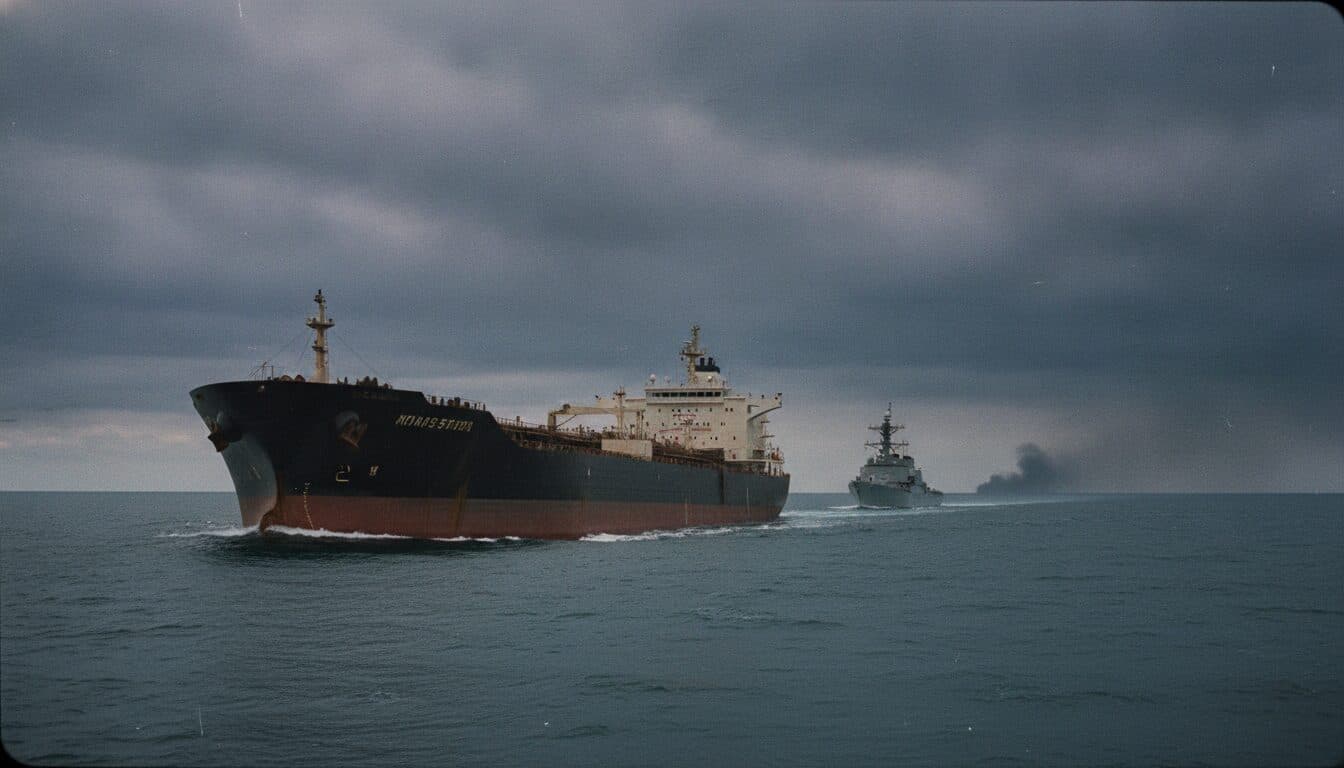
Despite the ceasefire, the U.S. military posture remains aggressive. Trump has instructed the U.S. military to maintain the naval blockade, imposed on April 13, 2026, and to “remain ready and able.” This underscores a volatile equilibrium, where diplomatic overtures are shadowed by the constant threat of renewed hostilities.
Senior-level talks, which began with an initial meeting in Islamabad, have since ground to a halt. A planned trip to the Pakistani capital by Vice President JD Vance was put on hold due to Iran’s refusal to re-engage, signaling the profound impasse in efforts to de-escalate the crisis.
Oil Markets Brace for Prolonged Volatility
The protracted uncertainty surrounding the U.S.-Iran conflict continues to exert a profound influence on global financial markets, with oil prices bearing the brunt of the instability. Geopolitical risk premiums have become the dominant force, overshadowing traditional supply-demand fundamentals and driving crisis-driven volatility.
“The complete closure of Hormuz has eliminated access to roughly 16-17 million barrels per day of normal transit capacity, creating the most severe chokepoint disruption in modern energy market history.”
The ongoing oil price rally has seen crude surge approximately 50% since the U.S. and Israeli military action against Iran commenced on February 28, 2026, under “Operation Epic Fury.” This escalation prompted Iran to close the strategic Strait of Hormuz, a critical waterway through which approximately one-fifth of the world’s daily oil flows transit. The complete closure of Hormuz has eliminated access to roughly 16-17 million barrels per day of normal transit capacity, creating the most severe chokepoint disruption in modern energy market history.
Oil prices reacted swiftly to the rising geopolitical risk, with WTI crude oil prices climbing to six-month highs near $66-$67 per barrel in February 2026. Analysts attribute $4–6 per barrel of this rebound directly to the geopolitical risk premium tied to Iran. International Brent oil prices surpassed $92 per barrel by March 6, an increase of 28 percent from the previous week. Expert predictions suggest that oil prices could reach an astonishing $200 per barrel if tensions escalate significantly, highlighting the immense economic stakes involved.
What’s Next for the Iran Ceasefire?
The indefinite extension of the Iran ceasefire offers a temporary reprieve from immediate military confrontation, but it does little to resolve the underlying tensions. The ball appears to be in Iran’s court, with Trump demanding a “unified proposal” for peace. However, given Iran’s current stance, such a proposal seems distant. The U.S. military’s continued blockade and readiness posture ensure that the threat of renewed conflict remains palpable.
Investors and global consumers alike will remain acutely focused on any shifts in diplomatic rhetoric or military positioning. The role of mediators like Pakistan will be crucial in attempting to coax both sides back to the negotiating table. The risk of miscalculation or an unintended escalation remains high, particularly with hardline elements within Iran advocating for a military response to the ongoing siege.
The key takeaway is that the global economy, particularly energy markets, remains hostage to the volatile U.S.-Iran dynamic. The current ceasefire is a fragile pause, not a resolution. The path forward is fraught with uncertainty, making judicious risk assessment and strategic planning paramount for businesses and investors navigating this turbulent geopolitical landscape.