“`json
{
“headline”: “US, Iran Exchange Fire in Hormuz Strait, Escalating Tensions”,
“content”: “
The fragile ceasefire in the Gulf region has shattered, as the United States and Iran engaged in direct military confrontation in the Strait of Hormuz on Monday, May 4, 2026. This dramatic escalation, marked by an exchange of fire and missile and drone attacks on the UAE, plunges the region back into conflict, raising immediate concerns for global oil prices and the stability of international shipping lanes.
The catalyst for this renewed aggression was President Donald Trump’s Sunday announcement of “Project Freedom,” an initiative for the U.S. military to guide commercial vessels through the Strait of Hormuz. Iran had effectively closed the vital waterway since the U.S. and Israel launched a war against Iran in late February, militarizing the Strait in retaliation for those actions. Tehran immediately warned that any U.S. interference would be considered a violation of the ceasefire, stating that any foreign armed force attempting to approach or enter the Strait would be attacked. Major General Ali Abdollahi, commander of Iran’s Khatam al-Anbiya Central Headquarters, explicitly declared, “any foreign armed force, especially the aggressive U.S. army, if they intend to approach and enter the Strait of Hormuz, will be subjected to attack.”
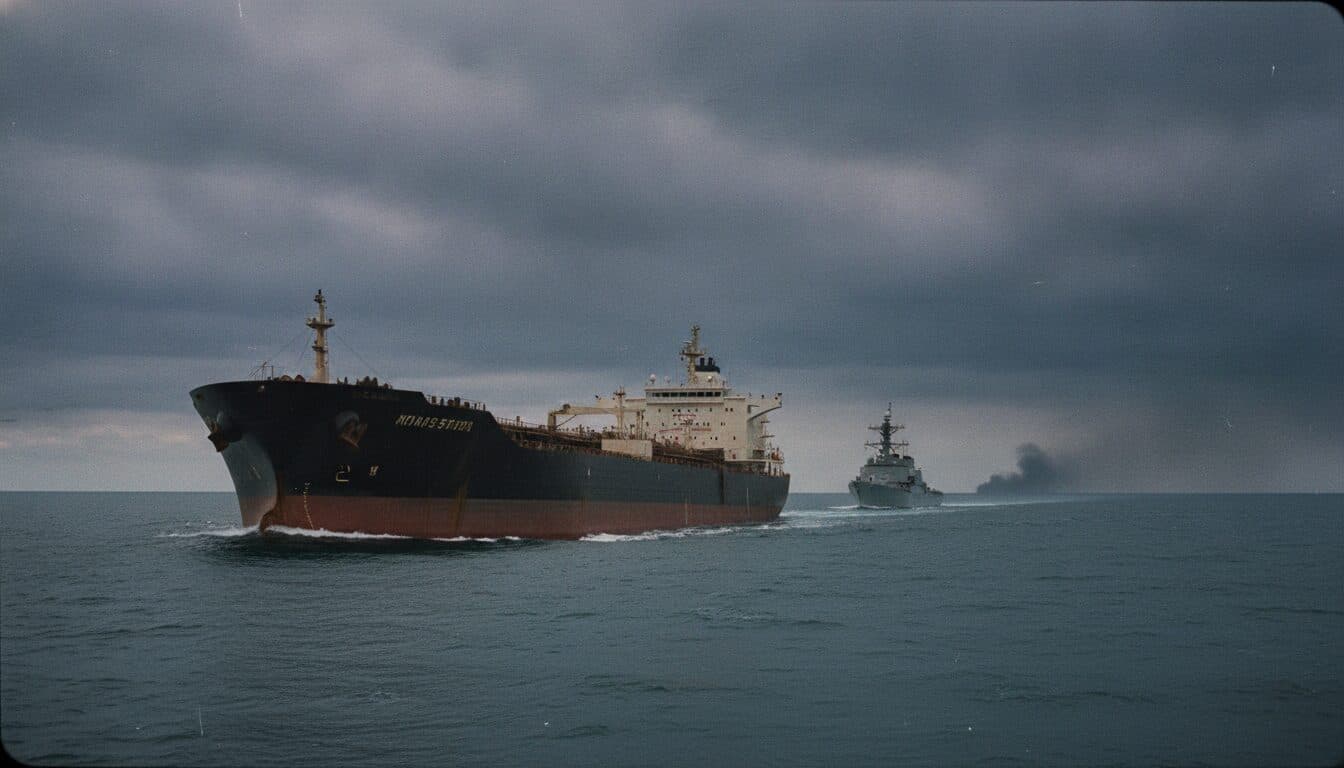
True to its word, Iran launched attacks on Monday using cruise missiles, drones, and small boats targeting U.S. commercial and military vessels, as confirmed by U.S. Navy Admiral Brad Cooper, commander of Central Command (CENTCOM). In response, the U.S. military engaged, destroying six Iranian small boats that attempted to interfere with shipping. President Trump later stated that the U.S. had “shot down seven small boats,” utilizing U.S. Army AH-64 Apache and U.S. Navy MH-60 Sea Hawk helicopters in these engagements. Iran’s state-run IRNA news agency, however, rejected the U.S. assertion that its “fast boats” were destroyed and claimed its forces fired “warning” shots, including missiles and drones, at a U.S. destroyer – a claim CENTCOM denied, stating, “No U.S. Navy ships have been struck.”
Impact on Markets and Regional Stability After Hormuz Strait Exchange
Beyond the direct military clashes, the UAE reported coming under significant attack, with over a dozen missiles and drones launched at the Gulf nation on Monday. The UAE Ministry of Defense stated its air defenses intercepted 12 ballistic missiles, three cruise missiles, and four drones. Tragically, three Indian nationals suffered moderate injuries in these attacks. A fire also broke out at the Fujairah Oil Industry Zone following a suspected Iranian drone attack, and a tanker belonging to Abu Dhabi state energy company ADNOC was targeted by two drones in the Strait of Hormuz, though no injuries were reported on the vessel. Separately, a South Korean cargo ship was reportedly hit by an explosion in the Strait, with the cause remaining unclear. Despite the intense activity, CENTCOM reported that two U.S.-flagged commercial vessels successfully transited the Strait of Hormuz on Monday under the auspices of Project Freedom, underscoring the U.S. commitment to keeping the waterway open.
The current escalation severely jeopardizes the fragile ceasefire between the U.S. and Iran, which had been in effect since April 8, 2026. This ceasefire was intended to pause over two months of intense fighting in the Gulf region, offering a glimmer of hope for de-escalation. The Strait of Hormuz is a critical artery for global trade, through which a fifth of global oil and liquefied natural gas flowed before the conflict. Iran’s effective closure of the Strait has already significantly impacted global markets and oil prices, and this renewed military confrontation is expected to send further shockwaves. Investors are bracing for volatility, with energy markets particularly sensitive to developments in this strategically vital waterway.
The U.S. military presence in the region is formidable. Admiral Cooper highlighted the “enormous amount of capability and firepower concentrated in and around the strait,” including helicopters, various fixed-wing aircraft (A-10s, F-15, F-16, F/A-18, F-35, EA-18 Growlers, RC-135s, KC-46s, KC-135s), and numerous warships, including destroyers and two carrier strike groups. The U.S. military mission for Project Freedom involves over 15,000 personnel, demonstrating the scale of the commitment to ensure freedom of navigation.
“The direct exchange of fire in the Strait of Hormuz signals a dangerous and immediate unraveling of the ceasefire. The market reaction will be swift, particularly in oil, as the risk premium associated with this critical choke point has now spiked dramatically. This isn’t just a regional flare-up; it’s a direct challenge to global energy security.”
Despite the military escalation, diplomatic efforts are reportedly still underway. The U.S. and Iran are engaged in indirect talks to end the war, with Tehran reviewing a U.S. response to a 14-point proposal. However, the latest events cast a long shadow over the efficacy of these discussions, making a diplomatic breakthrough appear increasingly remote. The immediate future holds significant uncertainty. The U.S. has demonstrated its resolve to ensure freedom of navigation, while Iran has shown its willingness to retaliate against perceived infringements on its stated sovereignty over the Strait. Further military engagements in the Hormuz Strait are a distinct possibility, and the risk of miscalculation remains exceptionally high.
For readers and investors, the key takeaway is the immediate re-emergence of high-stakes geopolitical risk in the Gulf. The Strait of Hormuz is not merely a shipping route; it is a barometer for global stability and a bellwether for energy prices. The direct military clashes between the U.S. and Iran signal a return to open hostilities, threatening the fragile global economic recovery and demanding close attention to both military developments and any renewed diplomatic overtures, however unlikely they may seem in the current climate.
“,
“excerpt”: “The fragile ceasefire between the US and Iran has shattered after an exchange of fire in the Strait of Hormuz and missile attacks on the UAE, following the launch of ‘Project Freedom’ to guide commercial vessels.”,
“keywords”: [“US-Iran conflict”, “Strait of Hormuz”, “oil prices”, “Project Freedom”, “UAE attacks”],
“seoTitle”: “US, Iran Exchange Fire in Hormuz Strait, Escalating Tensions”,
“seoDescription”: “Direct military confrontation erupts in the Strait of Hormuz between the US and Iran, shattering a ceasefire and raising global oil price concerns. Learn about Project Freedom and regional attacks.”,
“focusKeyphrase”: “Hormuz Strait exchange”,
“slug”: “us-iran-exchange-fire-hormuz-strait-escalating-tensions”,
“imageAlt”: “U.S. Navy ships transiting the Strait of Hormuz near an Iranian fast attack craft.”,
“imageScene”: “Naval vessels in a narrow strait”
}
“`