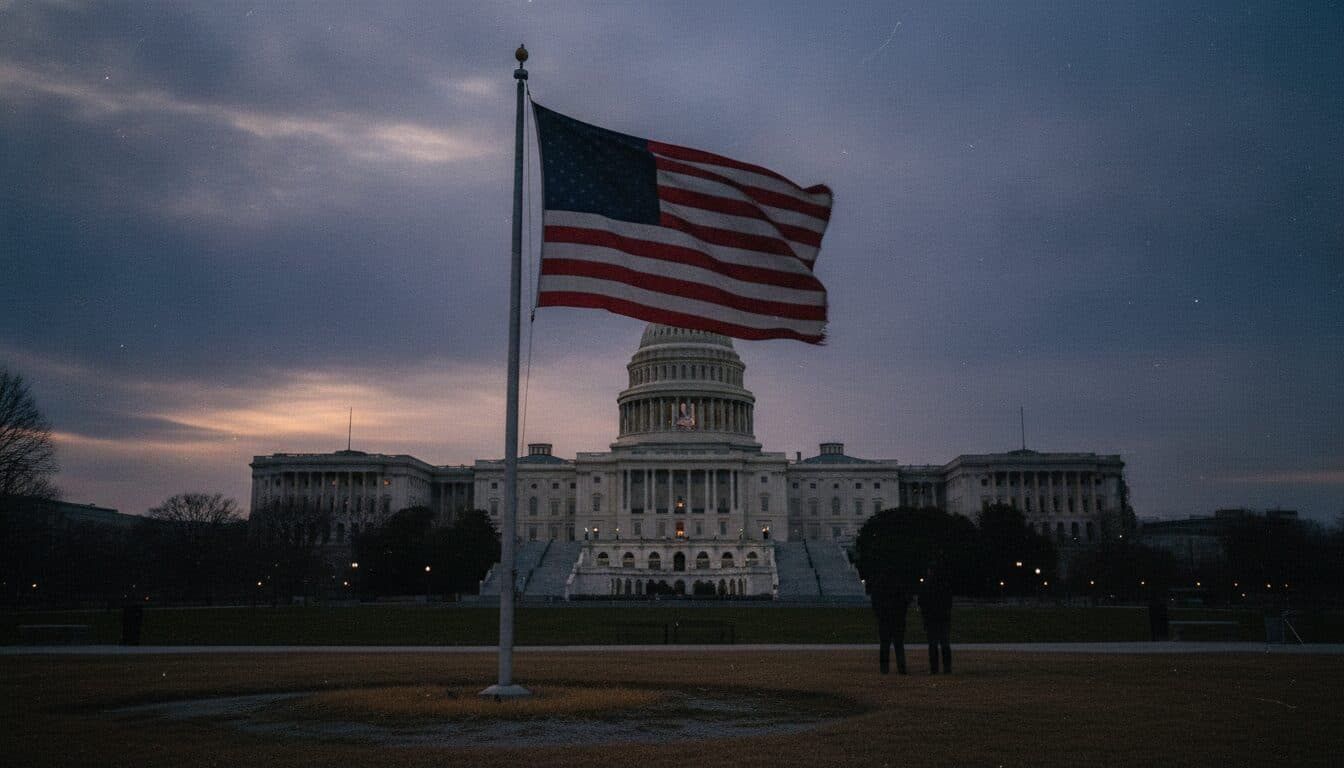
“`json
{
“headline”: “Supreme Court upholds birthright citizenship, strikes down Trump order”,
“content”: “
In a decision with profound implications for immigration policy and the very definition of American identity, the U.S. Supreme Court on Tuesday, June 30, 2026, delivered a definitive blow to efforts to restrict birthright citizenship. The Court upheld the long-standing understanding of the 14th Amendment, striking down an executive order by former President Donald Trump that sought to deny automatic American citizenship to children born in the U.S. to parents residing in the country illegally or temporarily. This 6-3 ruling, stemming from the case of *Trump v. Barbara*, No. 25-365, reaffirms over a century of legal precedent and sends a clear message about the limits of executive power in constitutional matters.
\n\n
The Court’s majority opinion, penned by Chief Justice John Roberts, was joined by Justices Sonia Sotomayor, Elena Kagan, Amy Coney Barrett, and Ketanji Brown Jackson. Justice Brett Kavanaugh concurred in the judgment but dissented in part, arguing the policy violated federal statute. Justices Clarence Thomas, Samuel Alito, and Neil Gorsuch dissented. The decision effectively preserves the status quo for an estimated quarter of a million babies born in the U.S. each year who would have been impacted by Trump’s order, according to research by the Migration Policy Institute and Pennsylvania State University’s Population Research Institute.
\n\n
Trump’s Executive Order 14160, signed on the first day of his second term on January 20, 2025, represented a cornerstone of his hardline immigration agenda. It aimed to redefine who is an American citizen, asserting that children of noncitizens are not “subject to the jurisdiction” of the United States in the context of the 14th Amendment’s Citizenship Clause. This interpretation, however, was firmly rejected by the Supreme Court, which found it inconsistent with the text, history, and established precedent of the amendment.
\n\n
Supreme Court Upholds Birthright Citizenship
\n\n
Chief Justice Roberts, in his majority opinion, underscored the historical intent and enduring promise of the 14th Amendment. He stated,
\”Citizenship, then and now, was the right to have rights — to freely participate in our political community. The Framers of the Fourteenth Amendment extended that promise to ‘every free-born person in this land.’ We keep that promise today.\”
The ruling explicitly clarified that children born to parents present in the U.S., whether unlawfully or temporarily, are indeed \”born in the United States\” and \”subject to the jurisdiction thereof,\” thus qualifying them as citizens at birth. This interpretation aligns with the 1898 *Wong Kim Ark* ruling, which affirmed citizenship for a U.S.-born child of Chinese nationals, and the original intent of the 14th Amendment, ratified in 1868 to ensure citizenship for formerly enslaved Black people.
\n\n
The impact of this ruling extends far beyond individual families; it significantly curtails the executive branch’s ability to unilaterally alter fundamental constitutional rights. For businesses, particularly those in sectors reliant on immigrant labor or catering to diverse populations, the stability provided by this reaffirmation of birthright citizenship is crucial. Uncertainty surrounding citizenship status can create significant social and economic disruptions, affecting everything from consumer markets to workforce planning. The clarity offered by the Court removes a major potential hurdle that could have destabilized communities and introduced new complexities for employers navigating immigration laws.
\n\n
The context surrounding this decision is critical. Former President Trump had repeatedly championed the idea of ending birthright citizenship, viewing it as a loophole that incentivized illegal immigration and \”birth tourism.\” His executive order was a direct attempt to implement this policy without congressional action or a constitutional amendment. The administration’s argument hinged on a narrow reading of the phrase \”subject to the jurisdiction thereof,\” contending it excluded children of non-citizens. The Supreme Court’s rejection of this argument highlights a fundamental disagreement on constitutional interpretation that has simmered for years within legal and political circles.
\n\n
The American Civil Liberties Union (ACLU), along with other advocacy groups, led the successful challenge against the executive order in *Trump v. Barbara*. Cecillia Wang, ACLU National Legal Director, who argued the case, lauded the decision:
\”The court’s decision reaffirms a fundamental American promise — if you are born here, you are a citizen. A president cannot change the Constitution by executive fiat.\”
This sentiment underscores the enduring principle of checks and balances, even with a Supreme Court featuring a conservative majority, including three justices appointed by Trump himself.
\n\n
Looking ahead, the immediate implications for immigration policy are substantial. The ruling ensures that the established framework for birthright citizenship remains intact, preventing a radical shift that would have redefined the legal status of hundreds of thousands of individuals annually. For investors, this legal certainty avoids potential demographic and social upheaval that could have impacted long-term economic planning and market stability. However, the political fallout is likely to continue. Following the decision, Trump took to Truth Social, urging Congress to pass legislation to restrict birthright citizenship, stating, \”No long and unwieldy Constitutional Amendment is necessary!\” This stance, however, is largely seen by legal scholars as requiring a constitutional amendment, a far more arduous process than simple legislation.
\n\n
The future may see renewed legislative efforts by those seeking to limit birthright citizenship, though such attempts would face significant constitutional hurdles and likely fierce opposition. The Supreme Court’s ruling solidifies the legal landscape, making it clear that any fundamental change to birthright citizenship would necessitate a constitutional amendment, not merely an executive order or simple statute. This outcome reinforces the stability of foundational legal principles, even amidst intense political debate, offering a measure of predictability for businesses and individuals alike.
\n\n
The key takeaway from this landmark decision is the Supreme Court’s unwavering commitment to constitutional text and precedent, even when faced with significant political pressure. By upholding birthright citizenship, the Court has not only protected a fundamental right but also reaffirmed the institutional integrity of the judiciary against attempts to redefine core constitutional principles through executive action. For readers and investors, this means a consistent legal framework for citizenship, reducing uncertainty and maintaining the broad societal stability that underpins economic activity. For more on the evolving political landscape, visit our related trending articles.
“,
“excerpt”: “The Supreme Court upheld birthright citizenship, striking down former President Trump’s executive order and reaffirming the 14th Amendment. This 6-3 decision in *Trump v. Barbara* preserves the status quo for hundreds of thousands of U.S.-born children annually, marking a significant defeat for Trump’s immigration agenda and affirming the limits of executive power. Chief Justice Roberts emphasized the historical intent of the 14th Amendment, stating the ruling keeps the promise of citizenship for ‘every free-born person in this land.'”,
“keywords”: [
“Supreme Court”,
“birthright citizenship”,
“14th Amendment”,
“Trump executive order”,
“immigration policy”
],
“seoTitle”: “Supreme Court Upholds Birthright Citizenship, Strikes Down Trump Order”,
“seoDescription”: “The Supreme Court upheld birthright citizenship, striking down Trump’s executive order in a 6-3 decision. This reaffirms the 14th Amendment and impacts immigration policy, limiting executive power.”,
“focusKeyphrase”: “birthright citizenship”,
“slug”: “supreme-court-upholds-birthright-citizenship-strikes-down-trump-order”,
“imageAlt”: “U.S. Supreme Court building with an American flag flying”,
“imageScene”: “A grand, neoclassical building with a large flag, representing justice and law.”
}
“`