Ted Turner’s passing on Wednesday, May 6, 2026, at the age of 87 marks the end of an era for a true giant of global media. The revolutionary media mogul, who founded CNN and forever changed the landscape of television news, died peacefully surrounded by his family after a long battle with Lewy body dementia, a progressive brain disorder he publicly disclosed in 2018. His death reverberates across industries, from broadcasting to environmental advocacy, underscoring the profound and multifaceted legacy of a man who was as audacious in business as he was passionate about philanthropy.
Born Robert Edward Turner III on November 19, 1938, in Cincinnati, Ohio, Turner’s path to media dominance began unexpectedly. After taking over his father’s billboard advertising business in 1963 following his father’s suicide, he quickly demonstrated an uncanny knack for transformation. His foray into broadcasting started with the acquisition of an Atlanta UHF station in 1970, which he rebranded WTCG (later WTBS). A pivotal FCC decision in 1976 allowed WTCG to leverage satellite technology, transmitting its content nationwide to cable providers. This pioneering “superstation” concept dramatically expanded his audience and advertising reach, catapulting his net worth to $100 million as subscribers swelled to 2 million.
The Birth of Global News: CNN’s Revolution
Turner’s most significant innovation, and arguably his greatest contribution to global media, materialized on June 1, 1980, with the launch of the Cable News Network (CNN). This audacious endeavor introduced the world’s first 24-hour live global news network, a concept previously unimaginable. It revolutionized television journalism, providing instant news coverage from around the globe and earning Turner the moniker “The Mouth of the South” for his outspoken nature. CNN’s pivotal moment arrived during the 1990 Gulf War, where its on-the-scene reporting from Baghdad surpassed traditional news networks, solidifying its reputation and boosting its ratings. He rapidly expanded his news empire with CNN2 (later Headline News, then HLN) in 1982 and CNN International in 1985. Beyond news, Turner’s media empire grew to include other popular cable channels such as Turner Network Television (TNT), Cartoon Network, and Turner Classic Movies (TCM). In 1991, *Time* magazine recognized his profound impact by naming him “Man of the Year” for “influencing the dynamic of events and turning viewers in 150 countries into instant witnesses of history.”
Beyond Broadcasting: Philanthropy and Environmentalism
While his media empire reshaped how the world consumed information, Ted Turner’s passing also brings into focus his immense philanthropic and environmental contributions. In 1990, he established the Turner Foundation, which has since granted over $380 million to hundreds of organizations focused on critical environmental issues like air and water quality, sustainable energy, and curbing population growth. A year later, his commitment to the planet extended to entertainment with the creation of the environmental animated series *Captain Planet and the Planeteers*.
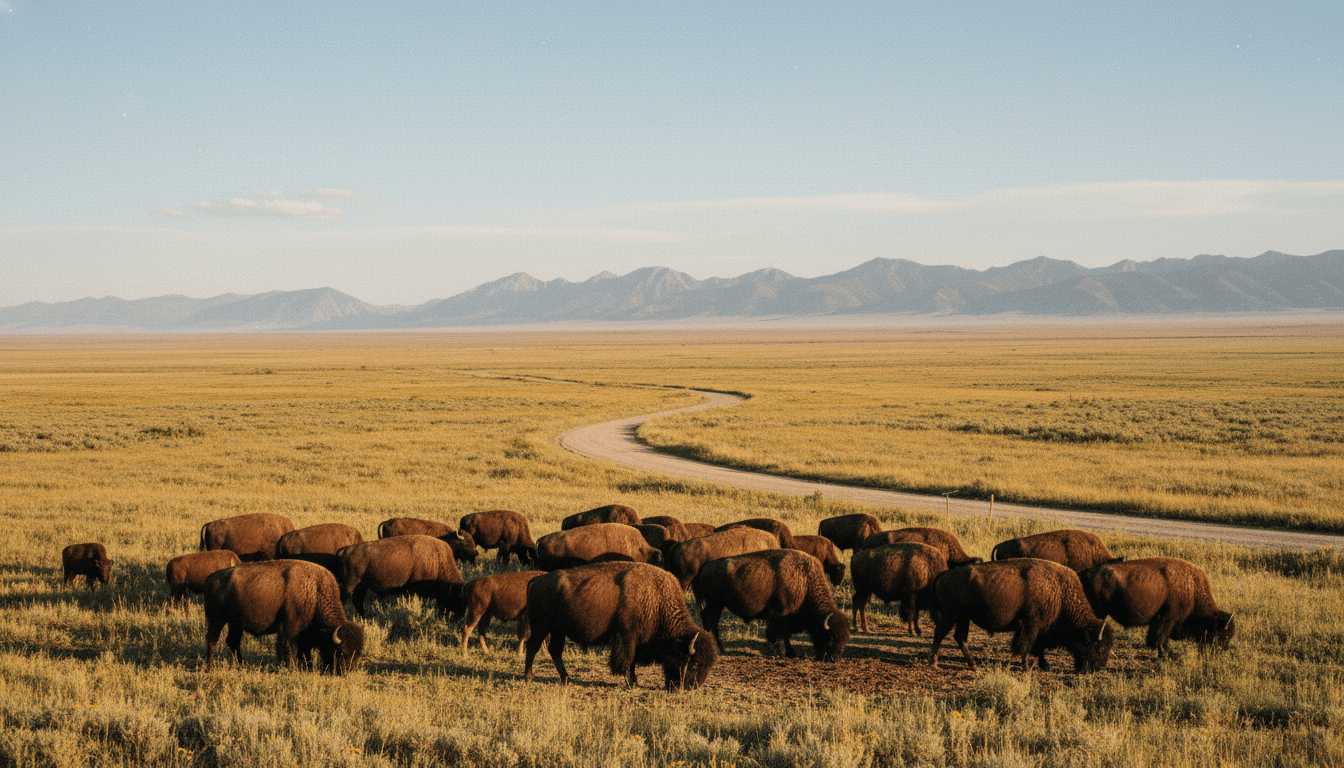
In 1997, Turner made a historic pledge of $1 billion to the United Nations, subsequently creating the United Nations Foundation in 1998 to broaden U.S. support for the UN’s goals of a more peaceful, prosperous, and just world. He also co-founded the Nuclear Threat Initiative (NTI) in 2001 with Senator Sam Nunn, a non-partisan organization dedicated to reducing global reliance on and preventing the proliferation of nuclear, chemical, and biological weapons. Turner was also one of the largest private landowners in the United States, owning nearly 2 million acres across several states. He utilized much of this land for bison ranching, amassing the world’s largest private herd of approximately 51,000 animals, and promoting bison meat through his Ted’s Montana Grill chain. His environmental efforts extended to restoring endangered species and promoting clean energy through Turner Renewable Energy.
Ted Turner’s Passing and its Market Impact
Turner’s entrepreneurial spirit and willingness to take risks profoundly impacted the media industry. His creation of the 24-hour news cycle set a new standard that has been replicated by numerous stations globally. In 1996, Turner Broadcasting System, including CNN, merged with Time Warner Inc., and later became part of AOL Time Warner in 2001. Turner departed the company in 2003 and stepped down from the board in 2005. Today, the networks and assets he built are under the ownership of Warner Bros. Discovery.
“Ted was an intensely involved and committed leader, intrepid, fearless, and always willing to back a hunch and trust his own judgment. He was and always will be the presiding spirit of CNN. Ted is the giant on whose shoulders we stand, and we will all take a moment today to recognize him and his impact on our lives and the world.”
Mark Thompson, Chairman and CEO of CNN Worldwide, eloquently summarized Turner’s enduring influence. The reverberations of more trending stories of his visionary approach are still felt across the media landscape, from the instantaneous nature of breaking news to the diversification of cable content. His legacy is that of a trailblazer who not only revolutionized how the world consumes news and entertainment but also dedicated significant resources to addressing global challenges through his extensive philanthropic and environmental endeavors. As the world reflects on Ted Turner’s passing, it’s clear his impact will continue to shape media, philanthropy, and environmental conservation for generations to come. The challenge now for media companies is to uphold the standards of fearless journalism and global perspective that he so boldly pioneered.