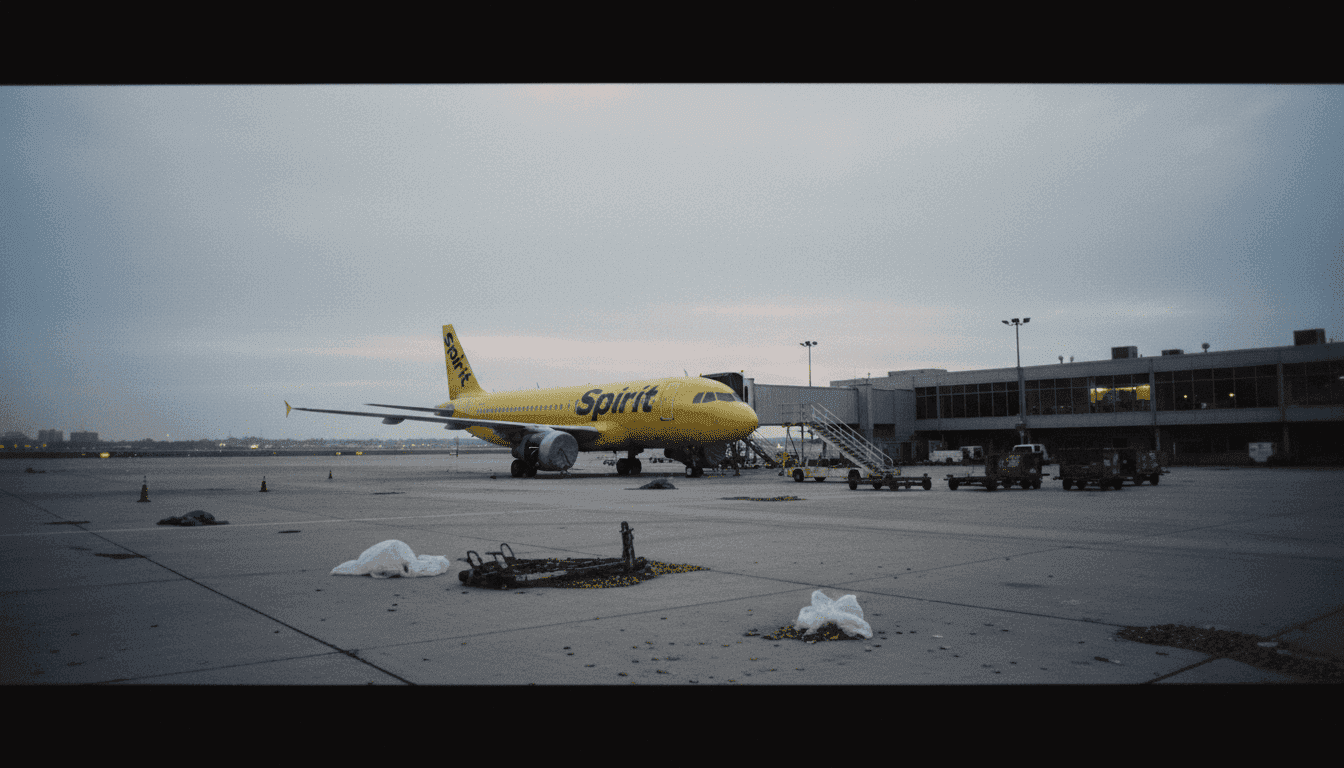
The skies grew a shade emptier today as Spirit Airlines, the pioneering ultra-low-cost carrier, officially ceased all operations and commenced an orderly wind-down. The abrupt shutdown, effective Saturday, May 2, 2026, follows years of severe financial distress, two Chapter 11 bankruptcy filings, and the ultimate failure to secure a vital $500 million federal bailout. This seismic event in the airline industry leaves thousands of passengers stranded, approximately 17,000 employees jobless, and sends ripples of concern through the broader economic landscape.
Spirit Airlines’ financial woes were no secret. The carrier had not reported a profit since 2019, with its fiscal health deteriorating sharply in recent years. Losses mounted to over $335 million in the first half of 2024, culminating in a staggering $1.2 billion in total losses by year-end. This precarious position led to its initial Chapter 11 bankruptcy filing in November 2024. Despite securing $300 million in Debtor-in-Possession financing and equitizing some $795 million of funded debt, the restructuring proved insufficient. The airline re-filed for Chapter 11 on August 29, 2025 – its second such filing in less than a year – reporting $8.1 billion in debts against $8.6 billion in assets. The repeated attempts at financial resuscitation underscore the depth of the challenges faced by the airline.
A significant blow to Spirit’s long-term strategy came in January 2024, when a federal judge blocked its proposed $3.8 billion merger with JetBlue Airways. The U.S. Justice Department had sued to prevent the deal, arguing it would harm budget-conscious consumers. This rejection left Spirit to navigate an increasingly competitive market alone, facing larger rivals who had adopted similar basic economy fare strategies, eroding Spirit’s once-distinct niche. Adding to these headwinds, the ongoing war in Iran sent jet fuel prices soaring, placing immense pressure on an already fragile balance sheet. Spirit had projected spending $2.24 per gallon this year, but actual prices more than doubled that expectation. Operational inefficiencies, including a more than 10% reduction in daily aircraft utilization to an average of nine hours, further compounded its decline.
In its final, desperate weeks, Spirit Airlines sought a lifeline in the form of a $500 million federal bailout from the White House. President Donald Trump publicly acknowledged considering a “final proposal” for a rescue, stating, “If we can do it, we’ll do it, but only if it’s a good deal.” The proposed deal would have seen the government provide $500 million in financing in exchange for warrants equivalent to 90% of Spirit’s equity. However, the bailout faced internal disagreements within the administration and, critically, failed to garner the necessary support from some of Spirit’s key bondholders, including Ken Griffin’s Citadel and Ares Management Corp. The collapse of these talks left the airline with “no choice but to stop flying ‘effective immediately’.”
“The failure of the Spirit Airlines bailout highlights the complex interplay of market forces, regulatory scrutiny, and investor appetite in times of crisis,” says Dr. Evelyn Reed, an aviation economist. “It also raises serious questions about the government’s role in propping up struggling industries, particularly when private sector solutions are elusive.”
The immediate fallout from Spirit Airlines ceasing operations has been chaotic for travelers. Thousands of passengers are stranded at airports nationwide, including major hubs like Detroit Metropolitan Wayne County Airport (DTW) and Houston’s George Bush Intercontinental Airport (IAH). Spirit announced the cancellation of all flights and the immediate unavailability of customer service. While direct credit or debit card purchases will be automatically refunded, those who booked through third parties must contact their travel agents. Passengers holding vouchers, credits, or Free Spirit points face an uncertain wait, with compensation to be determined through the bankruptcy process. For more information on navigating travel disruptions, see our related trending articles on consumer rights.
The human cost extends to the approximately 17,000 employees now facing immediate job loss. This follows earlier workforce reductions in 2025, which saw nearly 4,000 jobs cut and 200 underperforming routes eliminated, leaving Spirit with about 7,500 employees, including 2,000 pilots and 3,000 flight attendants. In a gesture of industry solidarity, other airlines such as Delta Air Lines and American Airlines have offered reduced “rescue fares” for stranded Spirit passengers and expressed willingness to assist former Spirit employees in finding new work, providing a glimmer of hope amidst the widespread job displacement.
The demise of Spirit Airlines is a stark reminder of the brutal realities of the airline industry, where razor-thin margins, volatile fuel prices, and intense competition can quickly ground even established players. For investors, it underscores the inherent risks in highly leveraged companies operating in cyclical sectors. The failure of a major airline, especially after a government bailout attempt, will undoubtedly spark further debate about economic stability, consumer protection, and the efficacy of government intervention in private enterprise. As the dust settles, the industry will watch closely to see how the remaining carriers absorb Spirit’s routes and market share, and what lessons are learned from the grounding of a once-dominant ultra-low-cost pioneer.