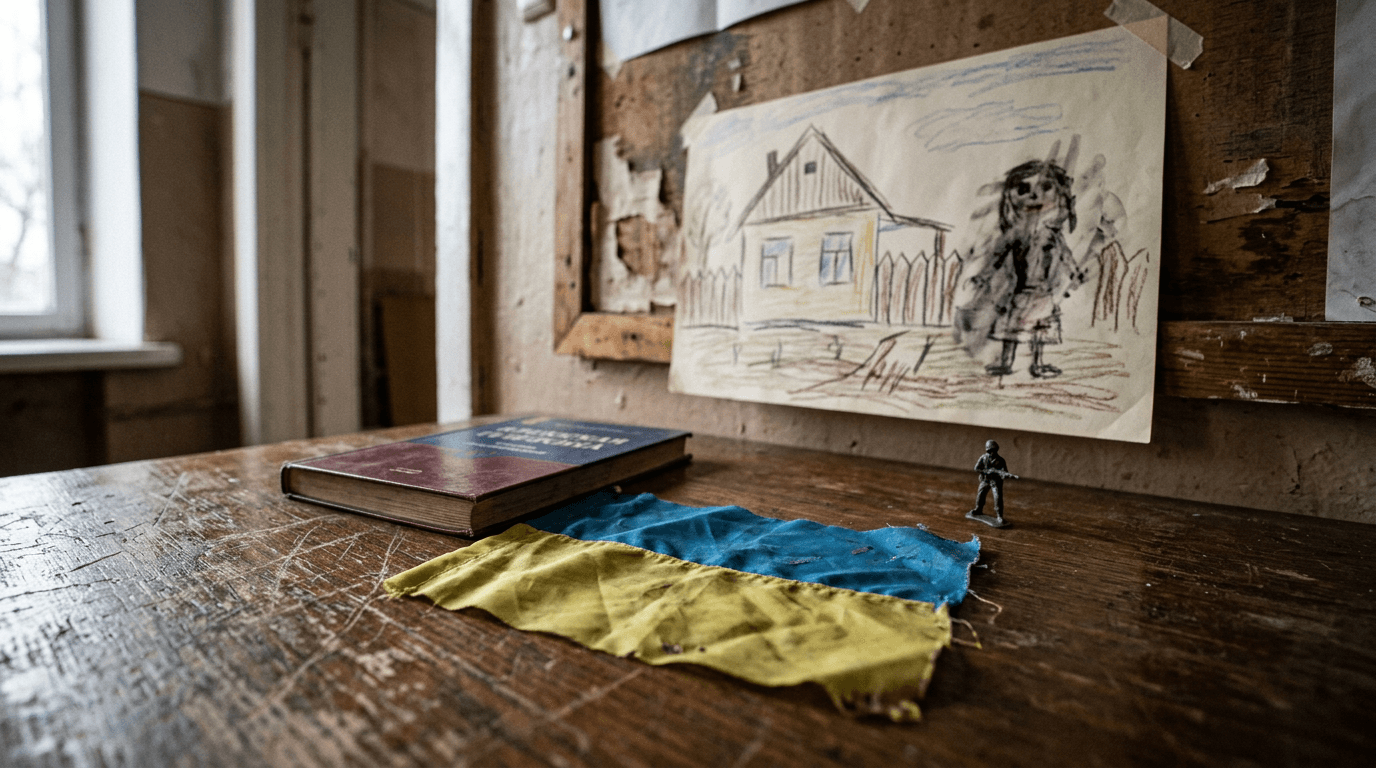
Russia’s child deportation, a systematic and widespread policy, has been formally declared a crime against humanity by a United Nations investigation, dramatically escalating international pressure on Moscow. This damning conclusion, presented by the Independent International Commission of Inquiry on Ukraine to the UN Human Rights Council in Geneva, marks a pivotal moment in the global response to Russia’s actions since its full-scale invasion of Ukraine in 2022. The report explicitly details acts of deportation, forcible transfer, and enforced disappearance of children, describing their consequences as irreversible for the young victims’ lives and futures.
Ukrainian authorities report that a staggering 19,500 children have been illegally deported or forcibly displaced to Russia and Belarus. The UN commission’s focused study on 1,205 cases from five Ukrainian regions revealed that a disturbing 80% of these children have not yet been returned to Ukraine. While Russia’s Commissioner for Children’s Rights claimed in July 2023 that Russia had ‘accepted’ 700,000 children, this figure controversially includes those who arrived with parents or legal guardians, obscuring the true scale of involuntary transfers. These deportations originate from various locations across Russian-occupied Ukrainian territories, forming part of a deliberate strategy to erase Ukrainian identity.
The Systemic Eradication of Ukrainian Identity
U.S.-funded research indicates that Russia has significantly expanded forced re-education programs targeting these children. These initiatives are designed to indoctrinate Ukrainian children, subjecting them to Russification and militarization. Children are coerced into speaking Russian, singing the Russian national anthem, and participating in military activities, all aimed at severing their ties to their Ukrainian heritage. Russia has also facilitated the adoption of Ukrainian children by Russian families, often granting them Russian citizenship and deliberately concealing their whereabouts from their biological relatives, further complicating any potential repatriation efforts. To date, only approximately 2,000 children have been returned to Ukraine, highlighting Russia’s failure to establish an effective return system, prioritizing long-term placement within Russia instead.
The international community has responded with decisive legal action. In March 2023, the International Criminal Court (ICC) issued arrest warrants for Russian President Vladimir Putin and Russia’s Commissioner for Children’s Rights, Maria Lvova-Belova, specifically for the war crime of unlawful deportation and transfer of Ukrainian children. Ukraine has also taken its own legal steps, initiating a case before the International Court of Justice based on the Genocide Convention, underscoring the gravity of the accusations.
“Russia’s systematic efforts to eradicate Ukrainian identity and forcibly integrate Ukrainians into Russian society through the deportation of children constitute a grave violation of international law and a profound moral outrage.”
Global Repercussions of Russia’s Child Deportation
While the immediate economic impact of this UN declaration is not directly quantifiable, the escalating international pressure and condemnation significantly contribute to Russia’s growing isolation. This heightened diplomatic and legal scrutiny can lead to further sanctions, accelerate divestment from Russian assets, and create a chilling effect on international business relations with Russia. The cumulative effect of the ongoing war and the associated human rights abuses, including the forced displacement of children, reinforces the perception of Russia as an increasingly high-risk environment for investment and trade, impacting its economy over the long term. This declaration provides further impetus for nations and corporations to reconsider their engagement with Moscow.
The forced deportation of Ukrainian children is not an isolated incident but part of a broader, disturbing pattern of actions by Russia since its full-scale invasion in February 2022. Russia continues to deny taking children against their will, asserting that it is merely evacuating people voluntarily from war zones. However, international law, as emphasized by the UN and other international bodies, mandates that such evacuations must be temporary, with children returned to their homes as soon as possible. The issue of displaced Ukrainian children has been a concern since Russia’s annexation of Crimea in 2014, but it has intensified dramatically since the 2022 invasion. The UN General Assembly has unequivocally demanded that Russia immediately and unconditionally return all forcibly transferred or deported Ukrainian children.
What’s Next: Mounting Pressure and Accountability
The UN’s declaration of Russia’s child deportation as a crime against humanity will undoubtedly intensify calls for accountability and potentially lead to further coordinated international actions. Watch for increased diplomatic efforts to pressure Russia, potentially through new rounds of sanctions from Western nations. The ongoing ICC warrants against Putin and Lvova-Belova gain additional weight with this UN finding, potentially galvanizing efforts to enforce these warrants, though practical challenges remain. Furthermore, expect more detailed investigations and documentation from human rights organizations, continuing to build the evidentiary base against Russia. The focus will remain on the urgent need for repatriation, with international bodies seeking new mechanisms to facilitate the return of the thousands of children still held in Russia. The long-term implications for Russia’s international standing and its relationship with the global community are set to worsen considerably.