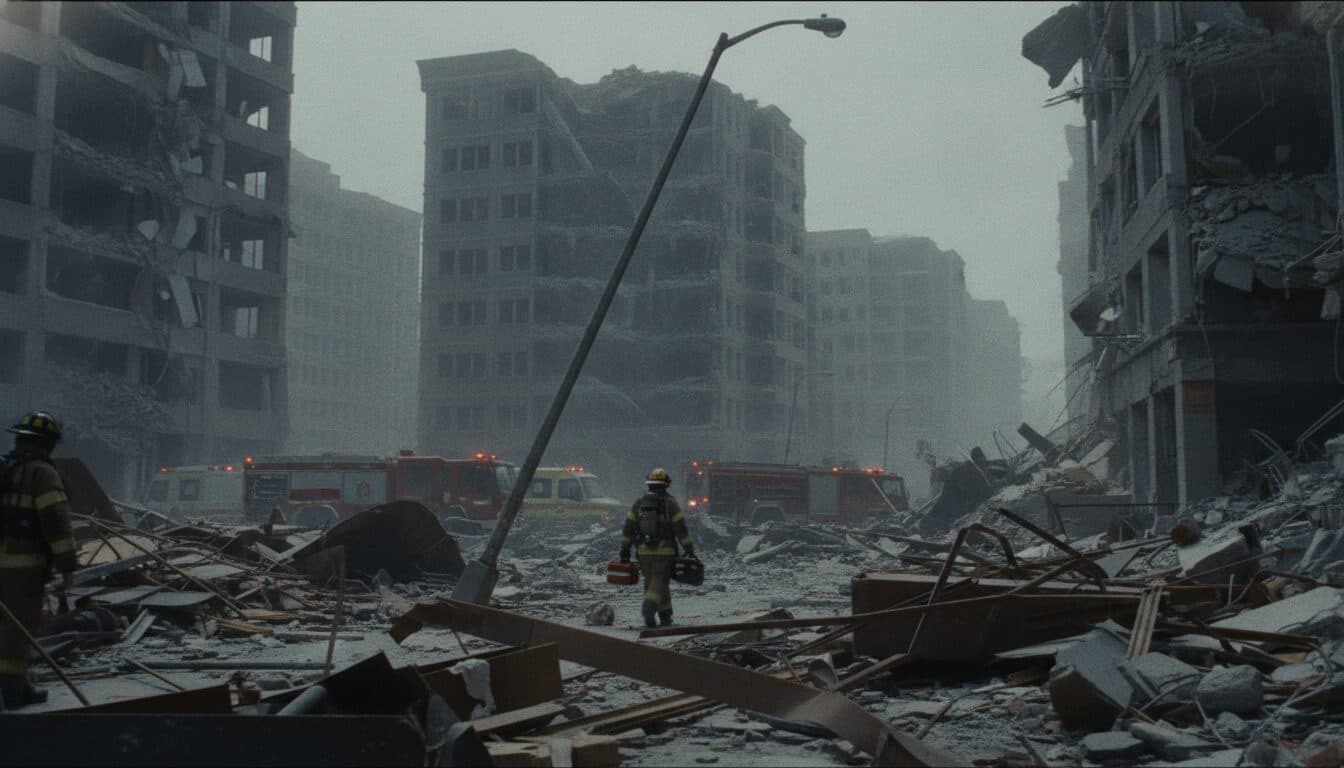
Kyiv, Ukraine – A large-scale Russian missile and drone assault on Kyiv overnight into Thursday, July 2, 2026, has resulted in at least 17 fatalities and dozens of injuries, marking a severe escalation in the ongoing conflict. The attack, described by Kyiv Mayor Vitali Klitschko as the “most massive” of the war on the capital, caused widespread destruction, impacting residential buildings and critical civilian infrastructure across multiple districts.
The assault saw Russia launch a staggering 74 missiles and 496 drones, totaling 570 aerial attack weapons. While Ukrainian air defense units intercepted a majority, 25 ballistic missiles and 12 drones successfully struck 33 locations. Notably, a record 28 ballistic missiles targeted Kyiv alone. The aftermath has seen 17 confirmed deaths and 86 injured, with 70 people hospitalized. Among the injured are two children, underscoring the indiscriminate nature of the strikes.
Damage reports indicate that 30 locations across Kyiv sustained hits, primarily residential areas. Interior Minister Ihor Klymenko confirmed that 20 residential buildings were damaged. Other affected sites include an ambulance station, a research institute, a hotel, and various local businesses. A six-story apartment building partially collapsed after a direct hit. Fires erupted in numerous districts, including Shevchenkivskyi, Holosiivskyi, Pecherskyi, Darnytskyi, Obolonskyi, Sviatoshynskyi, Desnianskyi, and Solomianskyi, requiring a substantial emergency response. Ukraine’s State Emergency Service (DSNS) deployed 570 rescuers and over 125 pieces of equipment, including a helicopter, to manage the extensive damage and ongoing search and rescue operations.
Massive Russian Missile Attack Escalates Conflict
The financial implications of such widespread destruction are considerable, adding to the immense reconstruction costs already facing Ukraine. The targeting of civilian infrastructure, including residential areas and an ambulance station, raises serious concerns for international humanitarian organizations and could lead to further sanctions discussions against Russia. For investors, the continued volatility and escalation of the conflict in a major European capital introduce heightened geopolitical risk, potentially impacting global energy markets and supply chains, as well as investor confidence in the broader European economy. The disruption to daily life and the tragic loss of life also represent a significant human capital cost, further hindering Ukraine’s economic recovery efforts.
Ukrainian President Volodymyr Zelenskyy had issued a warning on Wednesday, July 1, 2026, about Moscow’s preparations for a “massive attack,” cutting short his visit to Ireland to return to Kyiv. He urged citizens to seek shelter and stressed the critical need for more air defense supplies, reiterating his request for a US license to produce Patriot missiles locally. Zelenskyy stated that at least 20 sites were attacked, “most of them ordinary residential buildings.” Klitschko declared Friday, July 3, a day of mourning in Kyiv, urging residents to remain vigilant during the “furious enemy attack.” Tymur Tkachenko, head of the Kyiv City Military Administration, provided updated injury figures and damage assessments.
“Air defense supplies for Ukraine are an absolute and critical priority.”
Russia’s Defense Ministry claimed its “massive attack” utilized long-range, high-precision air-, land-, and sea-launched weapons and drones, targeting military and energy facilities, airports, and other locations. Russia asserted the attack was in retaliation for Ukrainian strikes on Russian civilian infrastructure. Ukraine’s Foreign Minister Andrii Sybiha condemned the strikes as “grave war crimes,” calling on international partners to expedite decisions on air defense systems and missiles for Ukraine, and to expand sanctions against Russia. He emphasized that “Russia has no right to make any strikes against Ukraine, while Ukraine has every right to respond, defend from aggressor, and strike any legitimate military targets in Russia.”
This latest assault comes amidst an intensified period of Russian strikes on Kyiv in recent weeks. The escalation coincides with Ukraine’s ongoing long-range drone campaign against Russian military sites and energy facilities, which has reportedly caused fuel shortages in Russia. The tit-for-tat nature of these strikes suggests a deepening and more destructive phase of the conflict.
Looking ahead, the immediate focus remains on search and rescue efforts and providing aid to the victims. International pressure on Russia is expected to mount, with renewed calls for stricter sanctions and increased military aid to Ukraine. The incident will likely intensify debates within NATO and the EU regarding the scope and speed of military assistance, particularly air defense systems, and the potential implications of Ukraine producing Patriot missiles domestically. The ongoing conflict’s impact on global energy prices and supply chain stability will also be a key area for investors to monitor. For more on geopolitical developments impacting global markets, visit related trending articles.
The sheer scale and devastating impact of this latest massive Russian missile attack on Kyiv underscore the urgent need for enhanced air defense capabilities in Ukraine and highlight the enduring human and economic costs of the prolonged conflict. Investors and policymakers alike will be closely watching for any diplomatic breakthroughs or further escalations that could significantly alter the geopolitical landscape and global economic outlook.