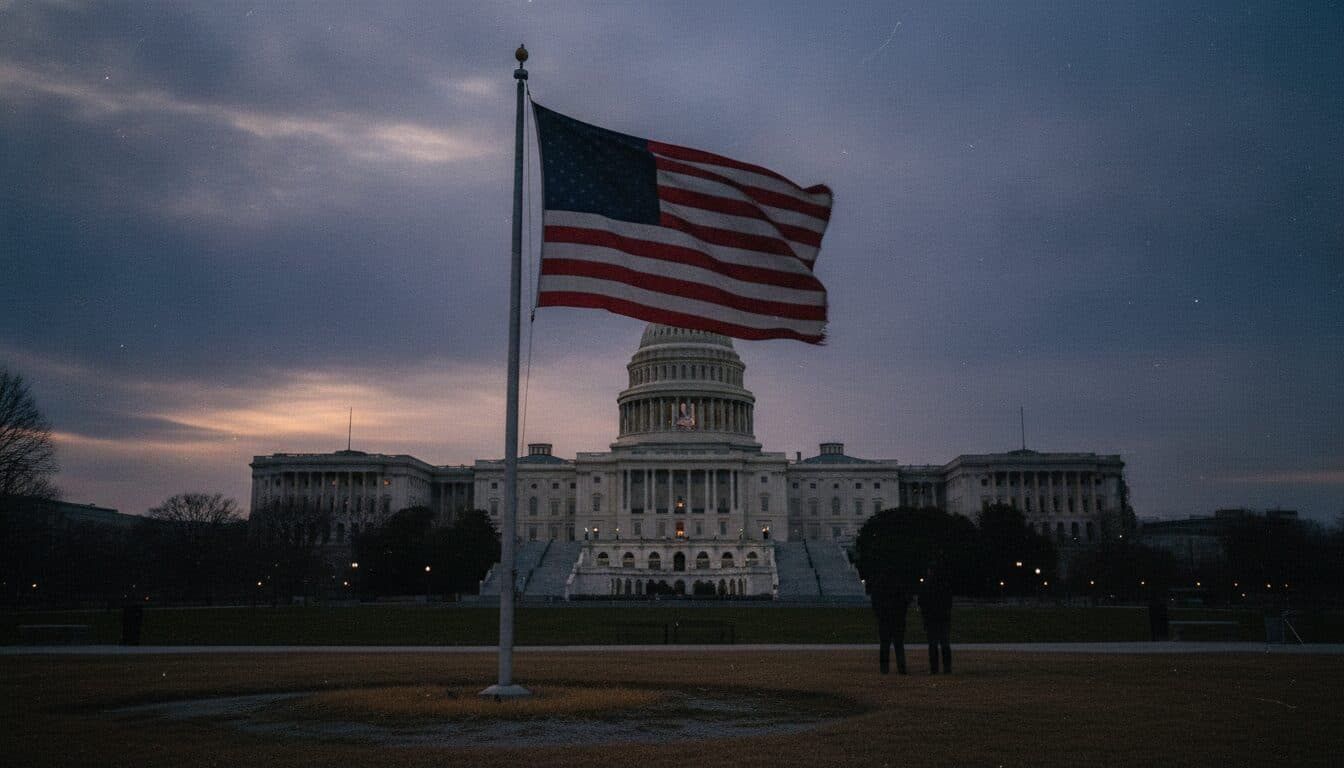
The sudden news of Robert Mueller death on Friday, March 21, 2026, at the age of 81 in Charlottesville, Virginia, has reverberated through Washington D.C. and beyond, marking the passing of a figure central to one of the most tumultuous periods in recent American political history. Mueller, who led the investigation into Russian interference in the 2016 US election and served as FBI Director for 12 years, leaves behind a legacy defined by unwavering public service and a steadfast commitment to the rule of law, even amidst intense political scrutiny.
His family announced his death on Saturday, March 22, 2026, requesting privacy. While the exact cause was not disclosed, The New York Times reported in September 2025 that Mueller had been diagnosed with Parkinson’s disease in 2021, a condition that likely contributed to his declining health.
A Legacy Forged in Crisis
Robert Mueller’s career was a testament to dedication, spanning decades as a decorated Marine veteran, a prosecutor, and a government official. His military service in Vietnam, where he was shot and earned a Bronze Star for valor and a Purple Heart, underscored a lifelong commitment to duty. However, it was his leadership of the FBI from 2001 to 2013 that first cemented his place in modern American history. Appointed just a week before the September 11, 2001, terrorist attacks, Mueller profoundly reshaped the bureau’s mission, pivoting its focus to counterterrorism and guiding it through a period of unprecedented national security challenges. He remains the longest-serving FBI Director since J. Edgar Hoover.
The Mueller Report and its Enduring Impact
The defining chapter of Mueller’s public life for many, however, was his appointment as special counsel in May 2017. Tasked by then-Deputy Attorney General Rod Rosenstein, he oversaw the federal investigation into Russian interference in the 2016 election and any links between Donald Trump’s campaign and Moscow. This two-year inquiry culminated in the 448-page Mueller Report in March 2019, a document that meticulously detailed Russia’s “sweeping and systematic” efforts to influence the election in favor of Trump.
The report, while identifying “numerous links” between the Russian government and the Trump campaign, concluded there was “insufficient evidence to establish that members of the Trump campaign knowingly engaged in a criminal conspiracy with the Russian government to interfere with the election.” Crucially, it also laid out instances of Trump’s efforts to control and potentially obstruct the investigation, stating it “did not exonerate” the president on obstruction of justice. The investigation led to 37 indictments, seven guilty pleas or convictions, including Trump’s former national security adviser Michael Flynn for lying to investigators, and charges against 34 individuals and three companies, including six former Trump aides and 26 Russians.
Global Reverberations and Divisive Reactions
The global impact of Robert Mueller death is less about immediate market shifts—his major investigations concluded years ago—and more about the symbolic closure of a contentious era. His work continues to be a critical reference point in global discussions about election integrity, foreign interference in democratic processes, and the boundaries of executive power. For many international observers, Mueller represented an adherence to institutional norms and an independent pursuit of facts in a highly polarized political landscape.
Domestically, reactions to Mueller’s passing were starkly divided, mirroring the deep partisan chasm his investigation exposed. While former President Trump, in a Truth Social post, declared, “Good, I’m glad he’s dead. He can no longer hurt innocent people!” many lawmakers and public figures lauded Mueller’s extensive public service. Former FBI Director Christopher Wray praised Mueller for embodying “the virtue of prioritizing service to the country over self.” Former Presidents George W. Bush and Barack Obama similarly lauded his dedication and leadership, particularly during his tenure as FBI Director.
“Robert Mueller embodied the virtue of prioritizing service to the country over self, a quality increasingly rare in public life,” said Christopher Wray, former FBI Director, highlighting Mueller’s principled approach.
The controversy surrounding the Mueller investigation, with its allegations of a “witch-hunt” from one side and affirmations of its necessity from the other, underscores the profound societal divisions that persist. His public silence throughout the investigation, a deliberate choice to let his work speak for itself, became a hallmark of his professional and effective approach.
What’s Next: An Enduring Reference Point
The passing of Robert Mueller marks the end of an era, but the issues he confronted remain profoundly relevant. Discussions about the vulnerabilities of democratic institutions to foreign interference, the role of intelligence agencies, and the checks and balances on presidential power will continue to reference the more trending stories and findings of the Mueller Report. His legacy will undoubtedly be debated and reinterpreted for years to come, influencing future policy decisions and legal precedents.
As the world reflects on the life of Robert Mueller death, his career serves as a powerful reminder of the complex interplay between law, politics, and national security in a rapidly changing global environment. His disciplined approach to highly sensitive investigations, even in the face of intense political pressure, will likely remain a benchmark for future generations of public servants. The implications of his work, particularly concerning election security and executive oversight, are far from settled, ensuring that his name will continue to resonate in critical debates about the future of American democracy.